Iran Conflict — 2026-06-12 (AM)



Current status
Trump claims a ‘great settlement’ with Iran and cancels the next wave of strikes — the most consequential diplomatic shift of the war. In remarks reported overnight, US President Donald Trump said Washington and Tehran had reached a “great settlement” and were finalising documents, and that he had called off planned strikes. Al Jazeera’s live blog frames the move as Trump claiming the Tehran deal is “approved” and cancelling new strikes, and the New York Times reports Trump, in his latest pivot, “retracted [his] threat to strike Iran again and widen the war.” The shift follows weeks of on-again, off-again talks that had failed to produce an agreement even as US and Iranian forces traded strikes for two consecutive days.
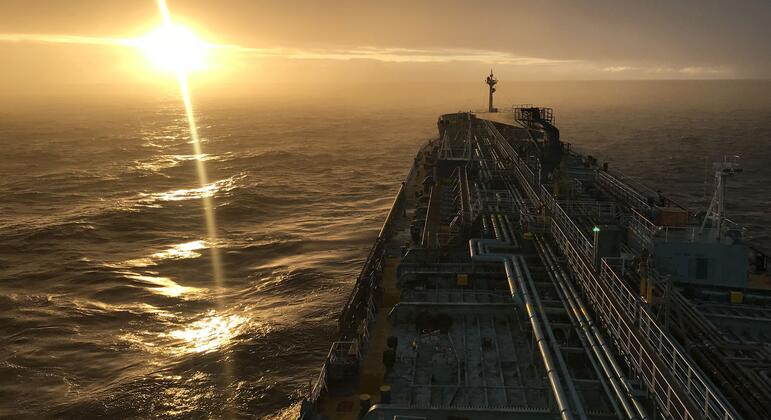
Stock markets surge and oil prices fall on the deal narrative, but Iran has not confirmed and a fatal Hormuz strike landed hours earlier. Al Jazeera reports Wall Street and Asian markets rallied overnight on hopes for an end to the US–Israel war on Iran, and CNBC says oil fell on Friday after Trump’s framework-agreement comment, raising hopes that Middle East tensions could ease. The market move is real and significant, but it sits awkwardly next to a UN News report that three Indian seafarers were killed in an attack on an oil tanker near the Strait of Hormuz on Wednesday — a reminder that the kinetic cycle that produced the deal framework is still landing blows inside the chokepoint.
On the ground in Iran, ‘whipsawed between fear and relief’ — the population is reading the same signals the markets are. The New York Times’ Farnaz Fassihi writes that Iranians are alternating between hopes the war will end and fears of another all-out escalation, with many worried the economy will keep collapsing even if the kinetic cycle pauses. The piece underlines that whatever Trump announces from Washington, the Iran-side decision-making is moving on a separate clock: a population that has now spent over 100 days under strikes, sanctions pressure and a closed Hormuz, with a parallel concern that a fragile deal could collapse the same way the last one did.
The oil-price re-rating is happening, but DC energy insiders are not yet pricing a full off-ramp. CNBC, reporting from the sidelines of the Global Energy Forum in Washington, says oil investors are balancing Trump’s “framework agreement” framing against the absence of a deal text, a venue for talks, or an Iranian confirmation. That is consistent with a market that is willing to rally on the headline but is not yet willing to take the chokepoint risk premium out of the curve.
UAE / Gulf angle
Gulf shipping is still the pressure point — three Indian seafarers killed in a Hormuz-area strike, UN warns of widening fallout. UN News reports three Indian seafarers were killed in an attack on an oil tanker near the Strait of Hormuz on Wednesday, and the UN is warning of widening fallout for food security, fuel prices and broken global supply chains. For the UAE — with the Habshan–Fujairah bypass pipeline, Fujairah port and the country’s role as a global re-export hub sitting on top of this chokepoint — the seafarer deaths are a direct operational warning. War-risk insurance for UAE-flagged traffic, and for the tankers serving Fujairah and the broader Gulf east-coast trade, will be repriced on this incident even as the macro deal narrative lifts the broader oil complex.
The UAE is the structural beneficiary of any de-escalation — and the structural victim of any relapse. With Trump claiming a “great settlement” and oil down, UAE fiscal pressure from the wartime oil-price spike eases; with the Hormuz seafarer strike and the unresolved two-day US–Iran kinetic cycle still fresh, the case for finishing the Habshan–Fujairah bypass and hardening Fujairah’s air-defence and port-resilience posture remains intact. The Day 105 situation is the rare frame in which both the macro (deal) and the operational (strike) stories are true at the same time.
What changed since the previous update (2026-06-11 ~18:17 UTC / Day 104)
From “Trump cancels the next wave” (Day 104 evening, NYT 17:49) to “Trump claims a great settlement” (Day 105 AM). Yesterday evening’s NYT report was a one-step move — cancel a specific wave of planned strikes because of “progress.” Today’s reports are a two-step move: announce a deal framework, claim it is “approved” by Tehran, and frame the cancellation as a consequence of that framework. The escalation is rhetorical and market-moving, but it is also unverified from the Iran side.
Markets have repriced Day 105 — and the oil curve is leading the move. CNBC reports oil down on the “framework agreement” framing; Al Jazeera reports Asian and Wall Street rallies. Day 104 closed with the macro question still open; Day 105 AM has a tentative answer that markets are willing to underwrite for now.
The Hormuz strike and seafarer deaths — from a Day 104 kinetic event to a Day 105 political anchor for the seafarer/shipping side of the war. UN News reporting three Indian seafarers killed in a Wednesday Hormuz-area tanker strike landed after yesterday evening’s note and turns Day 104’s kinetic cycle into a Day 105 political fact that the deal narrative has to absorb. It is the strongest single piece of evidence that the chokepoint is not yet safe, even if the diplomatic track is moving.
The two-day US–Iran exchange cycle (Apache down → US strikes → Iran retaliation in Kuwait, Bahrain, Jordan) is now framed by Trump as “the deal almost-but-not-quite” rather than “the war expanding.” The Day 104 arc was “kinetic escalation in three Gulf states with US explicitly targeting Hormuz control.” The Day 105 AM frame re-casts the same 48 hours as the final obstacle to a settlement, not as a regional expansion. If the Iran-side confirmation lands and the ceasefire holds, the reframe is correct; if it does not, Day 105 will be remembered as the briefest deal-rally of the war.
Latest headlines

