Iran Conflict — 2026-06-13 (PM)


Current status
Pakistan raises the tempo again: PM says a deal ‘could be finalised within 24 hours’; Iran’s foreign minister keeps the cautious ’never been closer’ line. The New York Times live blog carried the mediator-side escalation late Friday: Pakistan’s prime minister, Shehbaz Sharif, told reporters a US-Iran deal was “likely expected” and could be wrapped in roughly 24 hours, an even tighter timeline than the “final, agreed-upon text” framing that Sharif put on the record in the AM. An unnamed Iranian official walked the same cautious line as Iran’s foreign minister did in the AM: an agreement could be signed in the coming days, but expectations should be tempered. The NYT frame is the same contradiction the AM post flagged — Pakistan pushing the public timeline forward, Tehran holding the doctrinal line. Al Jazeera’s Day 106 evening summary paired the two reads into a single line: “final text agreed but key steps still pending.”
NYT analysis: ‘With a Deal Seemingly Close, the U.S. Faces an Iran More Willing to Withstand Pressure.’ Steven Erlanger argues the war has produced regime change on Iran’s side and the new leadership is more risk-tolerant, not less. The New York Times lead analysis piece by Steven Erlanger, published Friday afternoon, makes the under-appreciated point: a ceasefire is closer than it has been, but the Iranian side of the table is not the Iranian side of the table the US went to war with. Khamenei’s death and the succession removed the figure most willing to defer to a US-led process; the new leadership believes it has already absorbed the worst that America and Israel can deliver, and is more willing to take further risks. The piece sits in tension with the “Pakistan within 24 hours” frame — Erlanger’s read is that any deal on the table is structurally fragile, not because the text is weak, but because the Iranian signatory is not incentivised to honour the spirit of it once the worst pressure is off.
Iran announces funeral and burial dates for the late Supreme Leader Khamenei: ceremonies in Tehran and Qom, burial in his hometown of Mashhad. Iran has set the funeral ceremonies for the late Supreme Leader Ali Khamenei in Tehran and Qom, with burial to follow in Mashhad. The announcement is the first public-schedule moment of the succession that Erlanger’s piece flags as the structural variable in the deal narrative. The funeral timing — a state ceremony in two major cities, then a hometown burial — is also a logistical and security event: a mass public gathering of the Iranian state at a moment when a deal-narrative war is running in parallel is a non-trivial signal to read.
Israel continues to strike Lebanon: five killed in south Lebanon, forced-displacement orders for 24 towns and villages, in open contradiction to the IRNA-leaked draft that rolls Lebanon into the deal. The Al Jazeera wire from Friday evening: Israeli strikes killed five in south Lebanon and the Israeli military issued forced-displacement orders to residents of 24 Lebanese towns and villages. A separate Al Jazeera video piece made the contradiction explicit — “Israel attacks Lebanon despite being included in potential peace deal” — noting that Iran had named Lebanon inside the IRNA-leaked MoU text but Israel’s military posture has not changed. The Lebanon kinetic cycle remains the most visible contradiction in the deal-narrative frame; the IRNA-leak’s Lebanon inclusion now reads as an aspirational Iranian negotiating position, not a settled bilateral fact, until a signed text names a Lebanon ceasefire mechanism.
UAE / Gulf angle
CNBC second-day confirmation: the UAE has issued a categorical denial of the Reuters $3B / $10B fund-transfer story; Reuters wire has not retracted. CNBC’s Friday-evening write-up is the cleanest second-day wire-side read of the Reuters exclusive: the UAE “denies ‘false’ reports of fund transfer to Iran.” The piece restates Reuters’s sourcing (two sources familiar with the arrangement) and the UAE MoFA’s denial (no funds have been released, transferred, or facilitated through the UAE; the reports are “entirely false and unfounded”). The factual record at the PM cutoff is unchanged from the AM cutoff: Reuters says yes, UAE says no, Vance says no, US Congress says no. The contradiction is still unresolved; the Reuters story is now 24+ hours old and has neither been retracted nor independently re-confirmed by a second major wire.
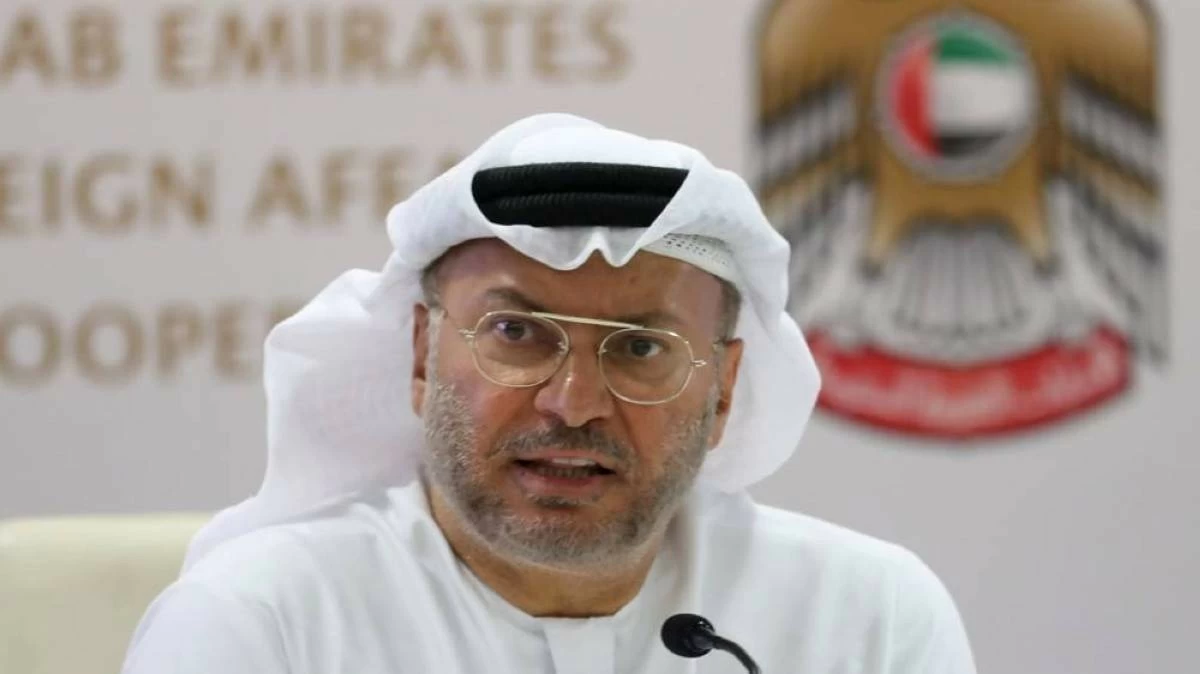
Dr. Gargash, Diplomatic Advisor to the UAE President, restates the three-pillar UAE Gulf-security posture: effective diplomacy, strong economic ties, capable and reliable deterrence. H.E. Dr. Anwar bin Mohammed Gargash posted on X on Friday that the UAE “is aware that dealing with the upcoming challenges requires three pillars: effective diplomacy, strong economic ties, and capable and reliable deterrence,” and that the UAE “will remain committed to the security and stability of the Arabian Gulf, as it is the foundation for shared prosperity.” The statement, carried on Emirates247, is the highest-level UAE public re-statement of Gulf-security posture in the post-deal-narrative window. Read against the Reuters funds story, the three-pillar framing is a careful piece of public signalling: the UAE is publicly recommitting to deterrence and to economic ties as the deal-narrative war runs, without naming the funds report or the Iran file. The structural read is that the UAE is anchoring itself to its Gulf-security role (Al Dhafra, Joint Air Defense, Habshan-Fujairah pipeline) at the precise moment the financial-channel role is being contested in public.
What changed since the previous update (2026-06-13 ~02:30 UTC / Day 106 AM)
From “final, agreed-upon text reached” (Day 106 AM) to “deal could be finalised within 24 hours” (Day 106 PM). The AM cutoff had Pakistani PM Sharif on the record with “final, agreed-upon text” and Iran FM with “never been closer”; the PM cutoff tightens the timeline (Sharif’s “24 hours”) and tightens the Iranian caution (an unnamed Iranian official saying the deal could be signed in the coming days, “temper your expectations”). The direction of travel since the AM is more compression, not less — but the contradiction between Pakistan’s “final” and Iran’s “no timeline yet” is still the single most important unresolved question.
From “Trump lashes IRNA leak as fake” (Day 106 AM) to “NYT analysis: any deal faces a more risk-tolerant Iran” (Day 106 PM). The AM frame was the public framing war — Trump’s “fake” and “dishonorable” attack on the IRNA-leaked draft. The PM frame, via Erlanger’s NYT analysis, is the structural war: the Iranian signatory is not the Iranian signatory the US went to war with, and the new leadership is more willing to take risks. This is a more durable threat to the deal-narrative than the AM’s framing-war coverage, because it survives a “deal-signed” headline.
From “UAE MoFA denies Reuters funds story” (Day 106 AM) to “CNBC second-day wire + Dr. Gargash Gulf-security statement” (Day 106 PM). The AM had the MoFA’s categorical denial on the front page of every UAE wire. The PM adds (1) a second-day CNBC piece restating the Reuters sourcing and the UAE denial, and (2) a separate high-level UAE public statement from Dr. Gargash on Gulf security. The Reuters story is now 24+ hours old, un-retracted, and the UAE has visibly escalated the public counter-framing — the contradiction is being managed in public, not resolved.
From “Lebanon in the IRNA-leaked deal scope” (Day 106 AM) to “five killed in south Lebanon, 24 towns under forced-displacement orders” (Day 106 PM). The AM noted the contradiction in passing. The PM escalates the kinetic reality: a named death toll, named forced-displacement orders, and an Al Jazeera video piece framing the strikes as happening “despite being included in potential peace deal.” The Lebanon file is the most visible, durable contradiction in the deal narrative; it has now lasted two reporting cycles without resolution.
The Khamenei funeral is announced for Tehran, Qom, and Mashhad — the first public-schedule moment of the succession that drives Erlanger’s analysis. A new variable on the timeline: a state funeral in two major cities and a hometown burial, on a date to be confirmed, at a moment when Pakistan is publicly saying “24 hours.” The funeral is the Iranian state’s public mourning moment for the figure whose death is the single largest structural variable in the deal-narrative — and a mass state event during a 24-hour countdown is not a coincidence.
Latest headlines