Iran Conflict — 2026-06-14 (AM)


Current status
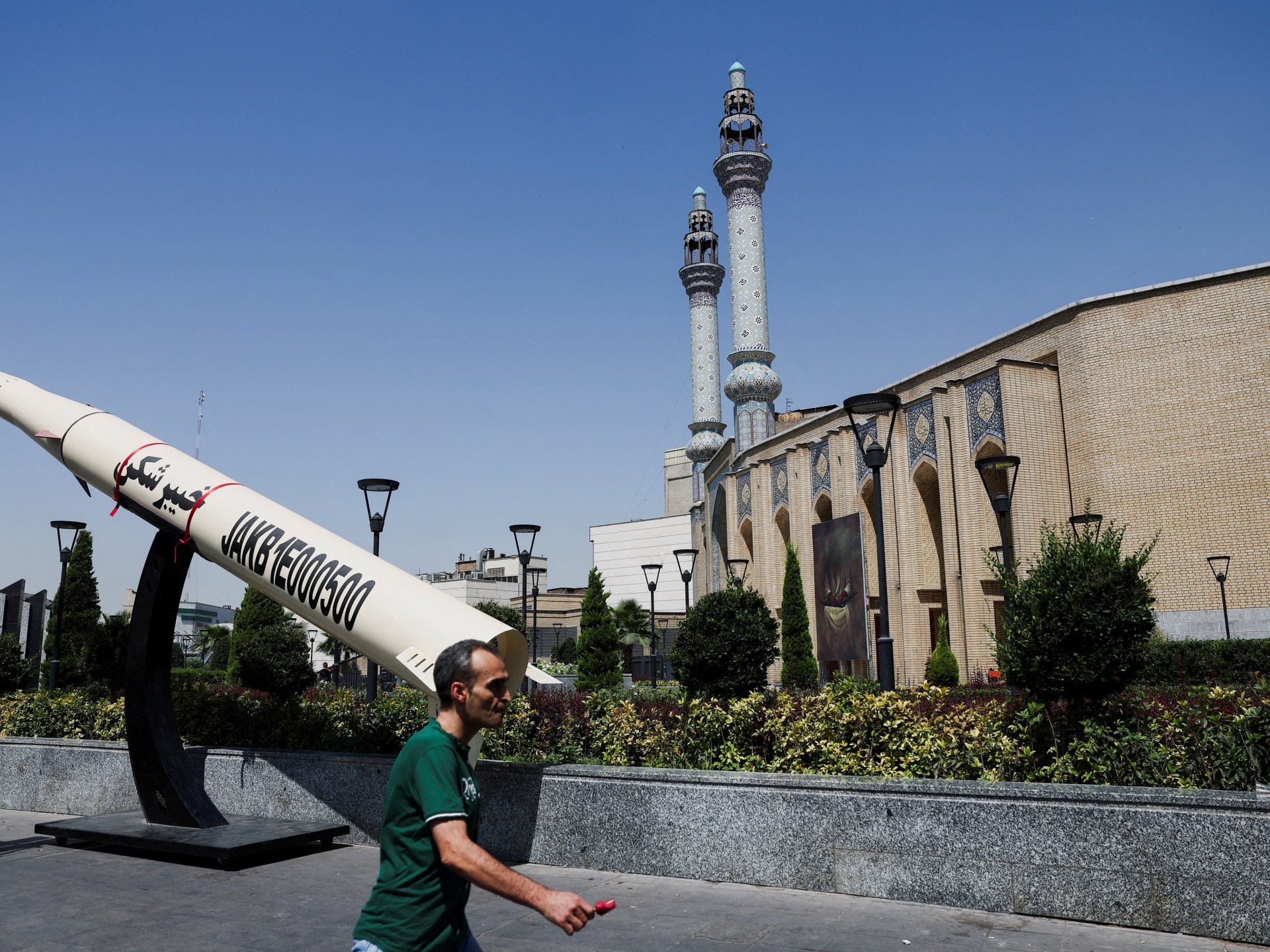
Trump on Truth Social: ’the deal will be signed on Sunday’; Pakistani PM Sharif says ‘we are closer to a peace deal than ever before.’ Strait of Hormuz would be ‘immediately open to all’ on signing. President Trump posted on Truth Social on Saturday that a deal to end the war with Iran will be signed on Sunday, and that the Strait of Hormuz — the chokepoint Iran has blocked since the February 28 US-Israeli strikes — would be “immediately open to all” once the document is signed. Pakistani Prime Minister Shehbaz Sharif, who has been the public mediator of record for the past 48 hours, said on X on Saturday that the two sides had agreed on a framework for a peace deal and that Islamabad was preparing for an electronic signing on Sunday, to be followed by technical-level talks next week. The Sunday-signing line is the tightest, most concrete timeline either side has put on the record since the IRNA-leak text started circulating on Day 105.
Iran’s foreign ministry pushes back: ‘We will have to wait and see about the exact date of the signing of the memorandum of understanding — although it will not be tomorrow.’ Iranian Foreign Ministry spokesperson Esmaeil Baghaei, quoted by Iranian state media on Saturday, cautioned against commenting on the timing of the signing: “We will have to wait and see about the exact date of the signing of the memorandum of understanding, although it will not be tomorrow. The possibility of this happening in the coming days cannot be ruled out. However, due to the hesitation of the other side, we must be cautious in making any comments about this process.” The statement is a step back from Friday’s Iranian foreign minister “never been closer” framing, and is a direct contradiction of the Trump-Sharif Sunday timeline. The official Iranian read is still that the deal is real in concept but conditional in timing; the contradiction is the most important new fact of the AM.
Reuters wire: deal text calls for Hormuz reopening, US lifting the naval blockade on Iranian ports, and a 60-day nuclear follow-on. The US would begin releasing frozen Iranian assets and waive sanctions on its oil exports. Reuters and the regional wires carried the operative terms on Saturday: the proposed MoU calls for reopening the Strait of Hormuz and lifting the US naval blockade on Iranian ports; negotiations over Iran’s nuclear program — Trump’s stated rationale for the war — would take place afterward, during a 60-day follow-on track. The US would begin releasing billions of dollars in frozen Iranian assets and waive sanctions on Iran’s oil exports in return for Iran opening the strait; the 60-day nuclear track would address the dismantling of Iran’s nuclear program and the destruction and removal of its stockpile of highly enriched uranium. Western, Pakistani and Iranian sources pointed to terms that could favor Iran, drawing the now-familiar Trump public pushback.
Iran’s nuclear red line: Araqchi says Tehran’s preferred outcome is down-blending the highly-enriched uranium stockpile, not dismantling it. Foreign Minister Araqchi told Iranian state television on Friday that Iran had not accepted the dismantling of its nuclear program and that Tehran’s “only preferred solution” for its highly enriched uranium stockpile is down-blending the material. The US official who briefed reporters on Friday described the deal as a “performance-based deal” with the dismantling and removal of the HEU stockpile as the end-state; a US official told reporters on Saturday it was “a great deal and a very strong deal” and declined to be drawn on the timing. The HEU disposition is the single most consequential variable in the 60-day follow-on, and the gap between Tehran’s down-blending position and Washington’s dismantling rhetoric is the most likely trigger of a Day 108–109 rupture.
Reuters wire: named signers are US Vice President Vance and Iran’s parliament speaker Mohammad Baqer Qalibaf; Geneva is the likely venue. Araqchi says the deal would be signed remotely before being announced. A Western source told Reuters on Friday that the deal could be signed as soon as Sunday by Vice President JD Vance and Iran’s parliament speaker, Mohammad Baqer Qalibaf, with Geneva seen as the likeliest venue; the US administration official said Europe had been discussed but no decision had been made. Foreign Minister Araqchi added that the deal would be signed remotely before it is announced. Vance, special envoy Steve Witkoff, and Jared Kushner are the US side’s named representatives (per Trump’s Day 105 PM account); Sunday is Trump’s 80th birthday, with a UFC bout on the White House lawn. The named-signer picture, with Iran’s parliament speaker on the Iranian side rather than the president or foreign minister, signals that the text is being framed in Tehran as a parliamentary-track deal rather than a head-of-state one.
Israel attacks Lebanon in open contradiction: explosions shake south Lebanon on Saturday, even as the US signals a Sunday signing. Netanyahu says Israel ‘will not be party to the agreement.’ The Al Jazeera video wire carried Saturday-evening footage of explosions in southern Lebanon, with Israel continuing its attacks on Lebanon as the US signals a Sunday Iran deal. Israeli Prime Minister Benjamin Netanyahu said his country would not be party to the memorandum — a posture that puts Israel structurally outside the deal text, even as it continues to operate militarily on the Iran-aligned Hezbollah front the deal is meant to end. Netanyahu has clashed with Trump in recent weeks over US demands that Israel curb military action in Lebanon to allow Washington to reach a deal with Tehran. The Lebanon kinetic cycle is now the most visible, durable contradiction in the deal narrative; the Day 106 PM forced-displacement orders and five deaths in south Lebanon have been followed by another 12–18 hours of strikes.
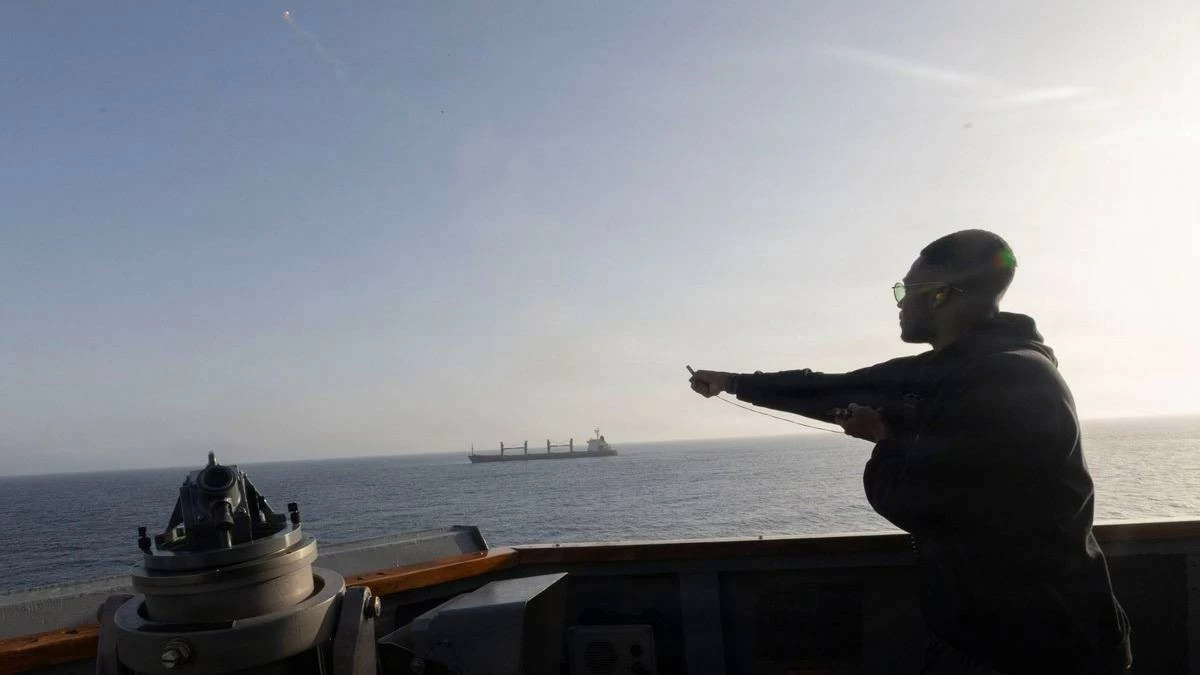
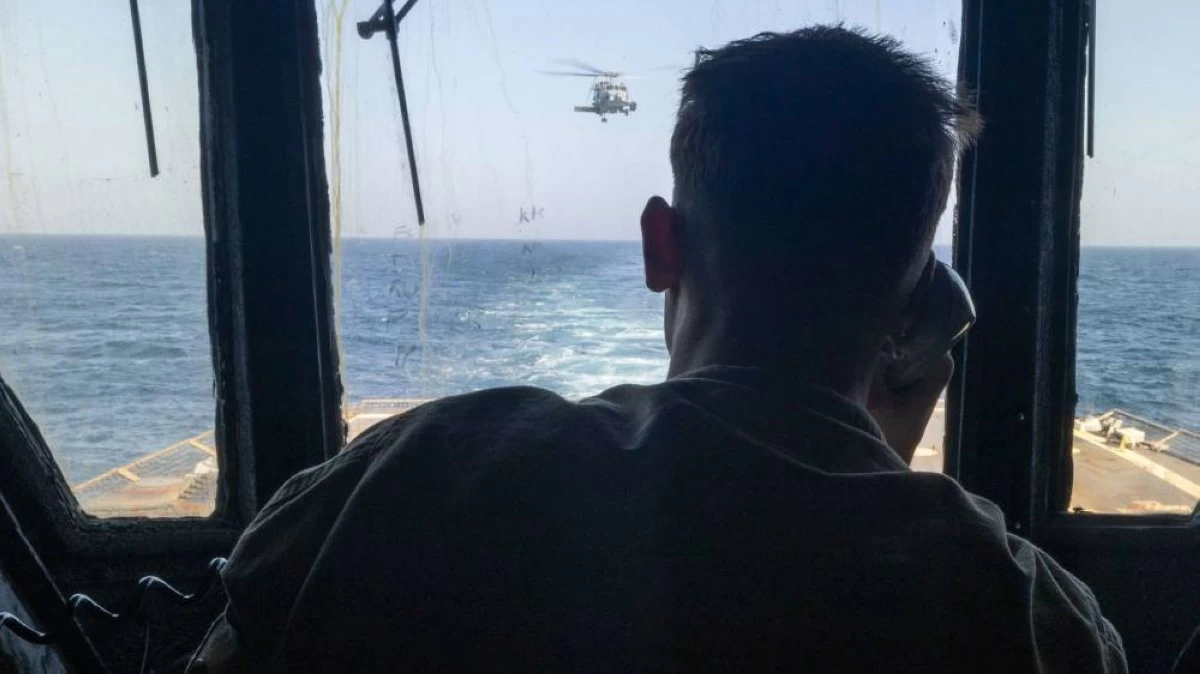
Military action near the Strait of Hormuz: US forces shoot down multiple Iranian one-way attack drones heading toward the strait; CENTCOM confirms the waterway is open for transit. The Emirates247 / Reuters wire from Saturday: hours after senior US administration officials said both sides had agreed on a text and that Washington expected to sign an initial deal in the coming days, US forces shot down multiple Iranian one-way attack drones heading toward the Strait of Hormuz. US Central Command later confirmed the action and said the waterway was open for transit. Iranian news agencies had reported that explosions were heard along the strait in Iran’s Sirik port and Qeshm island, attributed by residents and local officials to shots fired by Iranian forces to warn vessels attempting to cross without permission from the Revolutionary Guards’ navy. The kinetic reality in the strait is the most direct physical contradiction of the deal’s “immediately open to all” framing on the eve of the named signing.
Iranian street view: Iranians divided on peace prospects; state media frames the deal as proof strikes ‘failed to deter’ Iran. Al Jazeera’s Tehran street-level video piece: “Iranians gave mixed reactions as Iran and the US said they were close to an interim agreement to end the war.” A separate Al Jazeera long-form piece — “As Iran and US near a deal, Tehran remembers another recent bloody conflict” — carried an Iranian-authority framing that the year’s assassinations and strikes have “failed to deter” Iran, a domestic-rhetoric line that pre-positions Tehran for a “we held out” victory framing if and when the deal is announced. The Al Jazeera video piece on Iranian street reactions is the first on-the-ground public-read piece since the deal narrative entered the Sunday-signing phase.
Markets: oil falls more than 3% on the news, equity markets rise. The conflict has become a political headache for the White House ahead of November’s midterms. The Emirates247 / Reuters wire: “Progress towards an agreement has emerged at the end of a week that brought a sharp escalation in hostilities in the Gulf, including Israeli-Iranian exchanges of fire and US strikes on Iranian targets, followed by retaliation against US bases. Global stock markets rose and oil prices fell on the news. Brent crude prices were down more than 3% at their lowest in nearly two months.” The piece noted that the conflict has become a political headache for the White House amid rising fuel prices and slipping approval ratings for Trump, and that some Republicans worry the war’s unpopularity could cost them control of Congress in November’s midterm elections. The market reaction is a useful objective pressure: a deal that fails to sign on Sunday will produce an oil reversal and an equity selloff that the political calculus will have to absorb.
UAE / Gulf angle
UAE-relevance on Day 107 AM is structural, not headline-driven: the Hormuz-reopening mechanism, the US lifting the naval blockade, and the UAE’s role as the named-but-undisclosed financial channel from the Reuters Day 106 exclusive. The Day 107 AM wires do not have a fresh UAE-specific headline — the UAE MoFA’s Day 106 categorical denial of the Reuters $3B / $10B funds story is now 36+ hours old and has neither been retracted nor re-confirmed by a second wire. The structural read remains: the deal’s three load-bearing Gulf-relevant clauses (Hormuz reopening, US blockade lift, asset release) all run through the UAE’s waters, the UAE’s financial channels, and the UAE’s diplomatic posture. The Reuters story, if confirmed, positions the UAE as the principal Gulf financial channel for the deal’s first tranche of asset release; the UAE’s public position remains categorical denial. For the Habshan-Fujairah bypass pipeline — which proved its strategic value during the Hormuz-closure phase — the reopening of Hormuz materially changes the operator-economics for the first time since the war began.
Pakistan has crossed from mediator-of-record to deal-architect: Sharif’s Saturday ’electronic signing’ framing puts Islamabad in operational control of the signing mechanism, not just the public-rhetoric role. PM Sharif’s Saturday statement is the most concrete operational detail to come from any of the named mediators to date: Islamabad is preparing for an electronic signing on Sunday, followed by technical-level talks next week. Pakistan has now crossed from the Day 105 PM “we have a deal” call to the Day 107 AM “we will run the signing infrastructure” line. The Gulf side of the deal architecture has not had a similar named-operator moment since the Day 106 PM Reuters funds report; the UAE’s public posture remains categorical denial. The political cost to the UAE of being the financial channel for the deal that Pakistan signed into existence has not been publicly addressed; the Day 107 AM silence on the UAE line is consistent with a deliberate decision to let the deal signing play out before reopening the funds channel.
What changed since the previous update (2026-06-13 ~14:30 UTC / Day 106 PM)
From “deal could be finalised within 24 hours” (Day 106 PM) to “deal will be signed on Sunday” (Day 107 AM) — but with a direct Iranian contradiction on the timing. The Day 106 PM frame was Pakistan’s “within 24 hours” plus the Iranian foreign minister’s “never been closer” caution. The Day 107 AM frame is the most concrete timeline on the public record — Trump’s “Sunday” Truth Social post, Sharif’s “electronic signing on Sunday” framing — paired with the most direct Iranian contradiction to date: Baghaei’s “it will not be tomorrow.” The compression since yesterday is real, but the contradiction has hardened rather than resolved. The most likely Day 107 PM scenario is a Reuters/Washington Post wire either confirming the Sunday signing happened, or confirming it slipped into the “coming days” Iranian frame.
From “any deal faces a more risk-tolerant Iran” (Day 106 PM NYT analysis) to “named signers, named venue, named mechanism” (Day 107 AM Reuters wire). The Day 106 PM NYT analysis by Erlanger was the structural-war framing: a deal is closer but the Iranian signatory is structurally different. The Day 107 AM Reuters wire makes the structural question concrete: Vance and Qalibaf are the named signers, Geneva is the named venue, the mechanism is electronic signing followed by technical-level talks next week. Araqchi’s “signed remotely” framing is consistent with the electronic-signing account. The structural question of “what kind of signatory” is now answered for Day 107 — Iran’s parliament speaker, not the foreign minister, is the named Iranian hand on the document.
From “Strait of Hormuz reopening is the un-named mechanism in the deal text” (Day 106 AM) to “the strait will be immediately open to all on signing” (Day 107 AM Trump Truth Social). The Day 106 AM IRNA-leak had Hormuz control via an Iran-Oman bilateral partnership; the Day 106 PM Al-Monitor / BBC line had moved to “the deal would lead to Hormuz reopening” without naming a mechanism. The Day 107 AM Trump post is the first time the strait’s status on signing has been put in concrete US-side language: “immediately open to all.” The day-after-signing reality is the variable: CENTCOM’s Saturday shoot-down of Iranian one-way attack drones near the strait is the physical test of that commitment on the eve of the named signing.
From “US blockade lift not yet named” (Day 106 PM) to “US would lift the naval blockade on Iranian ports as part of the MoU” (Day 107 AM Reuters). Reuters’ Saturday wire is the first public-record read of the blockade-lift clause. The US blockade on Iranian ports has been one of the most visible escalations of the past two weeks, and its removal — paired with the strait’s reopening — is the most operationally consequential piece of the deal for the Gulf shipping lanes, including the routes that feed the UAE’s ports (Jebel Ali, Fujairah). The blockade-lift + strait-reopen combination is the structural pre-condition for the post-deal shipping normalization that the Habshan-Fujairah bypass pipeline was built around.
From “Lebanon under strike, contradiction unresolved” (Day 106 PM) to “Israel attacks Lebanon on the eve of the Sunday signing, Netanyahu says Israel is not party to the agreement” (Day 107 AM). The Day 106 PM had five killed in south Lebanon, 24 towns under forced-displacement orders, and the IRNA-leak’s Lebanon-in-scope clause still un-resolved. The Day 107 AM frame escalates the contradiction: Israel attacks Lebanon on the same day the US says the deal will be signed, and Netanyahu publicly says Israel “will not be party to the agreement.” The Day 106 PM NYT analysis frame — “Lebanon out of sync with a cautious optimism taking hold elsewhere in the Middle East” — is now the structural reality, not a one-day contradiction. The Lebanon file will outlive the deal signing if it is not named in the signed text.
From “Israel said to expect to retain freedom of action” (Day 106 PM, Israeli defense minister) to “Netanyahu says Israel will not be party to the MoU” (Day 107 AM). The Day 106 PM had Israel’s defense minister saying Israel would not withdraw from occupied areas. The Day 107 AM has Netanyahu saying Israel will not be party to the MoU at all. The position has hardened, not softened, in the 12 hours since the Day 106 PM cutoff. For the Iran side, this is a known variable — Araqchi’s earlier statement that “the agreement would end the war in Lebanon” implies an Israeli withdrawal from occupied areas, which Netanyahu’s Saturday statement rejects. The Lebanon clause is the most likely day-after-signing test of whether the deal text is a peace deal or a memorandum that does not include the only kinetic front still running.
Latest headlines