Iran Conflict — 2026-06-15 (AM)


Current status
US-Iran peace deal announced: signed Friday June 19 in Switzerland, ending nearly four months of war; Pakistan PM Sharif broke the news, Trump confirmed on Truth Social, Iran’s Supreme National Security Council confirmed an ‘immediate and permanent’ end to military operations on all fronts including Lebanon. This is the single most consequential development of the entire 108-day reporting cycle. The full PM Sharif X post: “Following intensive talks, we are pleased to announce that the Peace Deal between the United States of America and Islamic Republic of Iran has been REACHED. The official signing ceremony will be on Friday, 19 June in Switzerland.” Trump’s Truth Social post: “The deal with the Islamic Republic of Iran is now complete. I hereby fully authorize the toll free opening of the Strait of Hormuz, and, simultaneously herewith, authorize the immediate removal of the United States Naval blockade.” A follow-on Trump post: “With the opening of the Strait upon the signing of the Deal on Friday, for purposes of mine removal, oil will flow on both ends again for the Region, and the World!” Iran’s SNSC confirmed the finalized MoU, declaring “immediately and permanently” ceased military operations on all fronts including Lebanon, and confirmed the US naval blockade would be lifted immediately. The 14-page draft MoU (per Iranian state media reporting on Friday) had already named the load-bearing clauses: US lifts oil sanctions; Iran reopens the Strait of Hormuz within 30 days; a 60-day nuclear follow-on track to address dismantling and removal of the HEU stockpile. The structural read: the war that began 2026-02-28 has a signed end-state text, a named date, a named venue, and a named cessation on the Lebanon front that was the kinetic obstacle of the Day 107 reporting cycle.
Trump claims the Strait of Hormuz will be ‘permanently toll-free’ under the agreement; in a call to the NYT, Trump praised Putin and Xi, called Netanyahu ‘a very difficult guy.’ The NYT (Sanger) lede: Trump told the NYT the Strait would be “permanently toll-free” — a sharp escalation of the AM-cycle framing that framed the deal as a one-off reopening. In a separate call to the NYT, Trump praised Russia’s Putin and China’s Xi and described Israel’s Netanyahu as “a very difficult guy.” The Sanger read: the Trump-Netanyahu rift that hardened on Day 107 PM (Trump’s public condemnation of the Beirut strike) is now in print on the page as a personal relationship line, not just a tactical disagreement. The “toll-free” framing is the most aggressive US presidential line on the Strait of Hormuz in the 108-day reporting cycle and is the structural pre-condition for the post-deal shipping normalization that the Habshan-Fujairah bypass pipeline was built around. For Iran, the framing also names a US commitment to non-extraction of transit fees — a long-standing Iranian red line in any pre-war Hormuz transit deal.
World leaders welcome the deal: UK, France, Germany, Italy signal willingness to lift Iran sanctions; Japan PM Takaichi calls it ‘a major step toward resolution’; Qatar calls it ‘an important step towards consolidating sustainable peace.’ The E4 joint statement (UK, France, Germany, Italy), per the BBC live wire: “a moment of opportunity to restore regional stability and stabilise the global economy,” with the call to “implement rapidly and comprehensively” and for “urgent reopening of the Strait of Hormuz with unconditional and unrestricted freedom of navigation.” The E4 also committed: “Iran must never acquire a nuclear weapon. We stand ready to work with the US, Iran and the IAEA to this end.” UK PM Keir Starmer welcomed the deal as a “hugely important step forward in ending the war,” stressing the Strait must remain “fully and permanently open.” Japan PM Sanae Takaichi (Google translation of her X post): the deal is “a major step toward resolution,” with Tokyo “strongly hop[ing] that this memorandum will be steadily implemented, that free and safe navigation in the Strait of Hormuz will be actually ensured, and that a final agreement on Iran’s nuclear issue and other matters will be realized at the earliest possible date.” Qatar’s MoFA statement: the deal is “an important step towards consolidating sustainable peace and promoting economic growth regionally and internationally.” The aggregate G7 framing: the deal is the dominant agenda item at this week’s G7 summit in France, and Trump’s post-deal diplomatic positioning is now backed by the E4, Japan, and Qatar on the day the deal is announced. Two Gulf states (Qatar, plus Pakistan as named mediator) have named operational lines in the deal architecture.
Markets: oil -4.7% to $80.83 (WTI), Brent -4% to $83.77; Nikkei +3.6%, Kospi +5.1%, Topix +2.6%, ASX 200 +1.3%; gold still bid at $4,302 (+2%) as investors hedge signing risk. The strongest reaction was in energy markets — US crude futures for July delivery were down 4.77% to $80.83 per barrel; Brent for August traded about 4% lower to $83.77. Asian equities surged on the reopen. US dollar index weakened 0.32% to 99.483; 10-year Treasury yield fell 5 bps to 4.423% — falling yields alongside rising equities confirms the market is treating the energy shock as transitory. Gold at $4,302 — eToro’s Josh Gilbert: “the deal isn’t actually signed until June 19th, the details are still thin, and this conflict has shown more than once that headlines can turn on a dime.” CBA’s Vivek Dhar expects Brent to fall to around $80 a barrel by year-end “assuming the Strait remains open and exports recover,” warning that “damage to refining infrastructure, the presence of sea mines and uncertainty over tanker traffic could slow the return to normal operations.” The structural read: the market is repricing the inflation-risk premium that has dominated since February; the major central banks (Fed, ECB) have a busy week of policy meetings, and the deal removes the energy-shock input that drove the ECB’s quarter-point rate hike last week.
Trump heads to G7 summit in France on Monday; G7 likely to address the Iran deal alongside the Russia-Ukraine war. Vance: deal is ‘a great thing for the American people’ — ‘drive down the cost of energy, not just now but for the long term.’ Trump’s G7 attendance is now the named post-deal diplomatic set-piece: the summit starts Monday in France and brings together Canada, France, Germany, Italy, Japan, the UK, and the EU. The CNBC framing: the G7 will address “the Iran peace deal, as well as Russia’s war against Ukraine, which continues to rage in eastern Europe.” On Fox News immediately after the deal was struck, Vice President JD Vance: “I know that they suffer from high gas prices, the President has certainly been very concerned about that fact. What we’re going to be able to do is drive down the cost of energy, not just now but for the long term.” The structural read: the deal is now a domestic political asset for the Trump administration (energy-cost relief) and a multilateral framing device for the G7 (regional stabilization, sanction architecture). Both framings are now in print, on the day the deal was announced.
In Israel, broad discontent even before the deal’s details are known: ’the agreement appears to leave fundamental security threats posed by Iran unaddressed.’ The NYT (Kershner) lede: “Israelis across the political spectrum have said the agreement appears to leave fundamental security threats posed by Iran unaddressed.” The Kershner read is the most explicit NYT byline of the day on the Israel-deal contradiction, building on the Day 107 PM Netanyahu “Israel will not be party to the agreement” line and the Day 107 PM Beirut strike that hardened the US-Israel public split. The structural read: Israel is publicly the most-exposed state on the deal — the text that ends the war does not include Israel, the kinetic front in Lebanon has not stopped, and the Israeli public framing is that the deal leaves the Iranian nuclear program and the Iran-aligned Hezbollah threat structurally unresolved. The Day 107 PM Trump condemnation of the Israeli Beirut strike is now compounded by the Day 108 AM Trump-Netanyahu “very difficult guy” framing — the most direct US presidential line on the personal relationship with Netanyahu in the 108-day reporting cycle.
Trump allies cheer the announcement; Democrats call for clarity — no official terms released, signing set for Friday. The Al Jazeera wire: “US and Iran say memorandum of understanding to be signed on Friday, but no official terms yet released.” The structural read: the deal text is named (MoU), the signing is named (Friday in Switzerland), and the substantive terms (Hormuz toll-free, blockade lift, Lebanon cessation, 60-day nuclear follow-on) are in the public record — but the full 14-page draft is not yet released. The 4-day gap between the announcement and the signing is the new operational window for the most consequential 108-day reporting cycle decision: whether the deal text holds the four days to Friday, or whether the kinetic and political risks of the deal architecture produce a Day 109–112 rupture.
UAE / Gulf angle
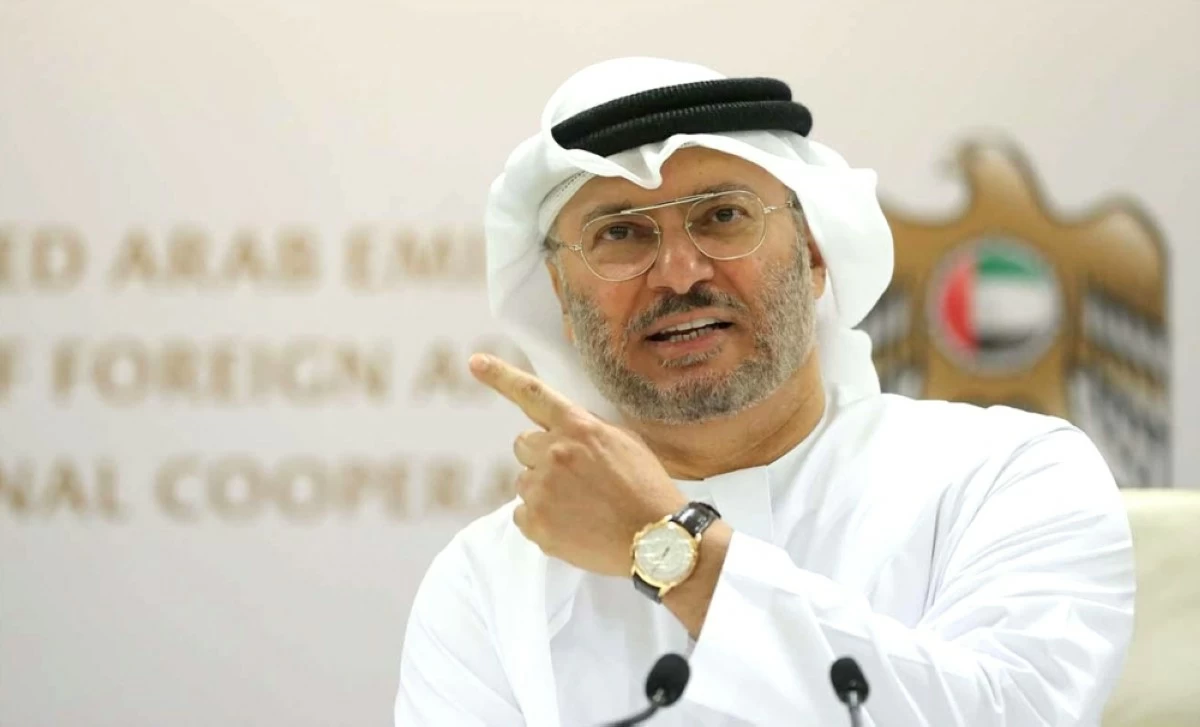
UAE-relevance on Day 108 AM is named and headline-driven: Anwar Gargash publicly praises UAE leadership’s handling of the Iran crisis, framing the UAE’s posture as ‘wisdom, steadfastness in positions, and flexibility when required.’ The Emirates247 wire (Gargash X post, Sunday 9:47 AM Dubai time): “As we approach the signing of the anticipated agreement between Washington and Tehran, which will turn the page on the war and open a political path that we hope will be successful, we cannot help but commend our wise leadership’s handling of this crisis and its repercussions.” Gargash added: “The UAE’s position reflects a consistent approach based on balance and adaptability during different stages of the crisis. We have never been advocates of war, and we will always remain advocates of peace and stability, while firmly committed to defending the homeland and preserving its sovereignty and interests.” This is the most explicit UAE-named wire of the 108-day reporting cycle on the Iran crisis, and the first UAE government-aligned public statement on the deal text itself. The structural read: the UAE is publicly positioning itself as a named, on-record supporter of the deal — not just a transit and financial channel, but a named diplomatic endorser of the diplomatic line that produced it. The Gargash framing (wisdom, balance, flexibility) is the named Gulf diplomatic template for the day-of-deal posture; the UAE is now on the diplomatic record before the Friday signing.
The structural Gulf posture on Day 108 AM is the convergence of named Gulf state lines on the deal: Qatar welcomed the agreement as ‘an important step towards consolidating sustainable peace’; Pakistan is the named mediator; the UAE (Gargash) named the UAE leadership’s handling; the E4 and Japan are the named diplomatic backers. The Habshan-Fujairah bypass pipeline is the structural pre-condition for the post-deal shipping normalization question that the named Gulf lines have all addressed. Three Gulf states (UAE, Qatar, Pakistan) have named operational or diplomatic lines on the deal as of Day 108 AM. The Reuters wire’s day-after-deal “60-day nuclear follow-on” track is the named next 60 days of the diplomatic architecture, but the structural pre-condition for the post-deal shipping normalization is the immediate and permanent end to military operations on all fronts including Lebanon — which Iran’s SNSC confirmed in the announcement, and which the Israeli public line (Kershner/NYT) does not accept. The Habshan-Fujairah bypass pipeline is structurally conditioned on the post-deal Hormuz-reopen + US-blockade-lift combination, and the day-of-deal news is that both clauses are now in the public text, signed Friday. The named Gulf variable that has not yet been addressed in the public text: the Reuters Day 107 wire’s report of the as-yet-unconfirmed $3B / $10B funds pipeline through UAE financial channels. The UAE MoFA’s Day 106 categorical denial of that pipeline is now 84+ hours old and has neither been retracted nor re-confirmed.
What changed since the previous update (2026-06-14 ~18:30 UTC / Day 107 late PM)
From “Trump condemns the Beirut strike, deal ‘very close’ but unsigned” (Day 107 late-PM) to “US-Iran peace deal ANNOUNCED, signed Friday June 19 in Switzerland” (Day 108 AM). The late-PM cycle ended with Trump’s ABC-This-Week “very close” framing, his explicit condemnation of the Beirut strike (“this morning’s attack on Beirut should not have happened, particularly on a special day when we are so close to a peace deal with Iran”), and the Waltz “every intent” line. The AM cycle opens with the deal announced: PM Sharif on X, Trump on Truth Social, Iran’s SNSC confirmation, Friday Switzerland signing, “immediately and permanently” ceased operations on all fronts including Lebanon, US naval blockade “lifted immediately,” Strait of Hormuz “toll-free” and opening on Friday. The 12-hour delta is the most consequential single delta of the 108-day reporting cycle: the deal that was “very close” at sunset on Day 107 is “REACHED” at sunrise on Day 108.
From “the in-person Geneva signing was scrapped, electronic signing was the new mechanism” (Day 107 late-PM) to “Friday June 19 signing in Switzerland, mechanism TBD” (Day 108 AM). The late-PM had the in-person Geneva signing scrapped, with the mechanism now electronic. The AM has the signing now in Switzerland (not Geneva) on Friday June 19, with the mechanism not specified. Pakistan is named as the mediator of record, and Sharif himself broke the news on X. The venue has changed (Switzerland, not Geneva); the date has hardened (Friday, not Sunday); the mechanism is now an open question (electronic vs in-person, not yet specified). Three different variables on the same day-to-signing question the late-PM had named as the most concrete operational detail in the deal architecture.
From “the Lebanon file is the US-Israel public split” (Day 107 late-PM framing) to “the Lebanon file is now in the deal text — ‘immediately and permanently’ ended” (Day 108 AM framing). The late-PM had the Beirut strike as the kinetic test of the deal text and the US public condemnation as the most direct US presidential break with Israel in the 108-day reporting cycle. The AM has Iran’s SNSC naming “all fronts, including Lebanon” as part of the immediate-and-permanent cessation, and the Israeli public line (Kershner/NYT) that the deal “appears to leave fundamental security threats posed by Iran unaddressed.” The Lebanon file is no longer a public US-Israel split; it is now a text-vs-text contradiction: Iran’s text says the Lebanon operations have ended, Israel’s public line says the fundamental security threats are unresolved. The Kershner framing is the most explicit Israeli-side rejection of the deal’s text in the 108-day reporting cycle.
From “no bylined US coverage of the day” (Day 107 late-PM) to “NYT bylines (Swan/Fassihi/Bergman; Sanger; Kershner) on the deal announcement” (Day 108 AM). The late-PM had NYT live blog and analysis piece framing. The AM has three NYT bylines on the deal: Swan/Fassihi/Bergman on the main deal, Sanger on the Trump-NYT call and the toll-free framing, Kershner on the Israeli discontent. The aggregate NYT framing: the deal is a major realignment (Sanger: “toll-free”; Swan/Fassihi/Bergman: “halts hostilities” but “leaves unresolved the critical issue of Iran’s nuclear program”) and a major Israeli rejection (Kershner: “broad discontent even before deal’s details are known”). The NYT’s institutional framing of the deal — as a realignment that is celebrated, unfinished, and contested — is the most authoritative AM addition to the reporting cycle.
From “no world-leader welcome statements” (Day 107 late-PM) to “E4 + Japan + Qatar + UK + named US officials” all on the record welcoming the deal (Day 108 AM). The late-PM had Trump’s condemnation of the Beirut strike and the Qatari emergency mediation in Tehran. The AM has the E4 joint statement, Starmer’s statement, Takaichi’s statement, Qatar’s MoFA statement, and the named US official line (Vance, Trump, Sharif as mediator). The multilateral welcome is the dominant named diplomatic addition of the AM cycle: the deal that was a US-Iran bilateral text in the late-PM is now a multilateral text with named backers on Day 108 AM.
From “UAE was structural, not headline-driven” (Day 107 late-PM) to “UAE is named and headline-driven — Gargash X post on UAE leadership” (Day 108 AM). The late-PM UAE-relevance section had the Emirates247 wire carrying the Trump condemnation as the Gulf-aggregator line, and the structural read on the UAE’s role as principal Gulf financial channel for the deal’s first tranche of asset release. The AM has the named UAE wire of the 108-day reporting cycle: Gargash publicly praising the UAE leadership’s handling of the crisis, framing the UAE posture as wisdom, balance, and flexibility. The UAE is now on the diplomatic record on the deal text itself, with a named senior government-aligned endorser. The structural read: the UAE’s named diplomatic endorsement of the deal text is the AM cycle’s most consequential UAE-specific line, and it is the first named UAE public line on the day-of-deal posture.
Latest headlines


