Iran Conflict — 2026-06-15 (PM)


Current status
NYT assessment: Trump “winds down the war he started” with “goals unmet” — Iran deal opens Hormuz and offers economic relief, but the nuclear program is deferred to further talks. Erica L. Green and Zolan Kanno-Youngs frame the deal as a win Trump is selling as a full victory but that the NYT reads as a partial settlement. The “much remains unfinished” framing covers the nuclear program (still on the negotiation table, not in the text), the duration of Iran’s enrichment suspension (Erlanger: “it is unclear for how long”), and the durability of the Hormuz reopen if the deal ruptures. The NYT’s Leo Sands “What to Know” piece explicitly notes the text “defers the most contentious issues” to a follow-on track.
Lebanon is the load-bearing ambiguity: Iran claims the deal extends to fighting in Lebanon, Israel says its forces will remain there, no public text confirms either reading. Christina Goldbaum’s NYT byline — “U.S.-Iran Agreement Leaves Lebanon’s Fate Murky” — is the most explicit PM-cycle wire on the Israel-deal contradiction. Iran publicly claims the deal includes a cessation “on all fronts including Lebanon”; Israel has said it will not be party to the MoU and that its forces will remain. The structural read: the Lebanon file is the first place the text-vs-text contradiction produces a kinetic test, and the 4-day gap to Friday’s signing is the window in which that test is most likely to fire.
Vance on CNBC’s Squawk Box: “a lot” of Iran deal details to figure out, but US has “all the cards” in subsequent nuclear talks. The Vance framing is the most explicit US-side line of the PM cycle on the architecture of the deal: signing the MoU does not finish the negotiation; it is the precondition for the 60-day nuclear follow-on. The “all the cards” framing is a direct Vance echo of the Day 108 AM Trump Truth Social posture (lifting blockade, “toll-free” Hormuz) and sets the US negotiating posture for the next 60 days. It also signals the second-track timeline: even with a Friday signing, the operational Iran-US negotiation is not done, and the most consequential US presidential line is that the US holds the leverage.
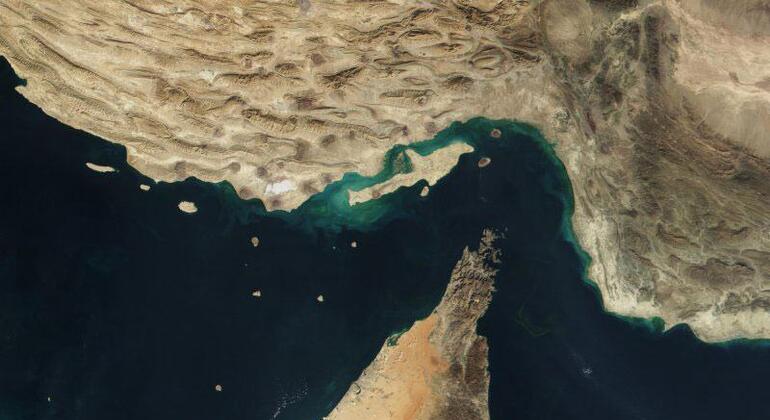
UN opens a Hormuz aid corridor while world waits for the deal text: Guterres welcomed the deal Sunday as a “critical step,” the UN on Monday pressed for an aid corridor to prevent a global hunger crisis. Two UN wires on the same day frame the dual pressure: Guterres’ Sunday wire treats the deal as the political breakthrough; Monday’s wire from the UN humanitarian system names the operational follow-on — an aid corridor through the Strait of Hormuz to prevent a hunger crisis. The 20,000 stranded seafarers (per Al Jazeera) are the named human cost of the 108-day closure. The UN framing: the deal is necessary but not sufficient; the humanitarian track needs a parallel corridor agreement.
Pakistan’s PM Sharif claims mediator credit; Al Jazeera reports deal likely to be finalised in Geneva, but Sharif’s own X post said Switzerland on June 19 — the venue is now a two-source contradiction. Al Jazeera’s wire reports Sharif “praises Pakistan’s army chief for his efforts in securing a tentative deal, likely to be finalised in Geneva” — the Geneva line is new on Day 108 PM and contradicts Sharif’s own earlier X post that named Switzerland as the Friday signing venue. The NYT “What to Know” wire does not name a venue. The structural read: the venue is one of the unresolved details, and Pakistan’s army chief is now the named Pakistani counterpart to PM Sharif on the diplomatic architecture.
Israel’s public posture: NYT’s Halbfinger/Bergman byline calls the US-Iran framework “Netanyahu’s life project failed.” The NYT byline is the most explicit PM-cycle framing of the Israel-deal contradiction: the US-Iran framework “appears to omit some of the most important provisions that Israel wanted.” Al Jazeera’s wire (“Netanyahu’s life project failed with US-Iran deal”) is the explicit named-quote version. The structural read: Israel is publicly on the losing side of the deal text — not opposing it on tactical grounds, but on the structural grounds that the deal as written leaves the Iran threat unaddressed. The Israeli public posture is now coherent on one line (the deal is bad for Israel) but is silent on what comes next if the deal signs Friday.
Hormuz reopen: oil recovery will be slow, dependent on shipper confidence in deal durability; Kalshi traders bet traffic returns to normal “as soon as August.” Rebecca F. Elliott’s NYT byline frames the energy-track recovery as conditional on deal-holding: “the pace of the recovery will depend on how confident companies are that the deal between the United States and Iran will hold and be extended.” Kalshi’s prediction market is now naming a specific window — August — for traffic normalization. U.S. crude dropped below $80 for the first time since March on the news. The structural read: the energy market is pricing the deal, but the operational shipping market is waiting for a durability signal.
China and oil: NYT’s Friedman/Stevenson byline — China “moves the price of oil, even when it buys less.” The China frame is the structural read on the post-deal energy market: China cut its imports in the first three months of the war, cushioning the global market; the question for the post-deal energy market is whether China resumes full buying or stays hedged. This is the named PM-cycle variable on the post-deal price formation mechanism.
UAE / Gulf angle
UAE-relevance on Day 108 PM is structural on three lines, named on zero: (1) the deal’s load-bearing clauses — Hormuz reopen, US naval blockade lift, asset release through Gulf financial channels — all run through UAE waters, ports, and banking; (2) the named Gulf-aligned mediator list is now Pakistan, Qatar, and the UAE (per Day 108 AM Gargash), with no fresh PM-cycle UAE wire; (3) the Habshan-Fujairah bypass pipeline remains the structural pre-condition for the post-deal shipping normalization question, but the named PM-cycle wires (Elliott, Kalshi) do not name the UAE explicitly. The aggregate PM-cycle UAE read: the deal architecture as published would not function without UAE waters (Hormuz transit), UAE ports (Jebel Ali for the post-deal shipping normalization; Fujairah as the bypass-pipeline terminus), and UAE financial channels (the Reuters Day 107 $3B/$10B funds pipeline, which the UAE MoFA’s Day 106 denial has neither retracted nor re-confirmed in the 96 hours since). The named operational Gulf variables in the Day 108 PM cycle: Pakistan as the named mediator of record with a Friday Switzerland-vs-Geneva venue contradiction, and Qatar as the named operational push on the day the deal was supposed to be signed (Day 107 PM). The UAE’s named public posture remains the Day 108 AM Gargash X-post praise of the UAE leadership’s handling — and that line has neither been re-confirmed nor extended in the PM cycle. The Day 108 PM has no fresh UAE wire; the structural read is that the UAE is in the deal architecture as a transit, ports, and financial channel, but is not on the public record as a named operational line in the post-signing window.
What changed since the previous update (2026-06-15 ~02:30 UTC / Day 108 AM)
From “deal announced, signed Friday June 19 in Switzerland, all details still in motion” (Day 108 AM) to “deal architecture now partially public: Lebanon in the text (per Iran), out of the text (per Israel), 4-day signing window” (Day 108 PM). The Day 108 AM cycle ended with the deal announced, the Friday Switzerland signing announced, the “toll-free” Hormuz framing announced, the Iran SNSC “immediately and permanently” framing announced, and the multilateral welcome statement (E4 + Japan + Qatar) complete. The PM cycle has hardened three of the named ambiguities into named public contradictions: (1) Lebanon is in the deal per Iran and out of the deal per Israel, with Goldbaum’s NYT byline as the explicit “murky” framing; (2) Vance’s “all the cards” Squawk Box line is the most explicit US-side post-signing negotiating posture, naming the 60-day nuclear follow-on as the next operational track; (3) the NYT “winds down the war he started with goals unmet” framing by Green/Kanno-Youngs is the most explicit US-press framing of the deal as a partial settlement. The 12-hour delta is the move from “deal announced” to “deal architecture partially public and partially contested.”
From “Gargash publicly endorsed the deal; UAE as named, on-record diplomatic endorser” (Day 108 AM) to “no fresh UAE wire in PM cycle; UAE remains structural (transit/ports/finance) but not headline-driven” (Day 108 PM). The AM cycle had the named UAE wire of the 108-day reporting cycle — Gargash’s X-post praise of the UAE leadership’s handling. The PM cycle has no fresh UAE wire: the Elliott NYT byline on Hormuz recovery, the UN aid-corridor wire, the Pakistan/Geneva wire, the Vance/CNBC wire, the NYT “winds down”/“celebrates a win” Green/Kanno-Youngs bylines, the Lebanon/Goldbaum byline, the Erlanger nuclear byline, the Halbfinger/Bergman Israel-strategy byline, the Friedman/Stevenson China-byline, the Kalshi byline, and the Trump-birthday Sky News byline are the named PM wires — none carry a UAE line. The structural read: the UAE’s role is in the architecture (Hormuz, ports, finance) and the named operational answer for the post-signing period is now Pakistan (mediator of record) plus Qatar (operational push), with the UAE as the structural transit/ports/finance channel whose role will become more visible in the next 60 days as the blockade-lift + asset-release clauses execute.
From “Guterres welcomed the deal, Vance and Trump on the record, world leaders welcomed” (Day 108 AM) to “UN opens a parallel humanitarian aid corridor to Hormuz; Kalshi traders name August as the predicted traffic-normalization window” (Day 108 PM). The AM cycle ended with the multilateral welcome complete. The PM cycle adds the operational follow-on tracks: the UN humanitarian system opening an aid corridor wire (Monday), the Kalshi prediction market naming a specific August window for traffic normalization, the Elliott NYT byline framing the energy-track recovery as conditional on deal durability, and the Vance “all the cards” line as the explicit US negotiating posture for the 60-day nuclear follow-on. The 12-hour delta is the move from “deal welcomed” to “deal architecture being operationalized.”
From “Israel is publicly discontent, not yet named” (Day 108 AM, Kershner NYT) to “Israel is named in the Halbfinger/Bergman byline as having ‘failed,’ and Al Jazeera carries the ‘Netanyahu’s life project failed’ quote” (Day 108 PM). The AM cycle ended with the Kershner NYT byline on broad Israeli discontent. The PM cycle has the most explicit NYT framing of the Israel-deal contradiction yet: Halbfinger and Bergman’s byline — “Israel Counts the Ways That Netanyahu’s Iran Strategy Failed” — names the US-Iran framework as omitting provisions Israel wanted. Al Jazeera carries the named “Netanyahu’s life project failed” quote. The aggregate Israel framing has moved from “discontent” to “named failure” in 12 hours. The Lebanon file (Goldbaum) is the most kinetic test of the Israel-deal contradiction in the PM cycle.
From “Pakistan is the named mediator of record, Friday Switzerland signing” (Day 108 AM) to “Pakistan claims mediator credit with army chief named; Al Jazeera wire contradicts Sharif’s earlier Switzerland line, now says Geneva” (Day 108 PM). The AM cycle named Sharif and Pakistan as the mediator of record with the Friday Switzerland signing. The PM cycle adds the Al Jazeera wire praising Pakistan’s army chief, but also names Geneva as the likely finalisation venue — a two-source contradiction with Sharif’s own earlier X post. The NYT “What to Know” wire does not name a venue. The structural read: the Friday signing is now confirmed by all sources, but the venue is one of the named unresolved details, and Pakistan’s role has hardened from “mediator” to “named mediator with a named army chief counterpart.”
Latest headlines