Iran Conflict — 2026-06-21 (PM)


Current status
Both delegations physically present at Burgenstock as talks harden into substance; Iran reasserts Hormuz closure claim that CENTCOM data already refuted. CNBC: “U.S. and Iranians meet in Switzerland for talks, overshadowed by Strait of Hormuz claims” — “With scant sign of an end to fighting there, Iran said it had again shut the Strait of Hormuz, though the U.S. has denied that claim.” The structural read: the NOON cycle’s “both delegations on-site + Lebanon as agenda” frame has now hardened into a PM cycle “substantive published analysis emerges + closure claim reasserted” frame. The IRGC’s verbal denial vs CENTCOM counter-data contest from the morning cycle is now operating in a second round within 12 hours.
NYT profiles the three Iranian decision-makers steering the Burgenstock track: Supreme Leader Khamenei, Foreign Minister Araghchi, and Parliament Speaker Qalibaf. Yeganeh Torbati in NYT: “Iran’s supreme leader, foreign minister and parliament speaker all play central roles in hammering out an agreement with Washington.” The structural read: PM cycle adds the who-decides layer to the NOON cycle’s who-arrived layer — naming the three principals and their distinct remits (Khamenei = ultimate sign-off, Araghchi = negotiating face, Qalibaf = domestic political anchor) clarifies why a deal that satisfies all three is structurally harder than a deal between Vance and one counterpart.
NYT: Iran Nuclear Talks Expected to Hinge on These 4 Questions. Leo Sands in NYT: “Tehran insists that its nuclear program is for peaceful purposes. The Trump administration is demanding assurances that Iran cannot secretly develop a weapon.” The structural read: the PM cycle has moved past the meeting is happening frame to the these are the four unresolved files frame. The published-question formulation (enrichment level, breakout time, IAEA access, weaponization evidence) is now the official NYT map of what Burgenstock must resolve.
Al Jazeera: Why Lebanon may make or break the Iran-US deal. “Israeli escalation in Lebanon threatens to undermine agreement between Tehran and Washington, analysts say.” Companion piece on who’s attending: “Iran wants the US to pressure Israel to stop the war in Lebanon, which has reeled from renewed attacks.” The structural read: the NOON cycle’s “Lebanon as the named first-order agenda item” frame has now hardened into a PM cycle “Lebanon as the deal-breaker” frame — analysts are publicly naming the file as the one most likely to collapse the track. This is the single biggest delta between the morning’s optimism and the afternoon’s caution.
NYT: Neither the War Nor Trump’s Deal Terminated the Main Threats in Iran, Analysts Say. Neil MacFarquhar in NYT: “Neither the war nor the agreement terminated the main threats emanating from Iran, many analysts said.” The structural read: PM cycle adds the deal skepticism layer. The published NYT analysis joins the Al Jazeera Lebanon piece in publicly framing the MOU as insufficient to terminate the underlying threat profile. This is the editorial-line delta of the PM cycle: from “deal is happening” to “deal may not be enough.”
Al Jazeera opinion: The deal with Iran may be imperfect but it is what the American people want. “The Iran war has put the US in a difficult position, but Trump has made the most of it.” The structural read: PM cycle pairs the NYT analyst-skepticism frame with a countervailing Al Jazeera opinion frame arguing the deal is domestically consumable even if imperfect. Both papers are publicly running the “deal-with-caveats” line in parallel.
NYT: A Glamorous Swiss Resort Hosts Officials for U.S.-Iran Talks — the Bürgenstock Resort Lake Lucerne has hosted some of the world’s wealthiest and most powerful people for more than 100 years. Ephrat Livni in NYT. The structural read: a softer-profile PM cycle piece — NYT publishes the venue-essay angle that pairs naturally with the substantive deal-coverage. Not a policy signal; useful as the cultural-bookend frame for the Burgenstock story.
UAE / Gulf angle
Burgenstock with Lebanon as the named deal-breaker is the principal UAE-facing diplomatic file of the PM cycle. For the UAE — with its east-coast port complex (Jebel Ali, Fujairah, RAK), its direct Hormuz-fee economic interest, and its established Oman-Iran back-channel — the named PM-cycle signal is that published analysis now publicly names Lebanon as the file most likely to collapse the deal. The named UAE-facing question is no longer “is the deal happening” but “what does UAE exposure look like if Lebanon breaks it in 48 hours.” If Iran walks away from Switzerland over Israeli operations in Lebanon, the exposure chain runs Hormuz → Fujairah transshipment → ADNOC offshore in a single cycle. The PM cycle has added two distinct published analysis pieces (Al Jazeera Lebanon-hinge + NYT deal-skepticism) explicitly modelling this risk.
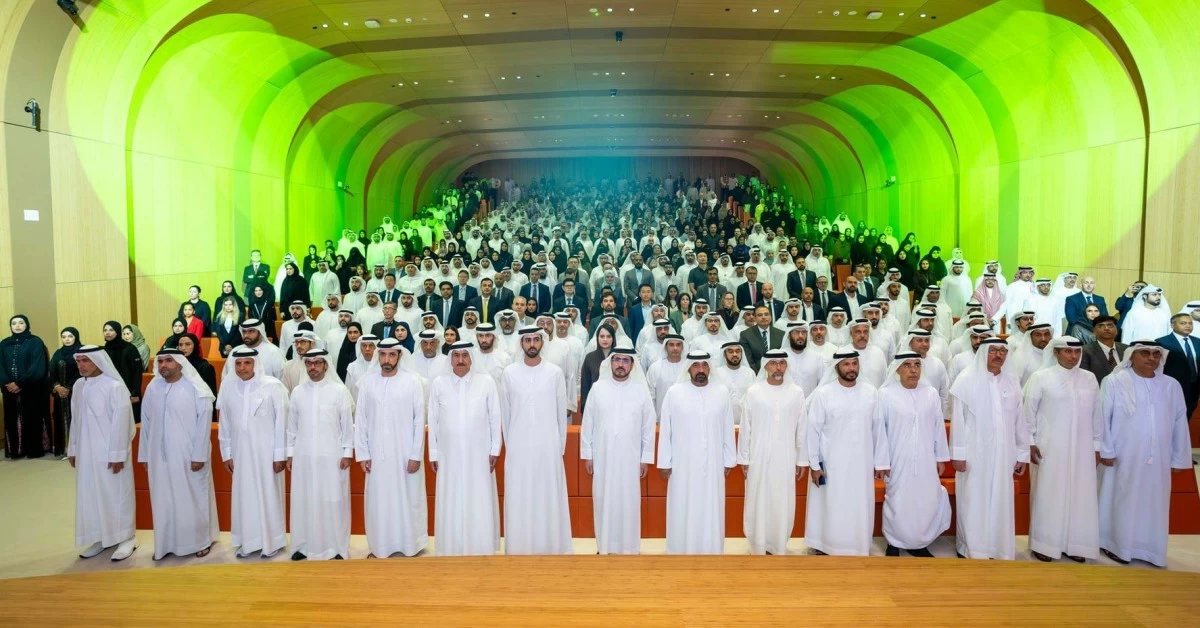
Dubai launches DEWA International — a global energy subsidiary anchored at Sheikh Ahmed bin Saeed Al Maktoum’s announcement. Emirates247 / WAM: “H.H. Sheikh Ahmed bin Saeed Al Maktoum, Chairman of the Dubai Supreme Council of Energy, announced, in the presence of Saeed Mohammed Al Tayer, MD and CEO of Dubai Electricity and Water Authority (DEWA), the establishment of ‘DEWA International’, a wholly owned independent subsidiary. The entity aims to develop conventional and clean energy projects worldwide and export Dubai’s successful energy and water infrastructure model to global markets.” Held at Al Shera’a, DEWA’s new headquarters, attended by Suhail Al Mazrouei (Minister of Energy). The structural read: PM cycle adds a UAE-domestic signal parallel to the Iran track — Dubai is publicly institutionalising its energy-export model even as the regional kinetic environment tests it. DEWA International is named as the vehicle through which the Dubai energy-and-water model goes global; the named UAE-facing question is whether this export push accelerates or pauses as Burgenstock unfolds.
The CENTCOM-published-throughput (55 vessels, 17M barrels) data is the named UAE-facing shipping-security baseline of the PM cycle. For the UAE — with its Fujairah terminal, ADNOC offshore operations, and Habshan-Fujairah pipeline — the named PM-cycle signal is that the morning’s hard-data refutation of the IRGC claim remains the operative verification benchmark. Iran’s PM-cycle reassertion that it has “again shut the Strait” now sits against the published CENTCOM throughput from the morning cycle. UAE-flagged shipping and Fujairah transshipment volumes can be publicly cross-checked against the named operational baseline.
The Lebanon-as-deal-breaker frame is the named UAE-facing kinetic exposure of the PM cycle. For the UAE — which has a named interest in regional stability frameworks — the named PM-cycle signal is that published analyst voices (Al Jazeera + NYT) now treat the Israel-Hezbollah kinetic track as the structural risk to the Burgenstock deal. This raises the named UAE-facing question of whether the MOU can survive a single Israeli operation in Lebanon without UAE-facing exposure.
What changed since the previous update (2026-06-21 ~08:30 UTC / Day 114 NOON)
- From “NOON: both delegations physically present” to “PM: substantive analysis published on who decides and what’s at stake.” The 6-hour delta: NYT publishes the Three Men profile (Khamenei, Araghchi, Qalibaf) and the Four Questions piece — substance has overtaken arrival as the dominant frame.
- From “NOON: Lebanon named as top agenda item” to “PM: Lebanon publicly framed as the deal-breaker.” The 6-hour delta: Al Jazeera’s analyst piece + NYT’s Lebanon coverage have escalated the Lebanon file from agenda-item to deal-hinge.
- From “NOON: deal-coverage dominated” to “PM: deal-skepticism analysis published alongside.” The 6-hour delta: NYT’s MacFarquhar piece (“Neither the war nor the agreement terminated the main threats”) joins Al Jazeera’s Lebanon-hinge frame in publicly modelling MOU insufficiency.
- From “NOON: IRGC warning conditioned on Lebanon” to “PM: Iran reasserts Hormuz closure claim against CENTCOM’s morning data.” The 6-hour delta: a second-round closure claim has been issued against the 55-vessel / 17M-barrel baseline.
- From “NOON: no UAE-domestic energy-news signal” to “PM: Dubai launches DEWA International with Sheikh Ahmed bin Saeed Al Maktoum announcement.” The 6-hour delta: a UAE-side institutional signal has appeared parallel to the Iran track.
- From “NOON: Bürgenstock named as venue” to “PM: NYT publishes venue-essay on the Bürgenstock’s 100-year history.” The 6-hour delta: a softer-profile cultural-bookend frame has been added.
Latest headlines

Source-by-source detail
CNBC — U.S. and Iranians meet in Switzerland for peace talks, overshadowed by Strait of Hormuz claims. “With scant sign of an end to fighting there, Iran said it had again shut the Strait of Hormuz, though the U.S. has denied that claim.”
NYT — Three Men Are Key to Iran’s Approach to U.S. Talks (Yeganeh Torbati). Khamenei, Araghchi, and Qalibaf named as the three Iranian decision-makers steering the Burgenstock track.
NYT — Iran Nuclear Talks Expected to Hinge on These 4 Questions (Leo Sands). Enrichment, breakout, IAEA access, weaponization evidence — the four published unresolved files.
Al Jazeera — Why Lebanon may make or break the Iran-US deal. Analyst voices publicly frame the Israel-Hezbollah kinetic track as the structural risk to the Burgenstock deal.
NYT — Neither the War Nor Trump’s Deal Terminated the Main Threats in Iran, Analysts Say (Neil MacFarquhar). Published NYT analysis framing the MOU as insufficient to terminate the underlying threat profile.
Al Jazeera opinion — The deal with Iran may be imperfect but it is what the American people want. Counter-argument: the MOU is domestically consumable even if imperfect.
NYT — A Glamorous Swiss Resort Hosts Officials for U.S.-Iran Talks (Ephrat Livni). Venue-essay on the Bürgenstock’s 100-year hosting history — cultural-bookend to the substantive coverage.
Emirates247 / WAM — Dubai launches DEWA International to expand global energy footprint. H.H. Sheikh Ahmed bin Saeed Al Maktoum’s announcement at Al Shera’a, attended by Suhail Al Mazrouei.