
Iran Conflict — 2026-06-28 (NOON)

Current status
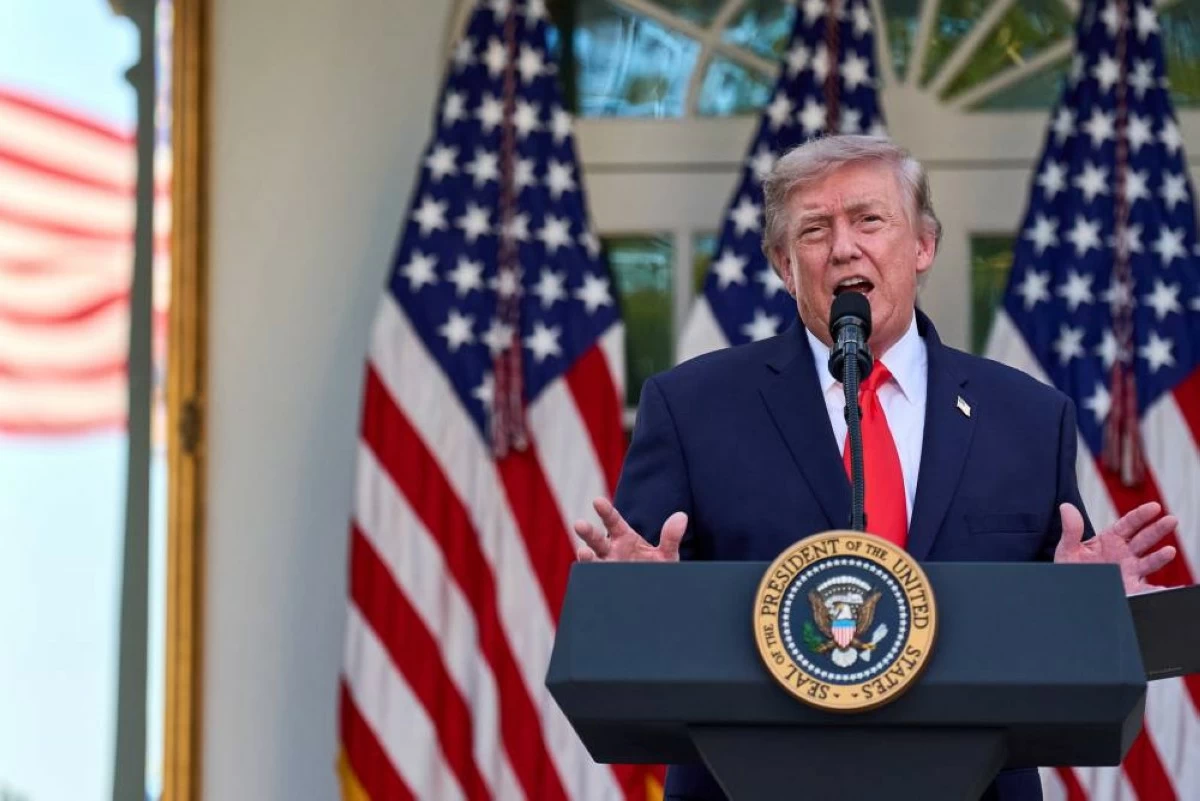
Trump publicly warned the United States could be “forced to militarily complete the job” — the strongest presidential rhetoric of the ceasefire cycle. Emirates247 / Reuters: “U.S. President Donald Trump warned that the United States could be ‘forced to militarily complete the job’ after launching strikes on Iranian missile and drone facilities, as tensions between Washington and Tehran continue to escalate despite a recent ceasefire agreement.” The statement is a public shift from the AM cycle’s “Sirik-Qeshm second-night strike package” framing into a “this is not over, we may do more” framing — the strategic signal is the absence of a stated end-state, not the strike itself.
Trump’s statement said U.S. forces had targeted Iranian missile and drone storage locations and coastal radar sites, accusing Tehran of violating the ceasefire. Emirates247 / Reuters: “U.S. forces had targeted Iranian missile and drone storage locations as well as coastal radar sites, accusing Tehran of violating the terms of a ceasefire agreement reached earlier this month. He warned that continued breaches could trigger further military action, adding that the U.S. might not be able to remain restrained.” The target list (storage + coastal radar) is a capability-degradation target set, not a retaliation-symbolic target set — the US is now operating to disable Iran’s ability to shoot back, not just to demonstrate that it can.
The IRGC claimed responsibility for the attacks on U.S. military sites in Kuwait and Bahrain, framing them as retaliation for the U.S. strikes on Iranian facilities. Emirates247 / Reuters: “Iran launched missiles and drones targeting U.S. military sites in Kuwait and Bahrain, marking a continuation of retaliatory strikes following recent U.S. operations.” The IRGC said the attacks were a response to U.S. strikes on Iranian facilities, which it described as violations of the ceasefire, and warned that continued military pressure would halt all diplomatic efforts and intensify the conflict. The “halt all diplomatic efforts” line is the operative piece: Iran is now publicly stating that further US pressure is incompatible with the diplomatic track.
Bahrain publicly condemned the Iranian attack as a “dangerous escalation” and a “deliberate and systematic pattern of repeated violations” — a sharper framing than Saturday’s first condemnation. Emirates247: “The Kingdom of Bahrain has strongly condemned what it described as renewed Iranian aggression against its territory, following a fresh attack involving ballistic missiles and drones. The Bahraini Ministry of Foreign Affairs said the incident represents a dangerous escalation and reflects what it called a deliberate and systematic pattern of repeated violations targeting the Kingdom’s sovereignty and the safety of its citizens and residents.” The “deliberate and systematic pattern” phrasing is new — Saturday’s statement named a single event; Sunday’s statement names a pattern, and is therefore harder to walk back.
Bahrain invoked the GCC Joint Defence Agreement — “any attack on one member state is considered an attack on all” — and called for an urgent UN Security Council session. Emirates247: “The ministry warned that the repeated attacks are not only directed at Bahrain but pose a broader threat to the entire Gulf Cooperation Council (GCC). It emphasised that, under the GCC Joint Defence Agreement, any attack on one member state is considered an attack on all.” The Joint Defence Agreement has been activated rhetorically: the UAE, Saudi Arabia, Qatar, Oman, and Kuwait are now in the public record as states against which the Iranian attack is read as an attack on themselves.
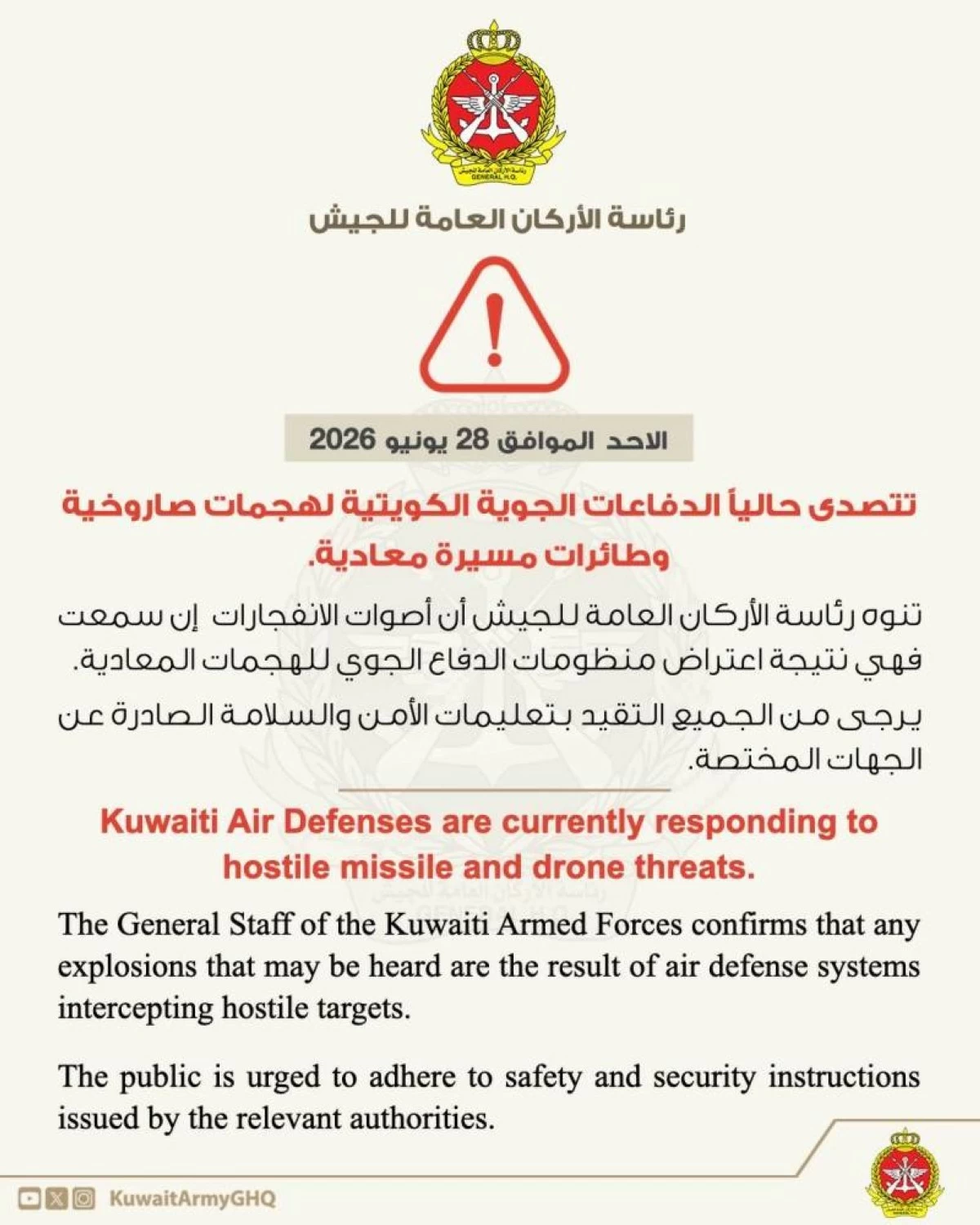
Kuwait’s General Staff confirmed its air defences were actively intercepting missile attacks and hostile drones — the first publicly confirmed Kuwait engagement of the conflict. Emirates247: “Kuwait’s armed forces confirmed that its air defence systems are actively responding to missile attacks and hostile drones. In a statement, the General Staff of the Army said that any sounds of explosions heard were the result of air defence systems intercepting incoming threats.” Kuwait is now a third Gulf state (with Bahrain and the U.S. military in Qatar) in the active-engagement posture — the Kinetic Gulf widened overnight.
Al Jazeera’s day-121 live blog headline confirms the second-night US strike package targeted Sirik and Qeshm, and confirms Bahrain and Kuwait were both within the Iranian retaliation envelope. Al Jazeera: “Iran war day 121: Iran attacks Bahrain, Kuwait as US strikes near Hormuz.” The single-line confirmation is the operative piece for the NOON cycle: the strike exchange is now publicly a US-strike-on-Iran → Iran-strike-on-Bahrain-and-Kuwait cycle, not a series of separate incidents.
UAE / Gulf angle
The Bahraini MoFA statement explicitly invoked the GCC Joint Defence Agreement, putting the UAE on the diplomatic record as a state against which this attack is read as an attack on itself. Emirates247. The activation is rhetorical today, not operational — but it is the first time in this ceasefire cycle that the Joint Defence Agreement has been named as the framework for a Bahraini response to an Iranian strike. The UAE’s standing diplomatic position (peace through the MoU, FM-channel with Tehran) is now bracketed by an activated GCC collective-defence commitment.
Kuwait is now publicly engaging Iranian missiles and drones for the first time in this conflict — the strike envelope is Bahrain, Kuwait, and the U.S. military in Qatar, and the Omani corridor is the only adjacent state with a de-escalation posture. Emirates247. The east-of-Hormuz pattern is now active across three states; the south-of-Hormuz pattern (Oman) is still the deconfliction channel. For UAE-flagged transits the choice space is now: (1) east-bound via Hormuz through an active Iranian attack envelope, (2) south via Omani corridor under “international law” framing, or (3) bypass-pipeline (AM cycle reference, ~50% complete) westbound to the Saudi infra.
The IRGC’s “halt all diplomatic efforts” warning is the most direct signal yet that the US-Iran deconfliction line — and the UAE’s standing FM-channel with Tehran — are at risk. Emirates247 / Reuters. The UAE’s FM-channel (Sheikh Abdullah bin Zayed received a call from FM Araghchi Day 120 AM reference) is the only publicly visible diplomatic line in the GCC to Tehran that has been active in this ceasefire cycle. The IRGC’s “halt all diplomatic efforts” line does not name the UAE-FM channel specifically, but is a public statement that further military pressure by the US is incompatible with the diplomatic track the UAE has been backing.
The Hormuz shipping posture is now the second consecutive day of three-vector escalation: tanker-strike Saturday, IRGC-warning-shots Saturday, IRGC-strikes-on-Kuwait-and-Bahrain Sunday. The cumulative count is now 4 commercial-vessel incidents in 5 days (Ever Lovely Thursday, the second vessel Friday/Saturday, the Saturday UKMTO-bridge-damaged tanker, and today’s Iranian strikes that briefly closed Kuwaiti airspace for intercept operations). For UAE-flagged transits the operational risk has moved from vessel-attack-only to vessel-attack + air-defence-intercept-overhead — the threat to a tanker now includes a missile interception happening above it.
What changed since the previous update (2026-06-28 ~02:30 UTC / Day 121 AM)
- NEW: Trump publicly warned the U.S. could be “forced to militarily complete the job” — the strongest presidential rhetoric of the ceasefire cycle, with no stated end-state.
- NEW: Trump’s target list (Iranian missile and drone storage + coastal radar) is a capability-degradation set, not a retaliation-symbolic set — the US is now disabling Iran’s ability to shoot back, not just demonstrating it can.
- NEW: The IRGC publicly claimed responsibility for attacks on U.S. military sites in Kuwait and Bahrain, and warned that continued military pressure would “halt all diplomatic efforts” and intensify the conflict.
- NEW: Bahrain’s second condemnation of the Iranian attack names a “deliberate and systematic pattern of repeated violations” — a sharper framing than Saturday’s single-event language, and harder to walk back.
- NEW: Bahrain explicitly invoked the GCC Joint Defence Agreement — “any attack on one member state is considered an attack on all” — putting the UAE, Saudi, Qatar, Oman, and Kuwait on the diplomatic record as states against which the Iranian attack is read as an attack on themselves.
- NEW: Bahrain called for an urgent UN Security Council session to enforce Resolution 2817 (2026) and hold those responsible accountable.
- NEW: Kuwait’s General Staff publicly confirmed air-defence intercepts of Iranian missiles and drones — the first publicly confirmed Kuwait engagement of the conflict.
- HARDENED: Day 121 AM second-consecutive-US-strike-on-Iran → Day 121 NOON capability-degradation-strike-list (the strike target set itself has hardened from demonstration to disarmament).
- HARDENED: Day 121 AM Iranian-strike-on-Bahrain → Day 121 NOON Iranian-strikes-on-Bahrain-and-Kuwait (the GCC-state-target-set widened by one state in six hours).
- HARDENED: Day 121 AM Iranian-warning-shots-and-permits-on-water → Day 121 NOON IRGC-strikes-on-Kuwait-and-Bahrain-with-diplomatic-track-threat (the warning-shots posture has hardened into a strikes-on-GCC-states posture, and the diplomatic back-channel is now publicly at risk).
Latest headlines