
Iran Conflict — 2026-06-28 (PM)


Current status
- US strikes on Iran entered a second consecutive day, with President Trump again publicly threatening to “militarily complete the job” — and the legal question is now openly in play: did the strikes violate Congress’s war-powers resolution? Al Jazeera: “Days after Congress tells Trump he needs to seek its approval or end Iran war, Trump returns to attacks. Is it legal?” The war-powers clock is the new operative variable: the strikes happened inside the congressional window Trump was told to either seek approval for or stop, and the second-day package is the first post-deadline action. The CNBC read: “Trump again threatens Iran with annihilation as Kuwait and Bahrain report attacks.” Trump is publicly betting that the strikes will be operationally completed before Congress can act; the second-day package is the test of that bet.
- The IRGC publicly framed the US-Iran MoU as a “mirage” and “doubled down” on the Hormuz-strikes posture — the agreement will not lead to lasting peace, it is merely a strategic pause. Al Jazeera (opinion): “The US-Iran MoU: A mirage of an agreement. Both Washington and Tehran know that current deal will not lead to lasting peace. It is merely a strategic pause.” The same outlet’s news-side (IRGC doubles down as Iran-US MoU jeopardised by Hormuz strikes) carries the same read: markets in Iran are reacting poorly after two nights of military confrontations over transit through the critical strait. This is the first time the Iranian side has publicly labelled the MoU a “pause” rather than a deal — the framing of tactical-recognition-not-strategic-resolution is now on the public record from both the IRGC and the opinion desk.
- Al Jazeera analysis pinpoints Article 5 of the Iran-US MoU as the operative text now being contested on the water — Iran and the US trade attacks over navigation through the Strait of Hormuz, which has emerged as a major sticking point. Al Jazeera: “What is Article 5 of Iran-US MoU, and why is it blamed for Hormuz strikes? Iran and the US trade attacks over navigation through the Strait of Hormuz, which has emerged as a major sticking point.” The article-5 dispute is the textual mechanism by which “make arrangements” — the vague NOON-cycle trigger — has hardened into a public legal frame for the strikes. For shipping, this is the moment the regulatory-dispute on Hormuz became a publicly-named legal text.
- Iran’s foreign minister Araghchi publicly stated the Strait of Hormuz “remains under Iranian control for 30 days” — and urged “all parties not to interfere” in the management of the strait. Al Jazeera: “Araghchi: Strait of Hormuz remains under Iranian control for 30 days. Iran’s foreign minister has urged ‘all parties not to interfere’ in the management of the Strait of Hormuz.” The 30-day claim is the same window the IRGC has been enforcing on the water with warning-shots-and-permits; Araghchi’s PM-cycle statement is the diplomatic-recognition of the IRGC’s operational claim. For UAE-flagged transits, the 30-day window is now the named countdown — the period in which the Iranian permit regime is publicly stated to be the governing rule.
- The NYT live blog confirms the strike exchange is now a US-on-Iran → Iran-on-Bahrain-and-Kuwait four-day kinetic cycle, with no public de-escalation signal from either side. NYT: “Mideast Live Updates: U.S. and Iran Trade Attacks With Few Signs of De-escalation. President Trump and Iran’s Revolutionary Guards exchanged threats and U.S. allies in the Gulf said they had intercepted Iranian drones, as hostilities entered a fourth day.” The “fourth day” framing is the second-cycle framing after Saturday’s “third day” framing — the kinetic pattern is now publicly a four-day pattern, not a single-incident pattern. The “few signs of de-escalation” tag is the second time in 24 hours the Western press has used that exact phrase; the cycle is no longer being framed as a discrete incident in any of the major wires.
- Al Jazeera’s separate “US trying to find its way out of MoU with Iran” report is the second Iranian-side signal in the PM cycle that the diplomatic track is being read as something the US is trying to abandon, not something the US is trying to defend. Al Jazeera: “‘US trying to find its way out of MoU with Iran.’ Bahrain and Kuwait have condemned Iran’s retaliatory attacks after a second day of US strikes on Iran.” The two Iranian-side framings — MoU-is-a-mirage and US-is-trying-to-find-its-way-out — are consistent and operational: both imply that the Iranian response is to a bad-faith US exit, not to a bad-faith Iranian violation. This is the diplomatic frame Iran will carry into any UNSC session that Bahrain triggers under Resolution 2817.
- Al Jazeera’s Iran-on-Kuwait-and-Bahrain piece hardens the strike exchange into a public named-event: “US-Iran deal under strain as Kuwait and Bahrain condemn Iranian attacks in response to US strikes.” The deal is publicly “under strain” for the first time in the major wires, not just “contested” or “unclear.” For the UAE’s MoU-backing posture, the public named-strain is the second-cycle signal that the standing UAE position (peace through the MoU, FM-channel with Tehran) is being outflanked by a publicly named MoU-under-strain frame.
UAE / Gulf angle
- The UAE publicly condemned Iranian missile and drone attacks on Bahrain and Kuwait — the first PM-cycle UAE statement of the day, and the first explicit UAE MoFA framing of the Iranian attacks as a “flagrant violation of sovereignty.” Emirates247: “Abu Dhabi: The United Arab Emirates has strongly condemned the renewed missile and drone attacks launched by Iran targeting the Kingdom of Bahrain and the State of Kuwait. In a statement, the Ministry of Foreign Affairs (MoFA) described the attacks as a flagrant violation of the sovereignty of both countries and a serious threat to their security and stability. The ministry reiterated the UAE’s full solidarity with Bahrain and Kuwait, affirming its support for all measures aimed at safeguarding their security and maintaining regional stability.” The statement puts the UAE on the public record as a state framing the Iranian attacks on its GCC peers as a flagrant violation of sovereignty — a categorically different posture from the AM-cycle deconfliction-and-restraint framing. The “all measures” language is also a non-trivial widening: it implies support for collective response up to and including enforcement action, not just diplomatic protest.
- Araghchi’s 30-day Hormuz-control claim is the most direct Iranian diplomatic statement yet that the Iranian permit regime is the governing rule for the strait for the next month — and the UAE’s east-bound shipping choices are now bracketed by a publicly named countdown. Al Jazeera. The 30-day window is the same length as the bypass-pipeline construction window (Day 120 PM reference, ~50% complete at start of Day 121). The pipeline is being built to not-transit Hormuz in the 30-day window in which Hormuz is publicly Iranian-controlled. The math is the operative piece: pipeline completion window ≈ Hormuz-control window.
- The Bahrain-Kuwait-UAE statement cluster is the second PM-cycle named GCC-collective-response frame of the day — the UAE is now publicly inside the all-measures envelope with Bahrain and Kuwait, alongside the AM-cycle GCC Joint Defence Agreement invocation by Bahrain. Emirates247. For UAE-flagged tankers, the Bahrain-and-Kuwait posture is a three-state-publicly-named-as-target posture with the UAE on the record as supporting “all measures” — the operational risk is no longer vessel-attack + air-defence-intercept-overhead but three-named-Gulf-states-collectively-framing-Iran-as-violator with the UAE inside the collective frame.
- The MoU-is-a-mirage framing from Al Jazeera’s opinion desk is consistent with the UAE’s standing FM-channel with Tehran — both publicly read the MoU as not-yet-peace. Al Jazeera opinion. The UAE’s FM-channel (Sheikh Abdullah bin Zayed received a call from FM Araghchi Day 120 AM) is one of the few publicly visible diplomatic lines still open to Tehran in this ceasefire cycle. The PM-cycle MoU-is-a-mirage read is consistent with the UAE’s standing position: the UAE has consistently framed the MoU as a process, not a settlement. The Al Jazeera opinion read is now a public confirmation of the UAE framing — the diplomatic language is converging.
- The IRGC’s MoU-jeopardised-by-Hormuz-strikes framing, paired with Araghchi’s 30-day claim, completes the named-30-day-window pattern: the IRGC is the operator on the water, Araghchi is the diplomatic voice of the operator, and the 30-day window is the diplomatic statement of the operational claim. Al Jazeera. For the UAE’s east-bound transits, the choice is: (1) operate in the 30-day Iranian-controlled Hormuz window with permits, (2) route via the Omani corridor under international-law framing, (3) wait for the bypass-pipeline (~50% complete, ~30-day window from Day 120 PM reference). The three options are now publicly named as a 30-day window, not as an indefinite situation.
What changed since the previous update (2026-06-28 ~10:30 UTC / Day 121 NOON)
- NEW: US strikes on Iran are now publicly a second-day event, with the war-powers resolution question opened in the major wires — Al Jazeera framed it explicitly: “Days after Congress tells Trump he needs to seek its approval or end Iran war, Trump returns to attacks. Is it legal?” The NOON cycle had the second-night strike; the PM cycle has the legal frame for the second-night strike.
- NEW: The IRGC and Al Jazeera’s opinion desk publicly framed the MoU as a mirage and a strategic pause, not a deal — Al Jazeera opinion: “The US-Iran MoU: A mirage of an agreement. Both Washington and Tehran know that current deal will not lead to lasting peace. It is merely a strategic pause.” The NOON cycle had the IRGC doubling down posture; the PM cycle has the named mirage framing.
- NEW: Al Jazeera published the Article-5 explainer, naming the legal text behind the Hormuz-strike posture — Al Jazeera: “What is Article 5 of Iran-US MoU, and why is it blamed for Hormuz strikes? Iran and the US trade attacks over navigation through the Strait of Hormuz, which has emerged as a major sticking point.” The NOON cycle had the vague-language signal; the PM cycle has the vague-language-binds-Hormuz signal, with the article-5 text now publicly named.
- NEW: Araghchi publicly stated the Strait of Hormuz “remains under Iranian control for 30 days” — Al Jazeera: “Araghchi: Strait of Hormuz remains under Iranian control for 30 days. Iran’s foreign minister has urged ‘all parties not to interfere’ in the management of the Strait of Hormuz.” This is the diplomatic-recognition of the IRGC’s NOON-cycle warning-shots-and-permits posture. The 30-day window is a named countdown for the first time.
- NEW: The UAE MoFA publicly condemned the Iranian attacks on Bahrain and Kuwait, framing them as a “flagrant violation of sovereignty” and offering support for “all measures” — Emirates247. The NOON cycle had the NOON-frame of the strike exchange; the PM cycle has the UAE on the public record inside the GCC-collective-response frame.
- NEW: The NYT live blog named the kinetic pattern as a fourth day of US-Iran attacks with “few signs of de-escalation” — NYT: “Mideast Live Updates: U.S. and Iran Trade Attacks With Few Signs of De-escalation. President Trump and Iran’s Revolutionary Guards exchanged threats and U.S. allies in the Gulf said they had intercepted Iranian drones, as hostilities entered a fourth day.” The four-day framing is a named event-pattern in a major Western wire; the few-signs-of-de-escalation tag is now a repeated phrase across cycles.
- HARDENED: Day 121 NOON MoU-vague-language-haunts-peace → Day 121 PM Article-5-of-MoU-binds-Hormuz-control (the textual mechanism behind the vague language is now publicly named).
- HARDENED: Day 121 NOON Iranian-warning-shots-and-permits-on-water → Day 121 PM Araghchi-30-day-Iranian-control-of-Hormuz (the IRGC operator’s water posture now has a diplomatic voice and a named 30-day window).
- HARDENED: Day 121 NOON US-strike-on-Iran-second-consecutive-night → Day 121 PM US-strike-on-Iran-second-consecutive-day-with-war-powers-clock-running (the strike is now publicly a legal question in addition to being a kinetic event).
- HARDENED: Day 121 NOON GCC-Joint-Defence-Agreement-rhetorically-activated-by-Bahrain → Day 121 PM UAE-MoFA-publicly-condemns-Iranian-attacks-on-Bahrain-and-Kuwait (the Joint Defence Agreement is no longer just rhetorically activated — the UAE MoFA is publicly inside the collective frame).
Latest headlines
CNBCTrump again threatens Iran with annihilation as Kuwait and Bahrain report attacks
→
Al JazeeraIRGC doubles down as Iran-US MoU jeopardised by Hormuz strikes
→
Al JazeeraIran attacks Kuwait and Bahrain in response to US strikes
→

Al JazeeraWhat is Article 5 of Iran-US MoU, and why is it blamed for Hormuz strikes?
→
NYTMideast Live Updates: U.S. and Iran Trade Attacks With Few Signs of De-escalation
→

Al JazeeraAraghchi: Strait of Hormuz remains under Iranian control for 30 days
→

Al JazeeraUS strikes Iran for second day: Is it a violation of war powers resolution?
→
A
Al JazeeraThe US-Iran MoU: A mirage of an agreement
→
A
Al Jazeera'US trying to find its way out of MoU with Iran'
→
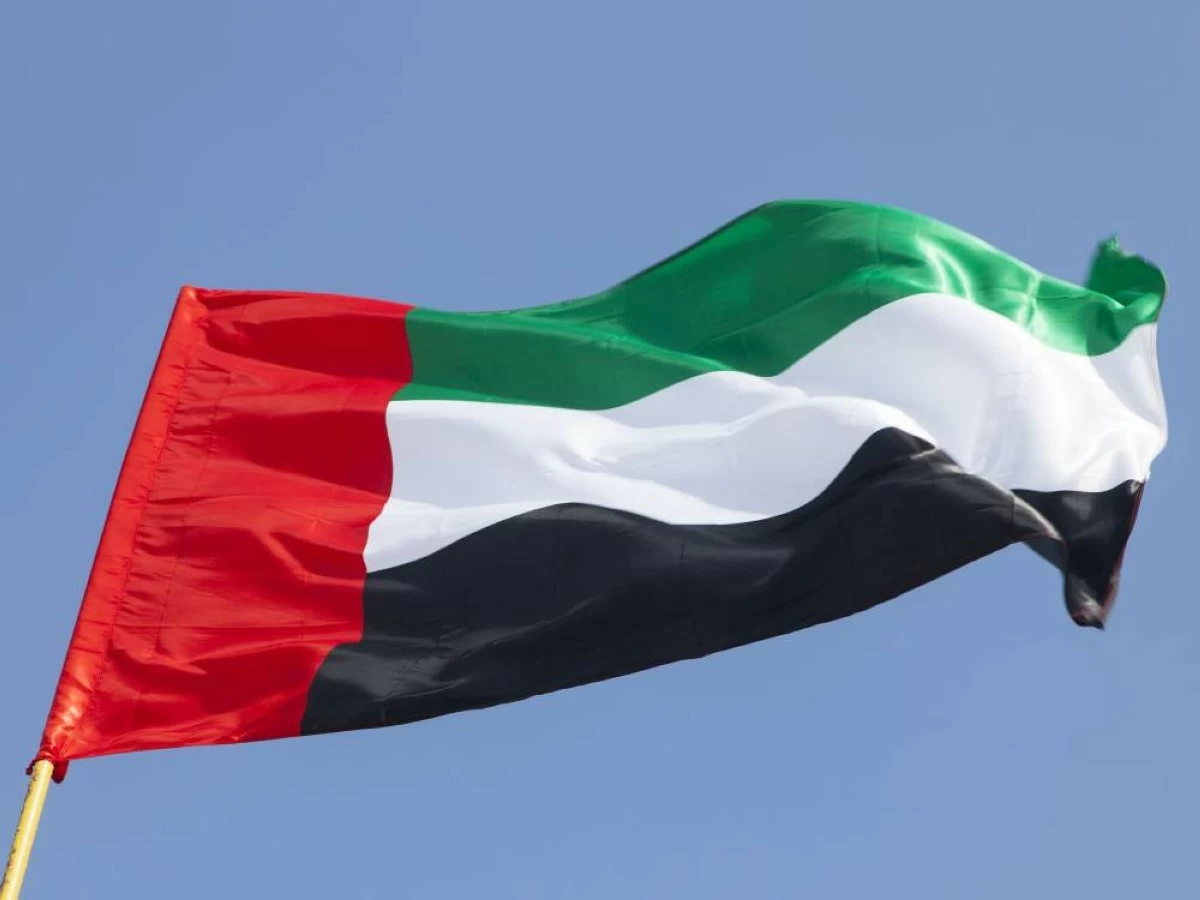
Emirates247UAE condemns Iranian missile and drone attacks on Bahrain and Kuwait
→