
Iran Conflict — 2026-07-13 (AM)



Current status
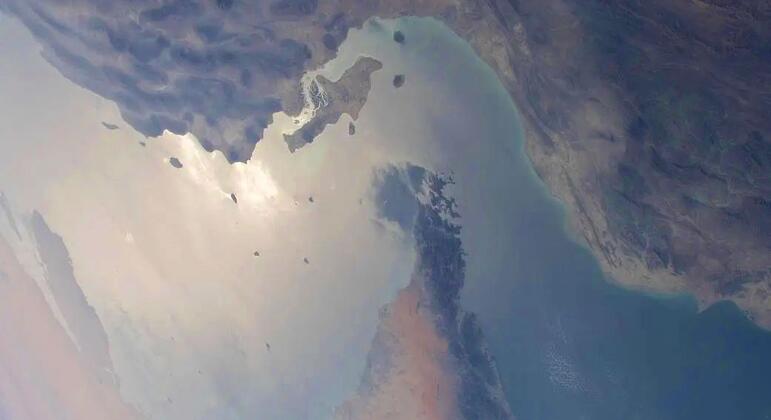
US strikes extended into Monday morning on Iran’s Hormuz coastline. Iranian state media report explosions in the port cities of Bandar Abbas, Sirik and Jask, as well as Qeshm Island. The geography is now broader than Sunday’s wave: Qeshm Island is a new direct strike target, with Sirik and Jask added to Bandar Abbas on the Iranian Hormuz side.
The June ceasefire is fraying after three consecutive days of tit-for-tat strikes. Sunday’s attacks follow three previous days of back-and-forth exchanges, with the stated US objective now degrading Iran’s military capability — a shift from containment. The New York Times’ live blog describes the situation as a familiar pattern of back-and-forth strikes fueled by disputes over the Strait of Hormuz, framing it explicitly as a cease-fire unraveling.
UN Secretary-General calls for urgent resumption of Iran-US negotiations. António Guterres urged both sides to urgently resume negotiations amid fears of a return to all-out war. Washington formally denied Tehran’s claim that it had closed the Strait of Hormuz on Sunday, leaving the strait’s status contested: Iran says closed, US says not. UN News characterized the renewed strikes and counterstrikes as having raised fears of a return to all-out war.
Analyst frame: ceasefire is failing because both sides see the other as unreliable. Al Jazeera Bottom Line analyst Ali Vaez attributes the resumed fighting to a mutual perception problem: Iran, US resumed fighting because they don’t see each other as ‘reliable negotiating partners’. The NYT’s analysis piece argues that President Trump’s Iran deal effectively gave Iran control of the waterway and that Iran’s military is now violently asserting authority over the strait.
UAE / Gulf angle
- The strike geography is converging on the Iranian side of the Strait of Hormuz — directly across from the UAE. Bandar Abbas, Qeshm Island, Sirik and Jask are all on the Iranian southern coast facing the strait, within roughly 50–100 km of the UAE’s Musandam peninsula and the Fujairah coastline. The Day 135 NOON six-Gulf-state Iranian target list (UAE, Qatar, Bahrain, Kuwait, Oman, Jordan) is now compounded by strikes physically located on the Hormuz coastline itself.
- Hormuz status is formally contested. Iran claims closure (since Day 135 AM, per IRGC declaration); the US formally denies this in the UN-attributed account. UAE-flagged shipping and the Musandam-Fujairah corridor remain in the kinetic active zone.
- The diplomatic-off-ramp is formally on the record but failing on mutual-unreliability grounds. The UN’s urgently-resume-negotiations call is the first formal multilateral diplomatic pressure point of the renewed cycle. UAE MoFA’s structural reading: the off-ramp is being actively called for, but the structural explanation for its failure is mutual unreliability, not one-sided intransigence — both sides now formally see the other as not a reliable negotiating partner.
What changed since the previous update (Day 135 PM)
- Cycle entered its fourth day. Sunday’s US strikes (Day 135 PM) have now extended into Monday morning (Day 136 AM), with new strike locations on the Iranian Hormuz coastline (Qeshm, Jask, Sirik) added to Sunday’s Bandar Abbas strikes.
- US objective formally shifted from containment to degrading Iranian military capability. AJ on-the-record reports the US is now aimed at ‘degrading’ military, with strikes explicitly targeting Tehran’s ability to threaten shipping in the strait.
- UN entered the diplomatic-pressure track. First UN-on-the-record of the renewed cycle: all-out-war-fears + Washington-denies-Hormuz-closure + UN-chief-calls-for-urgent-resumption-of-negotiations.
- Analyst frame hardened to mutual unreliability. First AJ-on-the-record analyst attribution: Iran-and-US-both-see-other-side-as-unreliable-negotiating-partner (Vaez, AJ Bottom Line). NYT adds: the Trump-Iran deal itself was the source of the Hormuz-assertion-of-authority problem.
- Hormuz status contested at the international level. Iran: closed. US (via UN-channel): not closed. Cycle is bilateral with active kinetic on both sides for four consecutive days.
Latest headlines