
Tech News Roundup — June 11, 2026 (AM)

Xbox dominates the morning as new CEO Asha Sharma and CCO Matt Booty publicly concede the division “over-extended” itself and prepare for a major round of layoffs next month, while a Bloomberg report pegs the cuts as significant and warns of a possible studio closure. Anthropic’s first broadly-available Mythos-class model, Claude Fable 5, ships the same week and Microsoft quietly restricts it for its own employees over data retention. Framework pushes the Laptop 13 Pro to July, Apple and Google both light up Thread 1.4, and ReactOS finally runs Half-Life. Plus Pplware’s Portuguese roundup (translated) and the usual Verge deal post pile-up.
Xbox announces a reset — layoffs, budget cuts, and a possible studio closure
Xbox is bracing for a significant round of layoffs next month, with a Bloomberg report on Tuesday describing the cuts as “major” and likely to include a studio closure. The announcement came moments after a leaked internal memo from new Xbox CEO Asha Sharma and CCO Matt Booty acknowledged the division had become “over-extended” and may not have invested adequately in some of its biggest franchises, outlining a strategic reset for the next five years. Sharma had hinted at “making hard choices” in previous remarks, and Giant Bomb had previously reported rumours of roughly 1,000 cuts. The memos also flagged budget reductions across marketing and other parts of Microsoft’s gaming business.
- Xbox admits it’s “over-extended” as leadership signals a major rethink of its studio strategy: New CEO Asha Sharma and CCO Matt Booty say in a leaked memo the company “became overextended across multiple strategies and may not have adequately invested in some of its biggest franchises,” with layoffs and potential restructuring looming. Windows Central
- “Xbox division is planning major layoffs next month”: A Bloomberg report says the cuts will be significant, alongside budget reductions across parts of the business — coming as Xbox publicly acknowledges ongoing financial challenges. Windows Central
- Xbox warns of a “reset” as it prepares for layoffs: Microsoft’s gaming division is set to be hit with significant cuts next month; sources say they could involve a studio closure or changes to the Xbox studio lineup. [The Verge]
Anthropic’s Claude Fable 5 lands — and Microsoft quietly blocks it internally
Anthropic released Claude Fable 5 this week, calling it the most powerful AI model it has ever made widely available and the first from its previously-withheld “Mythos” class — a family it had earlier said was too dangerous to release publicly because of its cybersecurity capabilities. The rollout was fast (GitHub Copilot and Azure Foundry both got it the same day) but Microsoft is reportedly restricting the model for its own employees because Anthropic’s new data retention requirements break the Zero Data Retention (ZDR) rules Microsoft applies to other Claude models. Fable also has the unusual property of refusing to answer basic biology questions — it routes them to the older Claude Opus 4.8 by design.
- Claude Fable won’t answer basic biology questions: Despite Anthropic praising Fable’s biology skills at launch, the model hands off even high-school-level biology questions to the older Claude Opus 4.8 — not because it doesn’t know the answers, but by Anthropic’s design. [The Verge]
- Microsoft restricts Claude Fable for employees over data retention concerns: Microsoft is limiting the use of Claude Fable 5 for employees because of Anthropic’s new data retention requirements — even as it quickly rolled the model out to GitHub Copilot and Foundry customers. [The Verge]
- Claude Fable 5: foi lançada a ferramenta de IA da Anthropic considerada demasiado poderosa (Anthropic’s “too powerful” Fable 5 lands): Pplware’s Portuguese-language launch coverage, noting Fable is the first model Anthropic had previously refused to release publicly to ship widely. Pplware
Apple: Siri AI keeps it short, Thread 1.4 lands on Apple TV and Google TV Streamer
Apple’s Siri AI is starting to land on real devices, and the early word from The Verge’s reviewer is that the personality is intentionally curt — a quiet counterweight to the wordier, more cheerful chatbots that have pushed users into unhealthy attachments. Separately, Apple and Google are both rolling out support for Thread 1.4 on their smart home streaming devices (Apple TV via the tvOS 27 developer beta, and the Google TV Streamer via a software update), laying the groundwork for Thread credential sharing and making it much easier to add these devices to an existing Thread network rather than starting their own. Pplware’s Portuguese coverage of the WWDC keynote rounds out the Apple beat.
- Apple’s new Siri AI knows when to shut up: The Verge’s hands-on finds Siri AI “quite curt” — a deliberate design choice meant to avoid the parasocial chatbot attachments that have come with OpenAI and others. [The Verge]
- Apple, Google add support for Thread 1.4: The latest Thread spec is now arriving on compatible Apple TVs in the tvOS 27 developer beta and the Google TV Streamer — enabling these Thread Border Routers to share credentials and join existing networks. [The Verge]
- iOS 27 chegou aos iPhones e há novidades (iOS 27 arrives on iPhones with these new features): Pplware’s Portuguese-language WWDC keynote roundup — Apple focused more on new tools than new products, and the iOS 27 lineup is heavy on features that change how you use your existing devices. Pplware

Framework slips the Laptop 13 Pro a month
Framework Computer has begun informing pre-order customers that the new Framework Laptop 13 Pro won’t start shipping in June as originally promised. The new 13-inch flagship’s first batch now ships in July, with some orders potentially slipping to early August or even early September, depending on where you are in the queue. Framework is blaming the delay on two issues that surfaced during testing: the new haptic trackpad and the custom display. Mainboard-only pre-orders and orders that don’t include either of the new components are not affected.
- Framework delays its first Laptop 13 Pro shipments by a month: The first batch is now expected in July, with some orders potentially slipping to early August; pre-order customers were informed via email. Mainboard pre-orders and orders that don’t include the haptic trackpad or custom display are still shipping on schedule. [The Verge]
- Framework Laptop 13 Pro To Begin Shipping In July: Phoronix reports on the same delay — Framework is now telling pre-order customers that the new flagship will begin shipping in July rather than its original June target, with the haptic trackpad and custom display as the two production bottlenecks. Phoronix
Linux & Open Source: ReactOS runs Half-Life, Intel XPU Manager 2.0, Linux 7.2 lands RISC-V support
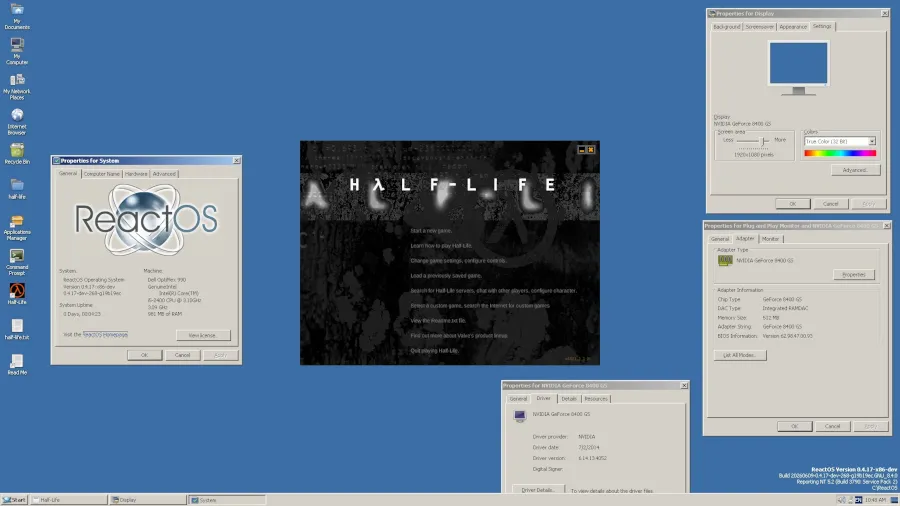
Phoronix brought three notable open-source stories this morning. The milestone of the week: ReactOS — the open-source Windows-compatibility OS that has been chasing Wine-like binary compatibility with Microsoft Windows for nearly two decades — has finally reached the point where it can run Half-Life. On the more enterprise-y side, Intel released XPU Manager 2.0, a major overhaul of its monitoring and management tool for Arc Pro GPUs on Windows and Linux. And in kernel land, Linux 7.2 is set to enable ESWIN SoC support by default for RISC-V builds, meaning off-the-shelf RISC-V developer boards (SiFive’s HiFive Premier P550) will boot default kernel builds without a custom compile.
- ReactOS “Open-Source Windows” Reaches The Milestone Of Being Able To Run Half-Life: The classic game running on the open-source platform is being treated as a binary-compatibility milestone for a project that has chased Wine-like Win32 compatibility for almost 20 years. Phoronix
- Intel XPU Manager 2.0 Overhauls Windows & Linux Management For Arc Pro GPUs: A major version bump of Intel’s data-center GPU monitoring/management tool, less than a week after 1.3.7. Phoronix
- Linux 7.2 To Enable ESWIN SoC Support By Default For RISC-V Kernel Builds: A one-liner change set to land in Linux 7.2 enables ESWIN RISC-V support by default — meaning default kernel builds will boot on SiFive’s HiFive Premier P550 developer board. Phoronix
- AMD’s Lemonade SDK For Local AI Adds NVIDIA CUDA Support: AMD’s local AI server solution is out with a new version that adds CUDA support — letting Lemonade’s CPU/GPU/NPU orchestration work with NVIDIA hardware, not just AMD’s. Phoronix
Microsoft & Windows: BitLocker backdoor closed, PowerToys gets an Extension Gallery
Microsoft’s June Patch Tuesday has shut down a BitLocker flaw described as an “intentional backdoor” — a flaw that gave the user account that triggered the encryption full read/write access to the encrypted volume, breaking the security model. PowerToys v0.100.0 brings an in-app Extension Gallery for the Command Palette, plus improvements to Dock, PowerDisplay, and ZoomIt, and a smaller app footprint.
- Windows 11’s June update shuts down an intentional BitLocker backdoor with full file access — here’s what changed: Microsoft has patched the BitLocker flaw — described as an intentional backdoor — in the June update. Windows Central
- PowerToys just made Command Palette extensions easier to install and manage: PowerToys v0.100.0 adds a new Extension Gallery for browsing, installing, and updating Command Palette extensions from inside the app. Windows Central

Gaming: Xbox studio strategy, Halo’s Campaign Remix, ID@Xbox indie roundup
The Xbox reset dominates the gaming conversation this morning, but there are smaller stories too: Halo Studios has revealed 42 skulls and a new Campaign Remix mode for Halo: Campaign Evolved, designed to boost replayability with classic fan favourites and major gameplay/visual modifiers. A Windows Central indie roundup highlights five ID@Xbox titles that have dominated the writer’s gaming sessions this month — chaotic co-op, cosy bug collecting, and a brutal bullet hell included. There’s also commentary on Xbox’s Spyro reveal outperforming PlayStation’s Wolverine on YouTube (10M+ views), and a long read on the Xbox team’s repeated promises to stop cancelling fan favourites. Xbox CCO Matt Booty says both Marvel’s Blade and The Elder Scrolls 6 are still on the way later this year.
- Halo: Campaign Evolved’s skulls and Remix Mode have me wondering how far the chaos can go: 42 skulls and an all-new Campaign Remix mode for Halo: Campaign Evolved — modifiers ranging from classic fan favourites to major gameplay and visual changes. Windows Central
- Chaotic co-op, cozy bug collecting, and a brutal bullet hell: 5 ID@Xbox titles that dominated this month: An indie roundup of five gems now available on Xbox — co-op hits from the studios behind Peak and Minami Lane, paired with singleplayer bullet hell and survival horror. Windows Central
- Xbox’s Spyro reveal has more YouTube views than PlayStation’s Wolverine, and the nostalgia is impossible to ignore: Spyro: A Realm Beyond has surpassed 10M YouTube views, outperforming Marvel’s Wolverine reveal and raising questions about Xbox’s current exclusivity strategy. Windows Central
- A decade on, Xbox’s old plea not to cancel fan favorites feels more relevant than ever: A long read on the Xbox One TV DVR feature cancellation and the trust problem the team faces when it has to walk back promises. Windows Central
- Microsoft just gave Xbox a big update after Summer Game Fest and the Xbox Games Showcase: Several nifty new features and additions to Microsoft’s gaming consoles in the post-Showcase update. Windows Central
- Xbox games chief hints Marvel’s Blade could be shown later in 2026 after missing the Xbox Games Showcase: CCO Matt Booty says there wasn’t room for Marvel’s Blade at the Xbox Games Showcase, but it could appear later in the year. Windows Central
- “It’s coming along well” — Xbox’s Matt Booty says The Elder Scrolls 6 looks “amazing”: As the game misses another Xbox Games Showcase, Booty reassures fans that Bethesda’s long-awaited RPG is progressing smoothly. Windows Central
- Fable has received a 30-minute gameplay deep dive, and it’s finally convinced me it’s a true reimagining of the original Fable: Playground Games’ 30-minute Fable gameplay video shows off NPC interaction, consequence-driven reputation, and more. Windows Central
AI/ML: AI regulation in DC, college grads boo AI speakers, Google’s data-collection sprawl
The Verge’s Regulator newsletter argues that the future of AI regulation is being shaped by some of the strangest, most anxious bedfellows in Washington — including a literal cast list of “strange bedfellows” at the Second Annual AI Honors. Separately, college graduates around the country have been heckling commencement speakers who hype up AI, and Microsoft would like everyone to “talk it out”: a 3,100-word blog post from vice chair Brad Smith addresses the trend and tries to thread the needle between acknowledging the public’s AI anxiety and defending the technology.
- The future of AI regulation is courting the strangest, most anxious bedfellows: The Verge’s Regulator newsletter from Washington, DC, surveying the AI-policy landscape on the run-up to the midterms. [The Verge]
- Microsoft, like, totally gets why students are booing AI-pilled graduation speakers: Microsoft’s Brad Smith published a 3,100-word blog post addressing viral clips of students booing AI-hyping commencement speakers (like former Google CEO Eric Schmidt at the University of Arizona) and trying to position the company as understanding the public’s concerns. [The Verge]
Security: nearly a million passports left unprotected on the public internet
A data-exposure investigation by The Verge found nearly a million passports and photo IDs sitting at unprotected public URLs, with no password or access control — anyone with the link could view the documents. The exposed systems belonged to a handful of cannabis-club-related platforms (nefos, PuffPal). One of the operators told The Verge “we have to do something about it as fast as possible, because people will find this and resell it. It will do damage.”
- Nearly a million passports and photo IDs were left unprotected on the public internet: The Verge found identity documents from around the world sitting at public URLs with no access control, on infrastructure operated by a handful of cannabis-club-related platforms. [The Verge]
Google, Meta, Kalshi: who’s training on what, who’s betting on what
Three Verge stories on the data/training/markets beat. A group of independent musicians is suing Google over claims it used YouTube uploads to train its Lyria 3 music AI; Google has filed a motion to dismiss, arguing the lawsuit is based on an “unsupported hypothesis” and that YouTube’s terms of service already grant the broad license required. Google is also rolling out a new “Search Services History” setting that will save your Lens photos, Search Live recordings, voice searches, and Translate audio for AI training (opt-out available). Instagram, meanwhile, is letting users tweak the algorithm on the main feed — a “Your Algorithm” feature that surfaces the topics Instagram thinks you’re interested in and lets you change them. And Kalshi, the prediction market, is adding required employment verification for some bets, the same week the CFTC published its first proposed rule for prediction markets.
- Google won’t just admit it’s feeding YouTube creators to its music AI: Independent musicians are suing Google claiming it trained Lyria 3 on YouTube uploads; Google has filed a motion to dismiss. [The Verge]
- Google will save your Lens photos, Search Live recordings, and Translate audio for AI training: A new “Search Services History” setting rolls out, with opt-out via the “Save Media” toggle. [The Verge]
- You can just tell the Instagram algorithm what you want now: Instagram’s “Your Algorithm” feature now surfaces the topics the platform thinks you’re interested in, with the ability to change them on the main feed. [The Verge]
- Kalshi adds required employment verification for some prediction market bets: The CFTC is also considering its first regulation for prediction markets, as arrests over “insider trading” on military operations and Google Search data continue. [The Verge]
Gadgets: Boox Tappy, Amazon Echo Sleep Studio, AirPods Pro 3 deal, Apple Watch Series 11 deal
The Verge’s gadget desk filed a hands-on with Boox’s Tappy wireless page-turning remote — a quirky little two-button Bluetooth remote that’s roughly the size of a matchbox, designed for use with e-readers. On the smart-home side, Amazon launched Sleep Studio for Echo and Echo Kids, a $5.99/month Amazon Kids Plus feature that combines bedtime stories, relaxing sounds, and guided meditations. Two Verge deal posts in the inbox: AirPods Pro 3 are $179 (down from $249) at Walmart and Amazon, and the Apple Watch Series 11 is $299 (down from $399) at Amazon, Walmart, and Target in all colourways — both likely tied to the run-up to Prime Day.
- Boox’s quirky page-turning remote won me over: The Tappy is a tiny two-button Bluetooth remote for e-readers — part fidget toy, part macro pad, with retro charm and a sliding metal power switch. [The Verge]
- Amazon’s Echo speakers can now help kids wind down and fall asleep: Sleep Studio combines bedtime stories, relaxing sounds, and guided meditations with parent-only scheduling; available with Amazon Kids Plus. [The Verge]
- The AirPods Pro 3 are $179, their best-ever price: Likely Prime Day tied; the $70 discount is the lowest price seen for the AirPods Pro 3. [The Verge]
- The Apple Watch Series 11 is back to its best price: $100 off in all colourways across Amazon, Walmart, and Target — the best price so far, and the first model that will support watchOS 27. [The Verge]
Bluesky is getting “communities”
Bluesky is going to add “communities” — smaller, topic-focused spaces that will run on the decentralized AT Protocol. Head of product Alex Benzer said the feature will roll out sometime this year, and that it will be “a new structure for everyone” in the wider “Atmosphere” ecosystem. Users will be able to create, join, post in, and get updates from communities, but the core Bluesky feed stays the same.
- Bluesky is getting ‘communities’: A new feature running on the AT Protocol, rolling out sometime this year. [The Verge]
Homelab: LeafWiki on Synology NAS
Marius Hosting walks through installing LeafWiki — a self-hosted, single-binary Go wiki with SQLite and Markdown files stored directly on disk — on a Synology NAS. Tree-structured navigation, full-text search, tags, backlinks, a Markdown editor with live preview and Mermaid support. No Node.js, no Redis, no external databases.
- How to Install LeafWiki on Your Synology NAS: A lightweight, self-hosted wiki with a single Go binary; no external services required. Marius Hosting
In Brief (Pplware roundup, translated)
A handful of smaller Pplware stories from the Portuguese-language desk, translated:
- Nintendo Direct announces 40+ games for Switch 2: Nintendo’s latest Direct showcase dropped over 40 games for the Switch 2 — the company’s response to the Switch 2 price hike and a thin 2026 calendar. Pplware
- UE tightens rules: AI-generated content must be labelled: The EU is moving to require AI-generated or significantly AI-modified content to be clearly identified in the coming months. Pplware
- WhatsApp gets into World Cup 2026 spirit with new features: New WhatsApp features themed around the 2026 World Cup. Pplware
- Tesla expands FSD in Europe: Denmark is the 4th country to approve the system: Denmark has granted provisional approval to Tesla’s “Full Self-Driving” (Supervised) system, making it the fourth European country to give the software a green light. Pplware
- Fire risk: recall of 1.3 million Jeep vehicles: Stellantis is recalling more than 1.3 million Jeep vehicles worldwide over a potential fire risk. Pplware
- Telegram returns to Apple Watch with a native app: Telegram has launched a fully native Apple Watch app, marking the messaging service’s return to Apple’s smartwatch ecosystem after years of absence. Pplware
- “Hi, uncle”: emergency code-word helps PSP stop alleged sexual predator: A case in Portugal where a child used a pre-arranged code word with a relative to alert them to a dangerous situation — a useful reminder of how the practice works in emergencies. Pplware
Tech roundup compiled from the TTRSS Tech feed. 41 stories from 45 articles across 5 sources summarised.