
Tech News Roundup — June 12, 2026 (PM)

This afternoon’s tech cycle is dominated by enterprise AI friction (Anthropic’s data retention policy prompts a Microsoft employee freeze), a major supply-chain incident on the Arch Linux AUR, and a near-miss for Nintendo in the Palworld lawsuit just days before the survival-craft title’s 1.0 launch. Console and Windows handhelds also stay in the news with a wide-ranging The Verge buying guide and a fresh look at Microsoft’s gaming-margin squeeze.
AI/ML
- Microsoft temporarily bans Anthropic’s Claude Fable 5 over new data retention policies. Microsoft’s internal IT blocked employee access to Anthropic’s newest Claude model after the company updated its data retention terms in a way that clashed with Microsoft’s own data-protection requirements. The block is described as temporary while Microsoft and Anthropic work out a configuration that keeps Claude usage compatible with Microsoft enterprise data handling. [Windows Central]
- Apple’s Craig Federighi: “Siri won’t be your AI girlfriend.” In a new interview, Apple’s SVP of software engineering said the new Siri AI is intentionally tuned against the sycophantic, engagement-bait style that has crept into other major chatbots. Federighi argued that pulling users into a “relationship” with the assistant can be manipulative and that Apple is shipping a calmer, less flattering Siri on purpose. [The Verge]
Security/CVE
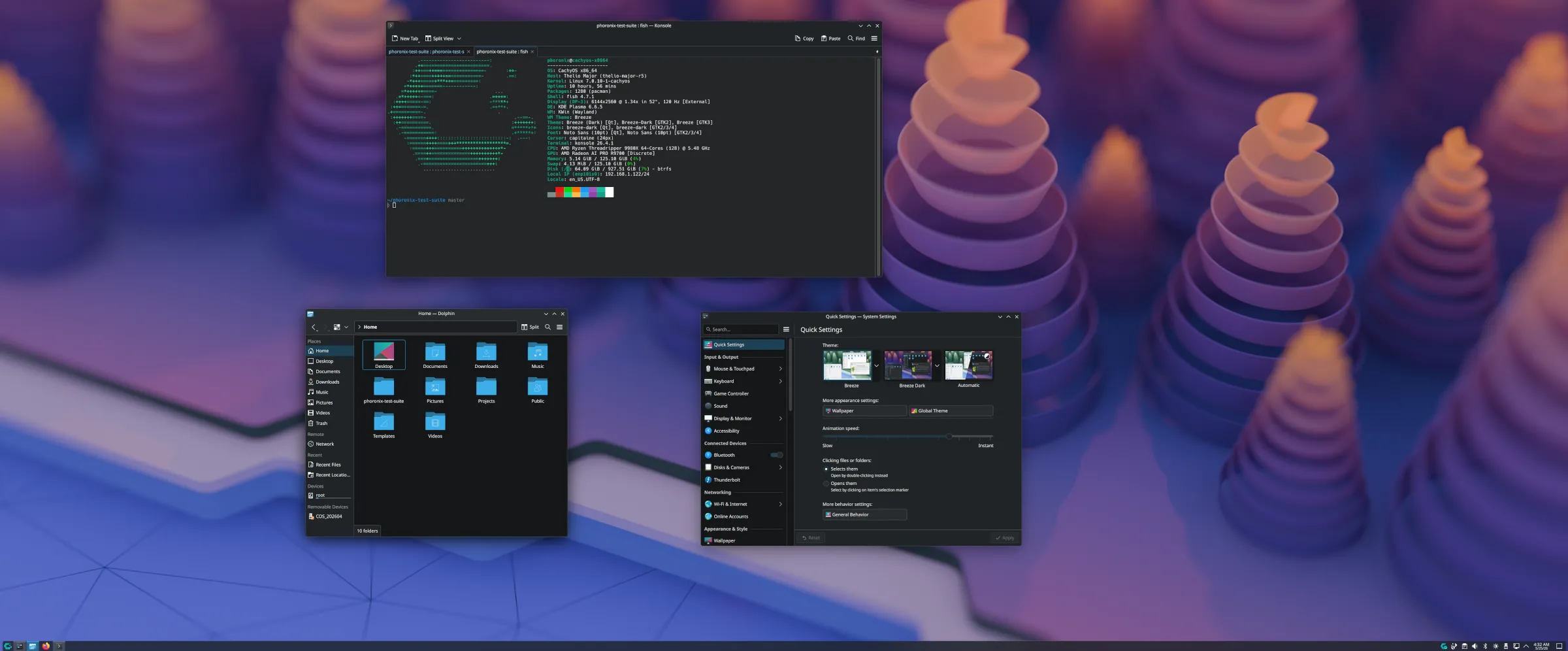
- More than 400 Arch Linux AUR packages compromised in a large-scale malware campaign. The Arch User Repository, the community-maintained package build system layered on top of Arch, was hit this week by an attack that pushed malicious code into over 400 user-supplied package definitions. AUR helpers typically fetch build scripts from maintainer repos, and the compromised entries reportedly tried to install miner-style payloads. Arch maintainers are urging users to refresh their AUR package lists and audit anything updated in the last several days. [Phoronix]
Linux & Open Source

- Linux 7.1’s new NTFS driver gains Windows native symbolic-link support. The NTFS kernel driver that landed in Linux 7.1 had a known gap around Windows native symbolic links; that gap is now being closed by upstream work. The fix matters for dual-boot users and anyone reading Windows-attached NTFS volumes from Linux: previously, Windows-style symlinks could appear broken or invisible. [Phoronix]
- AVX-512 RAID optimization hits 41% on Ryzen 9 9950X. Linux cryptography contributor Eric Biggers landed a new AVX-512 optimization in the software RAID code path, with benchmarked improvements up to 41% on AMD Ryzen 9 9950X hardware. The work continues a multi-year thread of AVX-512 tuning that has been quietly accelerating the kernel’s crypto and storage paths on modern x86_64. [Phoronix]
- Wine Wayland picks up alpha modifier support for surface opacity. The Wine Wayland driver now supports the alpha modifier protocol, which surfaces can use to control window opacity on Wayland compositors without falling back to X11/XWayland. It’s a small but visible quality-of-life win for Windows games and apps running natively on Wayland. [Phoronix]
- GCC 15.3 ships a year of bug fixes for late adopters. For projects still on the GCC 15 stable branch rather than the newer GCC 16, GCC 15.3 rolls in roughly twelve months of backported bug fixes. Notable fixes cover codegen regressions, miscompilations, and C++ standard-library edge cases. [Phoronix]
- Qt 6.12 beta lands with Qt Quick 3D XR running on 2D AR glasses. The first Qt 6.12 beta brings new Quick 3D XR support, including the ability to run Qt Quick 3D XR apps on 2D AR glasses. For commercial customers, Qt 6.12 doubles as the next Qt6 LTS. [Phoronix]
Microsoft
- Inside Xbox’s margin crush: a string of Game Studios misses and a Game Pass reckoning. Windows Central’s long read on Xbox’s current financial position argues that the gaming division’s margin problems aren’t purely a function of the memory shortage hitting the whole industry; they compound a run of misses at Xbox Game Studios and a Game Pass strategy that has struggled to grow into its new price points. The piece sketches out what Microsoft would need to change to stop the bleeding. [Windows Central]
- GroDock: a Windows 11 taskbar replacement worth keeping. Reviewer Cale Hunt calls GroDock his new favorite Windows 11 taskbar alternative, praising its deep customization options, dockable widgets, and per-monitor multi-dock support. The piece walks through setup, theming, and the productivity wins over the stock Windows 11 taskbar. [Windows Central]
Gaming

- Nintendo wanted to block Palworld — now it faces a 0% injunction chance and a $30K payout. Just days before Palworld’s 1.0 launch on July 10, the legal fight between Nintendo and Pocketpair has reached an anti-climactic end. Nintendo’s push for a preliminary injunction to halt Palworld is reportedly on track to be denied — the court assessed a 0% chance of Nintendo succeeding on the merits at this stage — and the case looks set to collapse into a small damages figure rather than the sweeping block Nintendo was hoping for. [Windows Central]
- Forza Horizon 6’s save-wiping bug is finally being investigated. Playground Games acknowledged the long-running save-wipe issue in Forza Horizon 6 and says a PC fix is rolling out through Microsoft Gaming Services. Xbox players will need a system update to follow; Quick Resume has been identified as a likely contributor to the corruption. [Windows Central]
- The Verge’s giant 2026 gaming handheld PC buying guide. Sean Hollister runs through every current Windows and Linux handheld worth considering this year, from refurbished Steam Decks at $279 up to the $2,500 GPD Win 5 with Strix Halo. The picks: Xbox Ally X at $999 for the top “I’d buy this for myself” slot, MSI Claw 8 for longest battery, Legion Go 2 for the best screen, and a long list of “don’t pay for these” alternatives at the bottom. [The Verge]
- Nintendo DS still rules for travel gaming. A retrospective arguing that, in an era of $789 Steam Deck OLEDS and price-hiked Switch successors, a Nintendo DS (or 3DS) is still the best choice for travel: cheap, indestructible, with a library of deeply replayable games. [The Verge]
Hardware
- BMW pulls the cover off a Neue Klasse M EV concept timed to Le Mans. BMW’s M division unveiled a two-door sedan concept built on the new Neue Klasse architecture, signaling the design and powertrain direction for future electric M cars. The concept introduces wider arches, a more muscular shoulder line, and motorsport-derived aero details. [The Verge]
- Intel’s “Project Firefly” wants €500 PCs built like smartphones. Intel is reportedly applying smartphone-style manufacturing methods to a new line of low-cost laptops, with sub-€500 price points and metal chassis as the design pillars. The project is an attempt to revitalize the entry-level portable PC market that Chromebooks and cheap ARM laptops have eroded. [Pplware]
- BYD overtakes Ford globally, targets Toyota within five years. Chinese automaker BYD has surpassed Ford in total global sales and is publicly targeting Toyota’s top spot within five years, riding its dominance in plug-in vehicles. The shift underlines how quickly the global auto pecking order is being redrawn around EVs. [Pplware]
- BYD’s Denza sub-brand leaks a 1,500 hp electric roadster. A regulatory filing leak has revealed the Denza (a BYD premium sub-brand) is preparing an electric roadster with claimed output above 1,500 horsepower. The car is positioned as a direct answer to the higher-end offerings from European performance brands. [Pplware]
- BougeRV T1 telescoping lantern: 3,000 lumens, doubles as a power bank. A review of the BougeRV T1 portable camping lantern, a telescoping three-arm LED design that can light over 1,000 square feet and doubles as a 57Wh USB-C power bank delivering up to 30W. The reviewer found it equally useful on the road and around the house. [The Verge]
Google / Android
- Google demos Gemini Live Translate for real-time cross-language conversations. Google unveiled Gemini Live Translate, a real-time voice translation system that promises natural-sounding conversations between speakers of different languages. The system is built on top of Gemini’s speech and translation models and is positioned as a step beyond current phone-based translation apps. [Pplware]
Startups
- SpaceX lines up the largest US IPO on record. SpaceX is preparing to list on the Nasdaq at a valuation that would make it the largest US IPO in history, dwarfing the current record holders. The pricing reflects private-market enthusiasm for SpaceX’s launch, Starlink, and Starshield businesses. [Pplware]
In Brief
- Researchers build a fabric that pulls drinking water from humid air. A team has demonstrated a textile material that extracts potable water directly from atmospheric humidity, with potential applications for survival gear and disaster relief. [Pplware]
- Flat tire with no spare: what to do. A practical guide for drivers whose cars now ship without a spare wheel — repair kits, run-flat tires, and roadside assistance options. [Pplware]
- WhatsApp is finally working on scheduled messages for groups. A long-requested feature: the ability to schedule a message to be sent later in a group chat. The feature is in development and not yet shipping broadly. [Pplware]
- Portuguese fuel prices: diesel down, gasoline up. The weekly Portuguese fuel price update, with diesel tipped to drop and gasoline to rise at the pump. [Pplware]
- Can a Portuguese shop refuse Multibanco for small purchases? A legal explainer on whether retailers can require a minimum spend for card payments via Multibanco, Portugal’s dominant debit network. [Pplware]
- Portugal’s SNS electronic prescription system hit by Friday outage. A Friday outage in the national electronic prescription system caused backlogs in pharmacies and primary-care units, with prescription issuance and dispensing disrupted across multiple regions. [Pplware]
- The Verge kicks off “Summer Upgrade Week.” A themed series of recommendations for summer upgrades, from smart outdoor lights to library streaming services to portable espresso makers. [The Verge]
Roundup compiled from the TTRSS Tech feed. 28 articles from 5 sources summarized.