
Tech News Roundup — June 13, 2026 (PM)
Anthropic is the lead story of the afternoon edition: a US government order has forced the company to cut off all foreign access to its new top-tier Fable 5 and Mythos 5 models, including for its own employees. Beyond the headline, the past 12 hours brought a Nadella memo on “tokenmaxxing,” the first mass shipment of Valve’s Steam Frame VR headsets, fresh concerns about ads on Xbox, and a packed Phoronix week for Linux: KDE Plasma 6.7 is days away from release and Intel quietly landed initial ARM support in its Thermald daemon.
AI

Anthropic cuts off Fable 5 and Mythos 5 access on a US government order. On Friday evening the US government ordered Anthropic to block access to its new Fable 5 and Mythos 5 models for all foreign nations, both inside and outside the US, citing national security concerns — and the order extended to Anthropic’s own employees. Anthropic says it is complying but that “the government did not provide specific details of its national security concern,” claiming any evidence of potential jailbreak was provided verbally and that the discovered vulnerabilities were minor and available on other models. The company has now restricted the models for all customers, not just foreign ones. [The Verge] [Pplware]
Nadella warns Microsoft staff against AI “tokenmaxxing.” Speaking to Microsoft staff, Satya Nadella pushed back on the recent pattern of running AI on every task without thinking about cost: “I’m a tokenmaxxer too, it’s addictive.” The framing is the classic “balance innovation with efficiency” memo — Microsoft is signalling that blanket AI usage is being treated as a budget line, not a free productivity multiplier. [Windows Central]
Apple’s first native AI photo editing tools are in the iOS 27 beta. The new features — reframe, extend, clean-up — are tame compared to what Pixel phones offer, but for the iPhone they represent a tipping point in what the native Photos app can do to a picture. They ship in the iOS 27 developer beta now, with refinements likely before the public release. [The Verge]
The future of Hollywood isn’t feeding prompts into vanilla gen AI models. Tribeca 2026 used custom builds of Google’s Veo and Imagen rather than off-the-shelf generators, and several high-profile studio–AI partnerships have evaporated over the past year. The takeaway from the festival floor: short, visually inconsistent bursts aren’t going to carry a feature film. [The Verge]
A Verge writer vibecoded a backyard gardening app with Gemini. Five minutes and a single prompt was enough for Gemini to produce a working app preview — plus a “channel is unrecoverably broken” bug it then asked the human to fix. The rest of the workflow (debug → fix → second-pass build) took another four minutes. [The Verge]
Microsoft
- Why Xbox (and others) are considering the role of “ads” on console. Jez Corden argues the question is more complicated than “greed”: an increasing share of Xbox and PlayStation users are spending literally nothing on the platform while Microsoft and Sony are selling hardware at a loss, and the memory crisis has only made the unit economics worse. Ads are being weighed as a way to recover margin, not as a cynical cash grab. [Windows Central]
Gaming
Valve just imported 13 tons of VR headsets in a single day. Import records show that on June 10 the German container ship Posen docked in Los Angeles carrying roughly 32 metric tons of “Virtual Reality Devices” offloaded by Valve’s distribution partner Ceva — minus the ~3,700 kg of five 40-foot shipping containers, that’s ~13 tons of actual product, almost certainly the first mass-production run of the Steam Frame. The same math put Valve at ~50 tons of game consoles in two days last month, so the company is stacking inventory ahead of the holidays. [The Verge]
Final Fantasy Resonance is the series’ first HD-2D game and it goes back to turn-based combat. IGN just published uninterrupted gameplay footage of Resonance, which Squaresoft is positioning as a return to the turn-based roots that the mainline numbered entries have largely abandoned. [Windows Central]
Echo Isle is a pint-sized Zelda-like you can finish in an hour. The PC adventure is heavily inspired by Link’s Awakening: retro graphics, blue tunic, sword, dungeon keys, magical MacGuffins, bosses — the lot — but the whole game wraps up in just over an hour. [The Verge]
Linux & Open Source
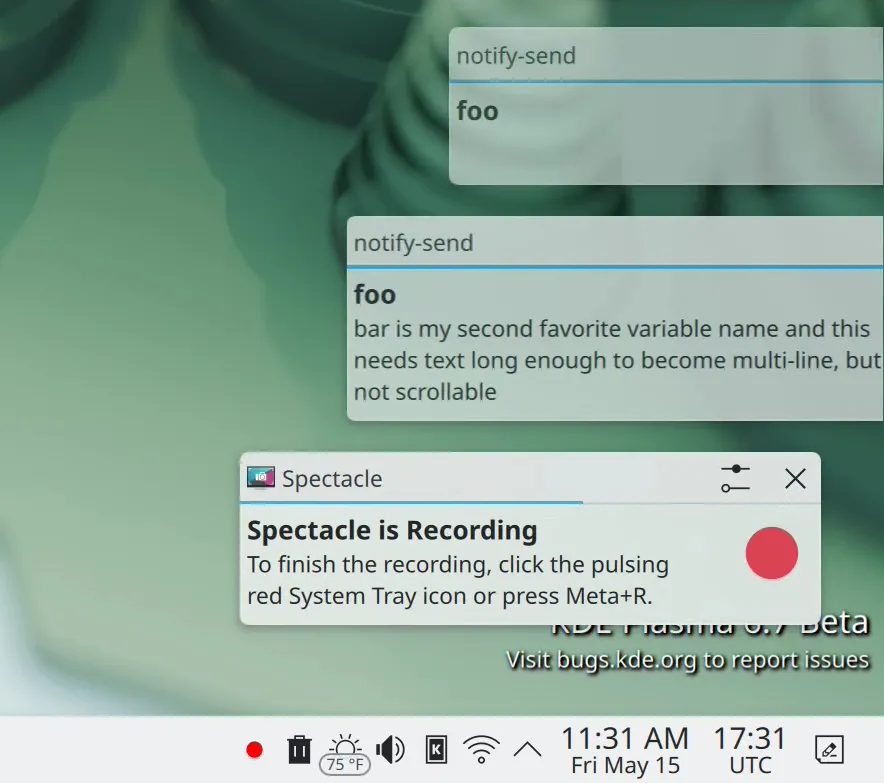
KDE Plasma 6.7 ships next week. KDE developers have been landing last-minute regression and bug fixes ahead of what is shaping up to be one of the most anticipated Plasma releases in recent memory. [Phoronix]
Fedora 45 is weighing a lightened GRUB UEFI bootloader for confidential computing. The minimal implementation would focus exclusively on confidential-compute workloads rather than carry the full GRUB feature set. [Phoronix]
Intel Thermald 2.5.12 lands with initial ARM support. The thermal daemon developed by Intel for its Linux laptops and desktops now monitors ARM platforms as well — a quiet but real cross-architecture expansion. [Phoronix]
GCC 17 merges function multi-versioning for APX and AVX10.2. Intel’s work to allow GCC to emit optimised code paths for APX and AVX10.2 while falling back to generic or other ISA targets is now in trunk ahead of the GCC 17 release. [Phoronix]
Haiku OS now enables AVX-512 by default on capable Intel/AMD CPUs. A batch of hardware-driver improvements also landed in the BeOS-inspired OS over the past month. [Phoronix]
In Brief
- Apple is reportedly dropping hints about three new products for this autumn. Specifics are scarce — the piece is built around analyst speculation more than hard evidence. [Pplware]
- Meta is preparing a premium “Meta One” tier for WhatsApp that bundles AI features and other exclusive extras behind a paid subscription. [Pplware]
- The CEO of Anker — the company that has dominated the powerbank category — is publicly forecasting that “powerbanks are going to die.” Better fast-charging batteries in phones and laptops are eating the use case. [Pplware]
- Xiaomi has built a robotic arm that can charge EVs autonomously, fulfilling a long-standing Tesla promise with a much smaller, consumer-targeted device. [Pplware]
- A fresh wave of malicious Android apps is bypassing the platform’s security model. Pplware is advising users to uninstall specific titles; check the article for the full list. [Pplware]
- Waze is rolling out a long-requested new feature to its navigation app — specifics are in the source post. [Pplware]
- World Cup 2026 has kicked off with a batch of subtle changes to the tournament format, the ball, and the offside/VAR workflow. [Pplware]
- Intel is exploring a smartphone-style build and sales model for PCs that could push sub-€500 laptops into retail at a much lower margin than the current channel. [Pplware]
- A new open-source app called Pool aims to tame the screenshot chaos by auto-organising captures into searchable groups; the lead item in The Verge’s weekly Installer newsletter. [The Verge]
- Marius Hosting walks through installing “May” on an Asustor NAS — a step-by-step for the curious homelab crowd. [Marius Hosting]
Roundup compiled from the TTRSS Tech feed. 23 articles from 5 sources clustered; Anthropic Fable 5 is the lead, KDE Plasma 6.7 is the top Linux story, Valve’s Steam Frame shipment is the lead hardware story.