
Tech News Roundup — June 14, 2026 (PM)
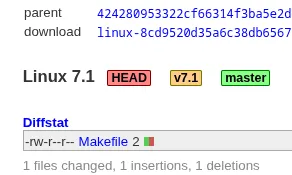
Linux 7.1 was the headline release of the afternoon — a kernel upgrade that brings Intel’s FRED support for Panther Lake, a new NTFS driver, faster Intel Arc graphics, and the usual round of scheduler and filesystem work. Microsoft, meanwhile, had a quieter day: a Reddit thread capturing growing user frustration with creeping Microsoft account requirements, and a simple Windows 11 performance fix that’s been quietly rolling out. The Anthropic Mythos story gained a fresh detail with reporting that the White House’s export-control decision was partly driven by fears that China-linked groups may have already accessed the model. A wide spread of gaming, hardware, open-source, and Pplware in-brief stories round out the edition.
Linux & Open Source

Linux 7.1 ships with a new NTFS driver, Intel FRED for Panther Lake, and faster Arc graphics. Linus Torvalds released the stable kernel a half-day early thanks to his travel plans, packing in a rewritten NTFS implementation, the Flexible Return and Exception Delivery (FRED) mechanism that Panther Lake silicon needs, and a round of Intel Arc GPU driver improvements. The release also rolls in performance work for AVX-512 parity generation in software RAID — Google’s Eric Biggers’ revised xor_gen() implementation lands on top of the new kernel. Phoronix
A revised AVX-512 xor_gen() implementation is yielding more performance gains for Linux software RAID. Biggers’ follow-up patch builds on the original 41%-better result by squeezing additional cycles out of the AVX-512 path, which the kernel uses to generate and validate parity blocks for RAID5/RAID6 arrays. Phoronix
PackageKit gets a modern, nicer command-line interface in the form of pkgcli. Open-source developer Matthias Klumpp posted a write-up of his work on pkgcli, a fresh CLI built on top of PackageKit’s package management abstraction layer — a usability upgrade for the toolchain that powers most distro-agnostic package front-ends. Phoronix
Wine-Staging 11.11 arrives carrying 289 patches atop upstream. Released just days after Wine 11.11’s Wayland driver improvements, Wine-Staging continues to serve as the testing/experimental derivative, carrying nearly 300 community patches that haven’t yet been pulled into the mainline codebase. Phoronix
AI / ML
The White House’s Anthropic Mythos export restrictions were partly driven by fears China had accessed the model. Semafor reports that the decision to limit access to Anthropic’s Mythos 5 and Fable 5 was motivated in part by concerns that a group linked to China had reached the model — a serious national-security risk if true, given the model’s capabilities and the possibility that the Chinese government could attempt distillation-based reverse engineering. The export-control directive has become one of the most consequential AI policy decisions of the year. [The Verge]
Solid-state batteries still aren’t ready for prime time — but gel-based alternatives are. Thomas Ricker’s weekly Stepback newsletter walks through the long road from lithium-ion to true solid-state, and why semi-solid “gel” battery chemistry is the practical middle step the industry is settling on. The piece frames gels as a meaningful improvement on current Li-ion without the manufacturing headaches that have stalled full solid-state. [The Verge]
Microsoft

Microsoft has made Windows 11 faster in a surprisingly simple way. Pplware reports on a quiet performance improvement that addresses some of the recent sluggishness users have reported — the fix appears to focus on background service handling and boot-time optimisation. The article frames it as Microsoft finally listening to feedback after a stretch of updates that prioritised AI features over raw performance. Pplware
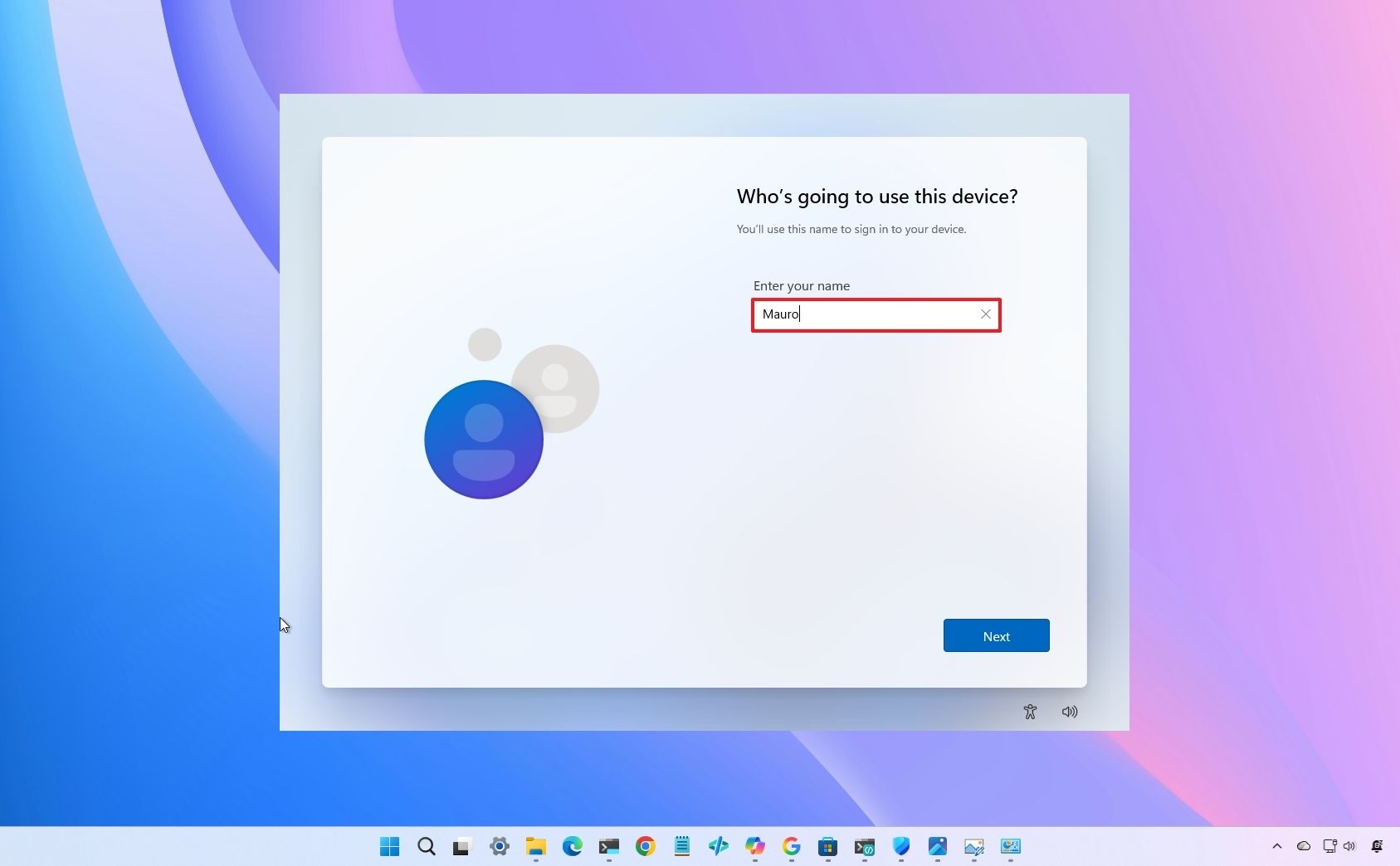
Windows 11 users say Microsoft account requirements are creeping into everything — and they’re tired of it. A Reddit thread surfaced by Windows Central captures the mounting frustration with mandatory Microsoft account setup, the workaround gymnastics required to install Windows 11 Home without one, and the confusion around BitLocker recovery keys tied to those accounts. The pattern is familiar: each Windows 11 update tightens the screws slightly, and the workaround community has to scramble. Windows Central
Ten years after the “Bring Android apps to Windows” promise, Microsoft’s app-gap problem still exists — but AI and Phone Link help fill the gap. Windows Central revisits the original 2016 Windows 10 promise and traces the long path of Microsoft’s failed attempts to bring a real Android-app-on-Windows experience to market. The current workaround — using AI assistants and Phone Link to surface app functionality from your phone — is the closest thing users have to a working solution. Windows Central
There are too many Windows laptops — and Microsoft could help. Windows Central argues that the sheer volume of configurations, chip generations, screen sizes, and price tiers in the Windows laptop market is actively confusing for buyers. A MacBook buyer has three or four real options; a Windows laptop buyer has dozens of near-identical SKUs to compare. Microsoft’s silence on curation leaves buyers — and reviewers — to do the work themselves. Windows Central
Gaming
Should Xbox CEOs have term limits? This week made the case. Windows Central’s Sean Endicott argues that Xbox’s financial troubles and leadership churn — a week of unflattering financials, layoff rumours, and Project Helix console uncertainty — have made the question of CEO term limits newly relevant. The piece walks through the case for fixed tenures, the risks of long-tenured gaming executives growing out of touch with the player base, and why this week’s news cycle sharpened the debate. Windows Central
Dragon’s Dogma 2 is getting a DLC expansion alongside long-overdue performance and balance patches. Capcom has announced Dragon’s Dogma 2: Dark Arisen, accompanied by a massive quality-of-life patch for the base game and a long-awaited performance patch slated for August 2026. The DLC-plus-patches bundle is being framed as a return to the form that made the original Dragon’s Dogma: Dark Arisen a cult classic. Windows Central
Star Wars Zero Company marks the return of the Clone Wars era. Pplware covers the new Star Wars title that returns players to the Clone Wars setting, with a tactical squad-based structure and a single-player campaign built around the period between Episode II and Episode III. Pplware
Apple
Apple throttled frequencies at WWDC 2026 to prevent accidental Siri activations. A Pplware deep-dive on the WWDC 2026 keynote reveals that Apple used a little-publicised technique during the live presentation to keep the devices in the audience from being triggered when “Siri” was spoken on stage. The frequency-throttling trick is a routine precaution for live events, but the article uses it as a hook to discuss how aggressively Apple is positioning Siri AI as the centrepiece of its 2026 platform strategy. Pplware
OPPO is refusing to copy Apple’s “Liquid Glass” aesthetic in ColorOS 17 — focusing on performance instead. Pplware reports on OPPO’s design decision to chart a different visual course for ColorOS 17, prioritising responsiveness and system performance over imitating the Liquid Glass look Apple introduced. The piece is part of a broader post-WWDC story about how Android OEMs are responding to the new Apple design language. Pplware
Hardware
Solid-state batteries still aren’t ready — but gels are. Thomas Ricker walks through the slow progress of solid-state battery commercialisation, and why semi-solid “gel” electrolyte designs are emerging as the practical near-term winner. The Verge piece covers the chemistry, the manufacturing trade-offs, and the product categories where gels are likely to appear first. [The Verge]
Carl Pei: “the best time to buy a new phone? Yesterday.” The Nothing CEO argues in a Pplware interview that the pace of smartphone innovation means there’s no real reason to wait — chips, displays, and camera systems have all hit a level of competence where last year’s flagship often outperforms this year’s mid-range. The framing is partly a sales pitch for Nothing’s own devices, but the underlying argument about hardware commoditisation is broadly accurate. Pplware
In Brief
The impossible dream of the universal remote. The Verge traces the long, troubled history of the universal remote — from Logitech’s Harmony line to today’s voice-control-and-IR-blaster mashups — and asks why the category has never quite delivered on the promise of replacing every remote in your living room with a single device. [The Verge]
How to watch most of the 2026 World Cup matches with free trials. The Verge’s streaming guide walks through the legal free-trial routes to catching the tournament’s marquee matches, with caveats about the regional blackouts and the inevitable auto-renewal traps. [The Verge]
Conclave is the sound of a NYC summer block party. The Verge reviews the self-titled debut from Conclave, framing the album’s warm, percussion-heavy sound as a love letter to the outdoor jam sessions that have defined the city’s post-pandemic music scene. [The Verge]
A jellyfish-repelling buoy promises to keep the pests away from bathing areas. Pplware covers a Portuguese engineering project that uses acoustic deterrents to keep jellyfish out of popular beach zones — a low-tech solution to a problem that has worsened as Mediterranean jellyfish populations expand. Pplware
The mysterious “cold spot” in the Atlantic that’s defying global warming. Pplware explores a persistent cool patch in the North Atlantic — a region where sea surface temperatures have stayed flat or even cooled over the last decade, bucking the broader global trend and puzzling oceanographers. Pplware
Sleeping with the air conditioning on? It might be ruining your sleep. Pplware runs through the recent sleep-science research on overnight AC use, the optimal temperatures, and the trade-offs between cooling and the body’s natural thermoregulation cycle. Pplware
HEV, PHEV, and MHEV — what’s the difference? Pplware’s primer on hybrid vehicle terminology explains the differences between full hybrids, plug-in hybrids, and mild hybrids, with a focus on the increasingly fuzzy lines between categories as more cars adopt 48V electrical systems. Pplware
Portugal is among the countries with the most expensive electricity in the world. Pplware shares a Eurostat-derived chart ranking Portugal against other EU and OECD countries on residential electricity prices, with a brutal gap between Portugal and the European median. Pplware
YouTube wants to be a social network — and that’s why it launched chats. Pplware covers YouTube’s new chat feature, positioning it as the platform’s clearest move yet toward becoming a full social network rather than a pure video destination. Pplware
Portugal’s new “radar”: cameras on school buses have already fined 18,000 drivers. Pplware reports on a road-safety programme that mounts cameras on the sides of school buses to catch drivers who fail to stop when the bus’s stop sign is extended. The 18,000-ticket first-year haul has made the programme one of the country’s more productive enforcement initiatives. Pplware
Pplware Classics returns with another round of music recommendations. The weekly feature continues to round up the editorial team’s eclectic picks, mixing Portuguese-language artists with international classics. Pplware
Roundup compiled from the TT-RSS Tech feed. 27 articles from 4 sources summarized.