
Tech News Roundup — June 16, 2026 (AM)

The morning’s two biggest stories are both about industry-defining decisions being walked back. Microsoft is shutting down another batch of Xbox studios while its Game Pass pricing reset plays out, and Anthropic is pulling its Fable 5 and Mythos 5 models for every customer after a White House directive citing cyberattack research. Beyond those, FreeBSD 15.1 finally ships, Linux 7.2 lands surprisingly large performance wins from a couple of VFS pull requests, and a 35-cluster working set spans gaming, AI policy, networking, and a generous helping of Portuguese tech from Pplware (with English summaries throughout). Verge-only stories are summarized without source links per the site convention.
Microsoft

Xbox is closing down more studios, and the leadership shake-up is getting louder. Asha Sharma’s “reset” memo from last week has now resolved into Kotaku-reported closures: Compulsion Games (South of Midnight) is being shut down, Ninja Theory (Hellblade) is being closed, and other studios including Double Fine are “at risk of being shuttered” with “active negotiations” for independence still ongoing. Xbox Game Studios head Craig Duncan and his chief of staff both departed Microsoft this week, with Duncan publishing a farewell message to dev teams. The same week Microsoft announced a Klarna/PayPal partnership to let buyers spread the cost of Xbox purchases over time — the kind of financial-services push you’d normally expect on a hardware launch, not a studio-closure week.
[The Verge] [Windows Central] [Windows Central] [Windows Central] [Windows Central]
Windows 11 Insider builds for June surface seven features worth attention. The June 2026 Insider flights add Screen Tint, a Low Latency Profile, quieter Widgets, smarter Search, File Explorer fixes, and fewer restarts. None of these are headline-grabbing on their own, but cumulatively they read as Microsoft quietly chipping at the roughest edges of 24H2 ahead of a likely 25H2 push later in the year.
AI/ML
Anthropic pulls Fable 5 and Mythos 5 for every customer after a US government directive. The models launched on June 9th with Anthropic saying Fable 5’s capabilities “exceed those of any model we’ve ever made generally available,” and Mythos 5 the same underlying model “but with the safeguards lifted in some areas.” On June 12th the White House ordered foreign access blocked after Amazon-conveyed research reportedly found ways to get Fable 5 to serve information usable in cyberattacks. Anthropic complied but pushed back, saying the “narrow potential jailbreak” shouldn’t trigger a recall of a model “deployed to hundreds of millions of people.” The shutdown is now being read in policy circles as the strongest possible case for sovereign/non-American AI infrastructure, and Big Tech’s lobbying push on KOSA and child-safety rules looks increasingly like a last-ditch effort to set the regulatory floor before that race accelerates.
[The Verge] [The Verge] [The Verge]
Gaming
Treyarch’s studio head Mark Gordon retires after 22 years, and Call of Duty: Modern Warfare 4 beta codes go out via the Cactus Bowl. Gordon’s exit adds to a brutal week for Xbox’s first-party roster. The MW4 beta access will be tied to the upcoming Call of Duty Endowment Bowl — same charity-event / beta-code drop pattern Activision has used since the Modern Warfare 2019 days.
EA opens a dedicated ads-in-games division, and the ads are already live. The new Advertising unit will let brands integrate directly into gameplay — read that as a meaningful expansion of the dynamic ad-placement programs EA has been trialing in FC and Madden over the past two years.
Capcom pulls paid DLC from Dragon’s Dogma 2 and folds the content into the base game as earnables. The move removes the controversial microtransactions ahead of the title’s DLC expansion, and Windows Central argues the rest of the industry should be paying attention. Earnable cosmetic content in a game that was already $70 feels like an actual olive branch.
Roblox’s VP of safety product policy: “ticking a box to say you’re 13 or older, it’s not enough anymore.” Eliza Jacobs told NBC News that Roblox’s video-selfie facial age estimation typically lands within 1.4 years of a child’s actual age, and that the platform is “optimistic” the tech will keep improving. NBC invited a group of kids to try to fool it; a fake mustache didn’t get them through.
[The Verge]
Crazy Taxi is back, with World Tour announced for 2027 at the Xbox Games Showcase. SEGA of America unveiled the new entry — the franchise’s first real return since the original trilogy — and it’s being positioned as a multi-platform release (the full platform list isn’t in the Pplware excerpt).
Linux & Open Source
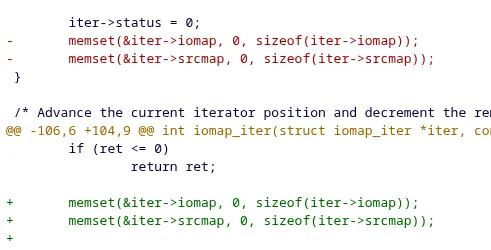
Linux 7.2 lands surprisingly large performance wins from a couple of VFS pull requests. Two near-trivial changes have outsized impact: an IOmap tweak delivers +5% IOPS for EXT4 and XFS by tightening how file data offsets in memory are mapped to physical storage locations, and reading
/proc/filesystemsis now up to 444% faster after profiling showed it was being hit on an unexpectedly hot path.FreeBSD 15.1 ships with updated WiFi drivers and better C23 support. The release was pushed back by two weeks but is now the current stable FreeBSD. Phoronix notes the WiFi driver refresh is one of the more substantial pieces of the changelog.
FreeBSD gets Linux Foundation funding for AI-assisted vulnerability discovery. The Alpha-Omega project — backed by Microsoft, AWS, Google, Anthropic, and OpenAI — will underwrite a new AI-Assisted Vulnerability Discovery Project for the BSD codebase. A separate piece (freebsd-ai-vuln) covers the announcement.
GCC steering committee backs a WebAssembly backend for the GNU toolchain. A new back-end proposed last month to allow C/C++ to be compiled to WASM has cleared the Steering Committee’s bar for inclusion. The next step is upstream integration work, with no specific merge-window target yet.
Firefox 152 ships with JPEG-XL compiled in by default, modernized settings UI. JPEG-XL support is built in the release binaries but still disabled at run-time behind a preference — the prelude to flipping the default in a near-future ESR.
Ubuntu Touch 24.04-2.0 beta fixes notches and rounded corners. The community-maintained Ubuntu Touch line pushes a beta ahead of its mid-July stable release, with proper cutout handling finally landing.
Intel’s new open-source project puts AI agent skills to work on Linux CPU performance tuning. Intel Performance Skills gives AI agents structured tools for CPU perf analysis and optimization on Linux. Aimed squarely at the developer-on-call workflow that normally involves hours of
perfandbpftracepoking.Russian spam and offensive messages are now plaguing the Arch Linux AUR. Fresh on the heels of the 1,500+ malware package incident, the Arch User Repository is dealing with another moderation headache — spam and profanity submissions in package metadata. The Trust Factor of community-maintained repositories is being tested hard this month.
Browsers & Privacy
Google Chrome 150 and 151 will close the last Manifest V2 ad-blocker workarounds. The phased kill of MV2 ad blockers — which started in 2024 with uBlock Origin and similar — has one more cleanup pass in late June and another in July, after which only Manifest V3 ad blockers (like uBlock Origin Lite) will keep working.
[The Verge]
Hardware
CHUWI AuBox X 256V mini AI PC reviewed as desktop prices climb. Windows Central’s reviewer used the AuBox for a few weeks and liked the price-to-size ratio, with the caveat that the value proposition shifts as traditional desktop pricing rises. A solid “wait for a sale” entry in the budget mini-PC category.
Home Lab & Self-hosting
Dockhand jumps from 1.0.32 to 1.0.33 with in-place container property updates and clickable stack badges. Useful for Synology and UGREEN NAS owners running Dockhand as a Docker Compose UI: restart policy, CPU/memory limits can now be applied without container restarts, and container/volume inspect modals now have clickable stack badges.
Portugal & Lusophone Tech (English summaries)
Portugal’s national AI model “Amália” to be unveiled publicly this month. Education, Science and Innovation minister Fernando Alexandre confirmed the launch window. The model is named after Amália Rodrigues, the iconic Portuguese fado singer.
Portugal’s EV subsidy program exhausted within hours of opening. The latest round of state incentives for electric vehicle purchases sold out almost immediately, raising the usual question of whether a follow-up phase will be opened. (Translated; the original headline uses the same exhausted-in-hours framing as the previous subsidy round.)
Renault and Thales unveil the 4 TROOP hybrid military vehicle concept at Eurosatory 2026. Designed for modern land-combat scenarios, the 4 TROOP integrates drones, AI, and secure communications. A direct answer to the increasingly network-centric European defence market.
Google Earth’s flight simulator is now available in the browser. Google quietly added the long-dormant flight simulator feature to Google Earth in the browser, no desktop install required. Pilots around the planet, report in.
Trump threatens 100% tariff on French wine in retaliation for the French digital services tax on US tech giants. A re-run of a long-running dispute, with wine as the leverage point on the French side. The article frames it as “taxa aduaneira gigante” (giant customs duty) if Paris doesn’t drop its tax.
The Portuguese gov.pt app now lets you manage your official IDs (cédulas) digitally. Another step in the digital transformation of Portuguese public services — the unified gov.pt app consolidates access to official government documents on a phone.
Portugal’s public-procurement portal Base.Gov: public transparency or a roadmap for attackers? Pplware raises the security argument that publishing detailed contract information — who buys what, from whom, for how much — gives potential attackers a free reconnaissance database of vendor relationships, contract values, and timelines.
“Fits on a Floppy”: a movement to make software small enough to fit on a 1.44MB diskette again. The pushback against ever-bloated dependencies continues — the Fits on a Floppy community advocates for leaner, faster apps with fewer unnecessary dependencies.
1,000-drone light show at Vivid Sydney goes wrong; 90 drones fall from the sky. A high-profile drone-show failure at a major Australian festival is now being used as a case study in autonomous-fleet safety. The question of what happens when show drones fail mid-flight is getting real-world answers.
Cultural prescribing: a Nordic solution heading to Portugal’s NHS. The University of Porto is piloting a model where doctors can prescribe cultural activities (concerts, museum visits, etc.) for anxiety and mild depression as an alternative or complement to medication. The “prescrição cultural” approach has been in active use in Sweden and the UK for years.
FIFA president tests the VAR system on Hisense RGB MiniLED displays ahead of the 2026 World Cup. Hisense is reinforcing its role as Official Television Supplier for the Video Assistant Referee (VAR) review system at the 2026 FIFA World Cup.
Streaming & Media
Fox announces a $22 billion deal to acquire Roku. Fox will take over the streaming middleman that powers more than 100 million TVs worldwide. CEO Lachlan Murdoch says the two companies will remain operationally separate, with Fox aiming to add Fox Sports, news, and local station content to the Roku platform. The big question is what happens to the user-data layer behind the Roku interface — that’s the real prize in the deal.
[The Verge]
Facebook’s new AI Mode search pulls from public posts. Meta is rolling out AI Mode as a new search option alongside “People” and “Marketplace.” The results are AI-generated from publicly-posted content across Meta’s platforms, with follow-up questions handled by Meta’s AI.
[The Verge]
One year of the Trump Mobile T1 phone. The Verge marks the first anniversary of the Trump-branded phone, recalling the contradictory specs, the product images that weren’t photographs, the $100 deposit to pre-order a $499 phone with no release date, and the bold “designed and built in the United States” claim. The first year of Trump Mobile hasn’t done much to quiet the original skepticism.
[The Verge]
Drones & Defense
Skydio CEO Adam Bry on why Silicon Valley shouldn’t draw red lines for military drone use. In a long Decoder interview, Bry argues against blanket restrictions on autonomous drone work with police and the military, noting that the bigger enterprise market is utility infrastructure inspection. The US consumer drone market has effectively disappeared after last year’s ban on Chinese-made drones, leaving Skydio as the main domestic alternative at substantially higher prices.
[The Verge]
In Brief
Verge coverage of Amazon Prime Day and gadget deals — the 2026 Prime Day event doesn’t start until June 23rd, but the early deals are already live: AirPods Pro 3 at their cheapest-ever price, Ring’s latest battery doorbell at $60 off with a free Indoor Cam Plus, and a Baseus AM52 Qi2.2 25W power bank for $42.99 with code THEVERGECODE through June 30th. [The Verge] [The Verge] [The Verge] [The Verge]
Verge Father’s Day 2026 gift guide is live, rounding up the usual mix of gadgets and home tech. [The Verge]
Roundup compiled from the TTRSS Tech feed. 47 articles from 5 sources clustered into 35 stories.