
Tech News Roundup — June 17, 2026 (AM)
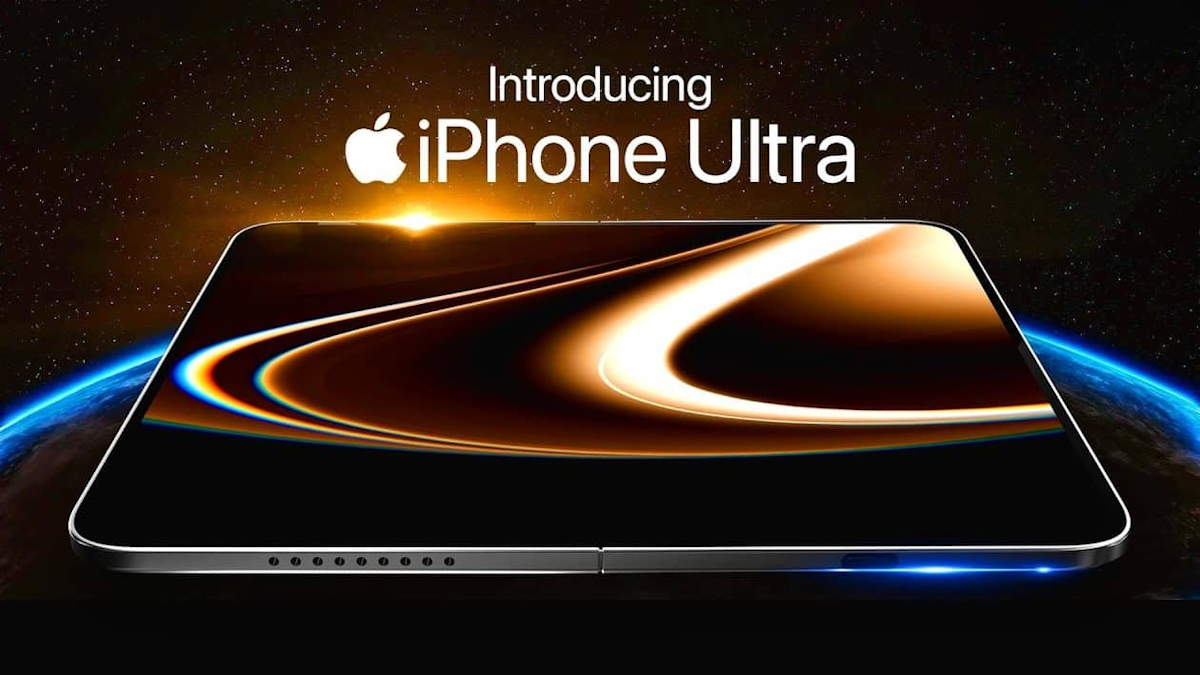
Google pushes Android 17 — and the new Wear OS 7 — to Pixel phones, with floating Bubbles, a 50/50 split-screen gaming mode for foldables, and a 10% battery boost for watches. Apple’s long-rumoured foldable iPhone Ultra is reportedly slipping into 2027 as production issues multiply. Linux 7.2 lands with a coordinated wave of filesystem and VFS work, Firefox 151 has been quietly running on Rust’s zlib-rs for better memory safety, and Tesla’s Cybercab is officially the lightest, most range-efficient EV the company has ever produced. Below: the thematic rundown.
Google / Android
Android 17 rolls out to Pixels, Wear OS 7 to Pixel Watches. Google is pushing the Android 17 update to compatible Pixel phones today, alongside the June Pixel Drop. The biggest user-interface change is Bubbles — floating app windows that open with a long press, similar to what many manufacturer skins have offered but now an official part of the OS. Other additions include a Screen Reaction recording mode and a 50/50 split gaming mode for foldables. [The Verge] [The Verge] [The Verge]
Wear OS 7 launches with Live Updates and a battery life boost. Wear OS 7 is rolling out to the Pixel Watch 2, 3, and 4, with Live Updates now syncing sports scores, deliveries, and other live events between phone and watch. Google claims up to 10% more battery life than Wear OS 6, and Gemini Intelligence features (Create My Widget, etc.) are set to follow later this year. [The Verge] [The Verge]
Android XR glasses lineup takes shape. The Google-Xreal Aura XR glasses are now available to preorder for a $99 refundable deposit ahead of a full US, UK, Japan, Canada, and South Korea launch this fall — the second Android XR device after Samsung’s $1,799 Galaxy XR headset. Qualcomm separately announced its Snapdragon Reality Elite chip at Augmented World Expo, and the Aura is in fact the first device we already know is running it. [The Verge] [The Verge]
Snap’s AR Specs finally ship — for $2,195. Snap is finally launching the public version of its AR glasses: Specs, a “wearable computer built into see-through augmented reality glasses,” will set buyers back $2,195 when they ship this fall in the US, UK, and France. Preorders are open at specs.com with a $200 refundable deposit. [The Verge]
Apple
Foldable iPhone Ultra reportedly slips to 2027. Apple’s long-rumoured foldable iPhone — internally branded as the iPhone Ultra — is hitting fresh production problems and is now expected to be pushed back to 2027, with the manufacturing issues adding to years of “the foldable is coming soon” reports. The delay leaves the foldable-phone field to Samsung, Google, and Chinese OEMs for another year. [Pplware] [The Verge]
Apple’s 2027 hardware roadmap: camera AirPods and a second folding iPhone. Bloomberg’s Mark Gurman reports that Apple’s camera-equipped AirPods are on schedule for a late-2027 launch — the buds will carry a camera in each stem plus an indicator light for cloud-uploads, and are being internally tested against next year’s iOS 28. Apple is also expected to ship a second-generation folding iPhone in 2027 as part of the 20th-anniversary lineup. [The Verge]
Linux & Open Source
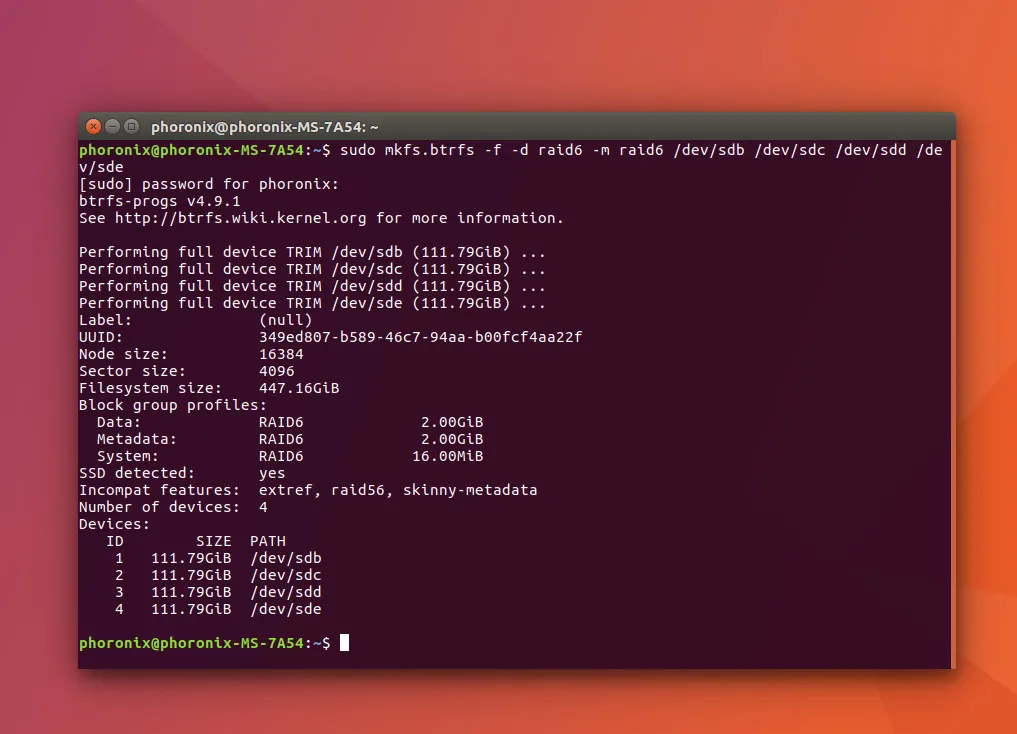
Linux 7.2 ships a coordinated filesystem and VFS push. The Linux 7.2 merge window landed with a heavy emphasis on filesystem and VFS work: Btrfs turns on Large Folios by default and gains Huge Folios, the new
OPENAT2_REGULARflag lets programs restrict themselves to regular files viaopenat2, and a patch series tackles the “VFS: Busy inodes after unmount” race to significantly lower container exit and unmount latency in heavy-I/O environments. Anonymous-pipe write performance is also up. [Phoronix] [Phoronix] [Phoronix] [Phoronix]Linux formalises the bar for new filesystems in-tree. With FTRFS, VMUFAT, and multiple competing NTFS drivers piling up at the door, the kernel has published a new guidance document laying out the criteria new filesystems must meet to be accepted upstream. Expect more rigorous maintenance expectations on future submissions. [Phoronix]
Firefox 151 has been quietly running on zlib-rs. Since Firefox 151’s release in May, Mozilla has been using the Rust-based zlib-rs library for Gzip compression and decompression in place of C zlib. The change yields both performance gains and better memory safety, though some Intel CPU bugs have caused fresh headaches. [Phoronix]
KDE Plasma 6 lands on Slackware. Slackware has finally shipped KDE Plasma 6 as its default desktop — a quiet milestone for the legendary distribution, and the latest in a long line of distros migrating to Plasma 6 ahead of the KDE 7 cycle. [Phoronix]
Wayland’s Weston 16 alpha adds HDR and Vulkan fixes. Weston 16.0 Alpha 1 has been cut with HDR improvements, Vulkan renderer fixes, and assorted compositor changes. [Phoronix]
Wine Wayland picks up fractional scaling. Following last week’s Wine 11.11 alpha-modifier support, Wine’s Wayland driver has merged fractional-scaling support, completing a long-running compatibility push. [Phoronix]
Intel’s Compute Runtime gets early Nova Lake support. Intel’s open-source Compute Runtime 26.22.38646.4 brings Nova Lake (Xe3P) support up to “early” status and introduces an experimental “LEO” backend. [Phoronix]
Microsoft & Xbox
GitHub’s AI surge forces Microsoft to call Amazon for cloud help. Microsoft has turned to Amazon for extra cloud capacity after AI-driven demand triggered repeated GitHub outages. The “unlikely alliance” highlights just how much pressure the Copilot coding workflow is putting on Microsoft’s own infrastructure. [Windows Central]
Microsoft denies Xbox-exclusives reversal. Microsoft is pushing back hard on weekend forum rumours that it was preparing to “reverse course” on Xbox exclusive games. The denial matters because Game Pass remains the central commercial bet for Xbox — pulling exclusive content from it would crater the platform’s value proposition. [Windows Central]
Call of Duty: Vanguard headlines Xbox Game Pass June wave two. Microsoft’s second batch of Game Pass titles for late June includes Call of Duty: Vanguard, EA Sports FC 26, and Tony Hawk’s Pro Skater 3 + 4 — a high-profile “redemption” slot for Vanguard, which has been a perennial punching bag for the franchise’s critics. [Windows Central]
Surface Pro 12 / Surface Laptop 8 ship with Snapdragon X2 across business and consumer. Microsoft is bringing the Snapdragon X2 generation to both the Surface Pro 12 for Business and the Surface Laptop 8 for Business — and since the silicon is now identical between business and consumer SKUs, the differentiation comes down to enterprise features. [Windows Central]
Microsoft’s free Surface Pro keyboard is okay; the Flex Keyboard is a real upgrade. With the Surface Pro 12 launch, Microsoft is bundling a free standard keyboard — but Best Buy’s $70 discount on the premium Surface Pro Flex Keyboard turns the tablet into something that genuinely feels like a real laptop. [Windows Central]
Hardware

SpaceX crosses a $1.75 trillion valuation post-IPO. SpaceX’s stock-market debut valued the company at a historic $1.75 trillion — driven by its capacity to keep slashing launch costs. The valuation puts SpaceX in rare air among non-financial public companies, with implications for everything from Starlink’s consumer pricing power to its AI infrastructure ambitions. [Pplware]
Tesla Cybercab is officially Tesla’s lightest, most efficient EV. Tesla’s EPA filings for the in-production Cybercab confirm it as the lightest and most range-efficient vehicle the company has ever built — and quite possibly one of the most efficient EVs ever produced. The single front-motor, two-seat autonomous robotaxi is in production, though Tesla still lacks a coherent plan for the broader ride-hail business. [The Verge]
Dell undercuts the Windows 11 laptop market at $599. Dell’s new XPS 13, unveiled at Computex, is now available to buy — starting at $599 for students and $699 for everyone else, setting what the reviewer calls a new bar for what affordable Windows 11 PCs should look like. [Windows Central]
Steam Machine CPU benchmarks surface — and they’re mid. Early Geekbench 6 numbers for the new Steam Machine put its CPU performance roughly in line with current gaming handhelds — middling, but in context: the GPU and SteamOS integration are the differentiators, not the raw CPU pass. [Windows Central]
DJI’s Osmo Pocket 4P lands as a cheaper Insta360 Luna Ultra alternative. DJI’s dual-camera Osmo Pocket 4P, briefly debuted at Cannes, is now on preorder in China for ¥3,799 (~$562) — undercutting the $769.99 Insta360 Luna Ultra. The Pocket 4P has a 1-inch sensor with improved dynamic range and 4K slow-mo, but not the 8K of the Insta360. [The Verge]
Telecom
- Verizon’s “Simplicity” plan starts at $30/month. Verizon is launching a new flat-rate Simplicity plan at $30/month for new customers ($45 for existing ones), with activation and upgrade fees dropped in exchange for opting into the carrier’s new My Verizon-app loyalty program. [The Verge]
Policy & Regulation
Florida sues TikTok over its kids’ social media ban. Florida has sued TikTok, alleging the platform is not complying with HB3, the state’s law banning kids under 14 from creating social media accounts. The suit claims TikTok is “actively deceiving” parents about the risks, and is failing to require parental consent for 14- and 15-year-olds. [The Verge]
Fox Corp’s Roku acquisition will create a US-TV top-three. Fox Corporation CEO Lachlan Murdoch is moving to acquire Roku, gaining access to the 100 million households in Roku’s user base and combining the two companies into “the third-largest player in U.S. television” by viewing share. The piece is more elegy than news — saying goodbye to Roku City as a free-wheeling independent platform. [The Verge]
“Content is King” turns 30 — and AI is rewriting the punchline. A reflective piece marking 30 years of Bill Gates’ 1996 “Content is King” essay. Gates was right that content would be where the real money is made on the internet — but the AI revolution has so thoroughly altered how that content is produced, distributed, and monetised that the essay’s predictions are now sitting alongside the technology that has shifted the ground beneath them. [Windows Central]
In Brief
Microsoft Flight Simulator 2024 Sim Update 6 is on the way. MSFS 2024’s next major update is incoming within “the next couple of months” — no firm date yet, but the change list is published. [Windows Central]
XPENG P7+ officially launches in Portugal. The new XPENG P7+ has arrived in the Portuguese market, marketed as one of the most technologically advanced cars on sale and claiming up to 660 km of urban range. [Pplware]
The longest direct train routes in Europe start this month. A new direct rail service linking Frankfurt to the Ukrainian border via Prague and Kraków begins daily service from June 25, with tickets starting at €10. [Pplware]
Brussels will ban shared e-scooters from 2027. The European Commission has announced that shared electric scooters will be banned across EU cities from 2027, citing safety and urban planning concerns. [Pplware]
Nothing Ear (a) hit $53 ahead of Prime Day. The Verge’s favourite budget earbuds drop to an all-time low of $53.20 in black on Amazon ahead of the early Prime Day sales push. [The Verge]
Amazon’s Fire TV Soundbar Plus 5.1 kit is $110 off. Amazon’s Fire TV Soundbar Plus with subwoofer and satellite speakers — a Dolby Atmos / DTS:X 5.1 system — drops to $380 from $490 in the run-up to Prime Day. [The Verge]
PopSockets’ new Low-Pro grip is 2.6mm thin. PopSockets’ thinnest phone grip yet is now available exclusively through Apple in four colours for $39.99, with broader availability from July 29. [The Verge]
Prime Day 2026 runs June 23–27. Amazon’s Prime Day 2026 officially starts June 23 at 12:01 AM PT and runs through June 27 at 12:01 AM PT, with rolling Lightning Deals throughout. Walmart is hosting a competing sale from June 22 through June 28, and Target’s Circle Deal Days run June 23–26. [The Verge]
MIT develops a swallowable body-temperature sensor the size of a blueberry. MIT researchers have built an ingestible temperature sensor that continuously monitors core body temperature from inside the gastrointestinal tract — a potential new alternative to traditional thermometry. [Pplware]
Yale’s new smart-lock and camera range targets short-let hosts. Yale’s new generation of smart locks, cameras, and digital safes is targeted at short-let / vacation-rental operators needing to automate guest access and on-site management. [Pplware]
Portugal’s Fundo de Garantia Salarial is now trackable online. Workers in Portugal can now follow Fundo de Garantia Salarial (wage-guarantee fund) claims online — a process that previously required in-person or phone follow-up. [Pplware]
Roundup compiled from the TTRSS Tech feed. 47 articles from 4 sources (Phoronix, Pplware, The Verge, Windows Central) summarised into 30 cluster bullets.