
Tech News Roundup — June 25, 2026 (AM)

A pre-order heavy morning led by Rockstar opening GTA 6 pre-orders at $79.99 for the Standard edition and $99.99 for the feature-locked Ultimate Edition, with bonuses for early reservers and a worrying sign for physical game retail. Microsoft keeps cutting: cheaper 12-inch Surface Pro and 13-inch Surface Laptop models arrive with 8GB of RAM at $849 / $899. On the AI side, Satya Nadella argues the technology must demonstrate real-world value or lose public support, NVIDIA pitches its next-gen AI infrastructure as a power-and-water answer, and OpenAI reveals Jalapeño — its first in-house AI processor, built with Broadcom. The Linux 7.2 merge window keeps landing big numbers: an MGLRU improvement yields 30–100% higher MongoDB throughput depending on workload.
Gaming
- GTA 6 pre-orders are live at $79.99 Standard / $99.99 Ultimate. Rockstar has officially opened pre-orders for Grand Theft Auto VI on Xbox Series X|S and PlayStation 5 ahead of the November 19 launch. The Ultimate Edition adds the Criminal Enterprise Starter Pack, a bank bonus, vehicle upgrades, and a “Boom Fi-Bi” radio station; Rockstar is also offering exclusive pre-order bonuses through the Rockstar Launcher. Windows Central has the full breakdown of where to buy and which edition is right for which buyer. Windows Central Windows Central Pplware [The Verge] reports that GTA VI is a worrying sign for the future of physical games, with retailers noting that many of the bonus items will arrive as digital codes inside the box.
- Xbox update: longer gamertags, Xbox 360 BC buffs, Cloud Gaming improvements. Microsoft has rolled out a new Xbox platform update letting users make their gamertags longer (up from 12 characters), plus a round of backwards-compatible Xbox 360 game improvements and notable upgrades to Cloud Gaming session quality and resume times. Windows Central
- Xbox CEO Asha Sharma on “gaming is unaffordable.” New Xbox CEO Asha Sharma told Entertainment Weekly that “gaming is unaffordable in many cases” — and Windows Central readers responded with a scathing message for Microsoft, arguing the platform holder has done plenty to push prices up (full-priced console launches, $70 base games, $80 deluxe editions, layered microtransactions) before pinning the affordability problem on consumers. Windows Central
- An Xbox Game Pass sequel gets a “refining the experience” tease. Microsoft has teased the sequel to an Xbox Game Pass title with a “to further refine and strengthen the overall experience” framing, but has not yet named the game. Windows Central
- Riot’s Vanguard anti-cheat is now opt-in. Riot Games has updated Vanguard so players with the right hardware can opt into “pre-boot security mechanisms” rather than being forced into the always-on kernel-level driver. League of Legends and Valorant players can now enable the extra layer on their own schedule. [The Verge]
- American Truck Simulator is the surprising Prime Day bargain. Euro Truck Simulator 2 and American Truck Simulator are deep-discounted during Amazon Prime Day, and Windows Central is making the case that the sim-genre sleeper hits are still the best value in PC gaming. Windows Central
Microsoft
- Microsoft cuts Surface RAM in half to hit lower prices. Microsoft has added a cheaper 12-inch Surface Pro ($849) and 13-inch Surface Laptop ($899) to its lineup, both equipped with 8GB of RAM instead of the 16GB found on existing models. The Verge’s take: the company is willing to ship sub-16GB devices in 2026 because that’s the price point where volume buyers actually live, even though the spec sheet is a step backward. [The Verge]
- A new Nature paper challenges Microsoft’s quantum claims. A critique published in Nature Wednesday argues that the basic technology behind Microsoft’s “breakthrough” Majorana 1 quantum computing chip was overstated a year ago. The paper takes issue with the topological qubit architecture Microsoft used to claim the path to a million-qubit machine. [The Verge]
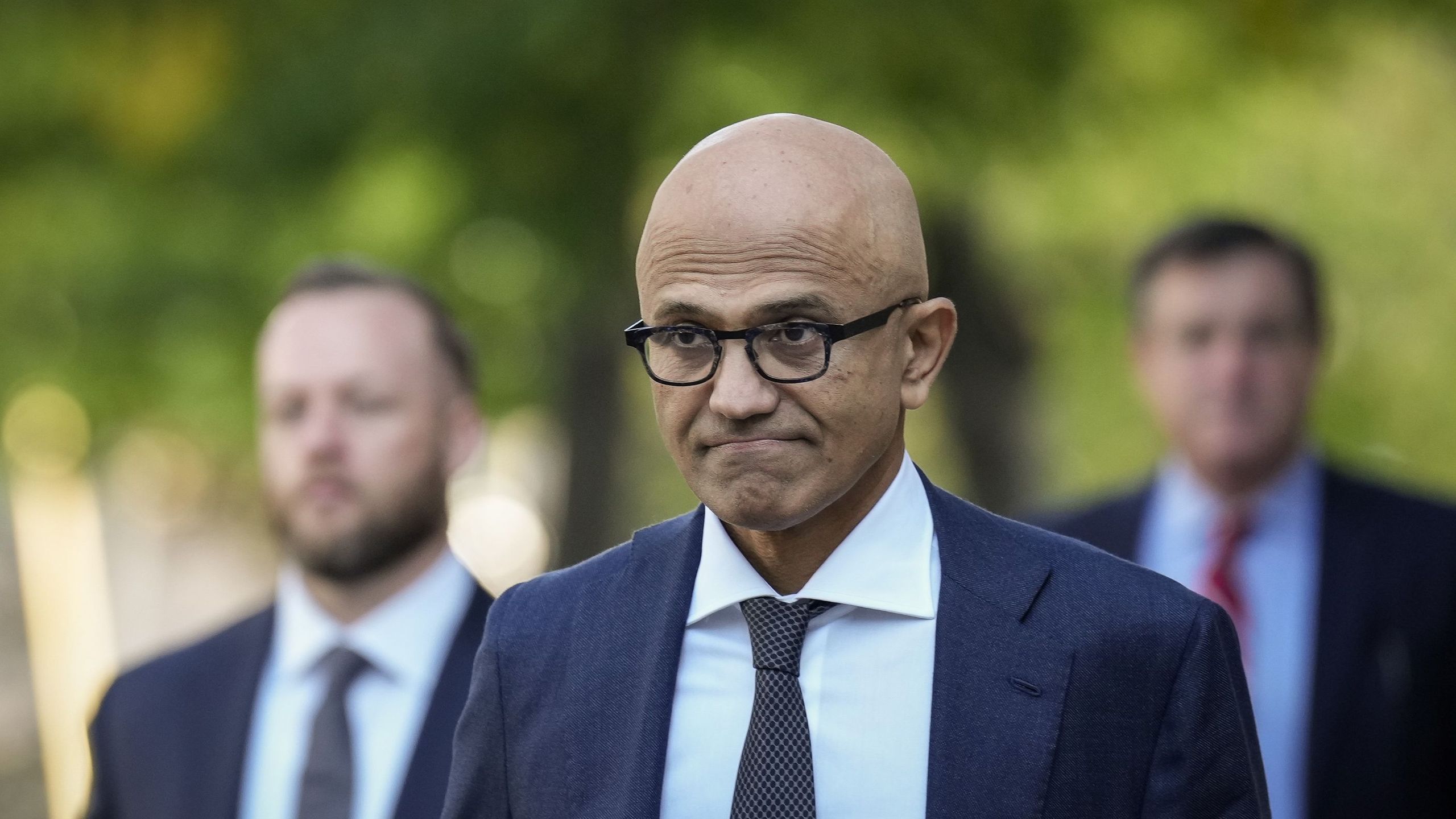
- Satya Nadella: AI must benefit everyone, not “a few powerful firms eating up the economy.” Microsoft’s CEO warned that AI must demonstrate real-world value or risk losing public support, citing the backlash over data centers’ heavy demands for electricity and cooling water. His framing — that AI gains need to be broadly distributed rather than concentrated in a handful of hyperscalers — echoes the FTC’s recent scrutiny of AI partnerships and the EU’s compute-intensity reporting rules. Windows Central
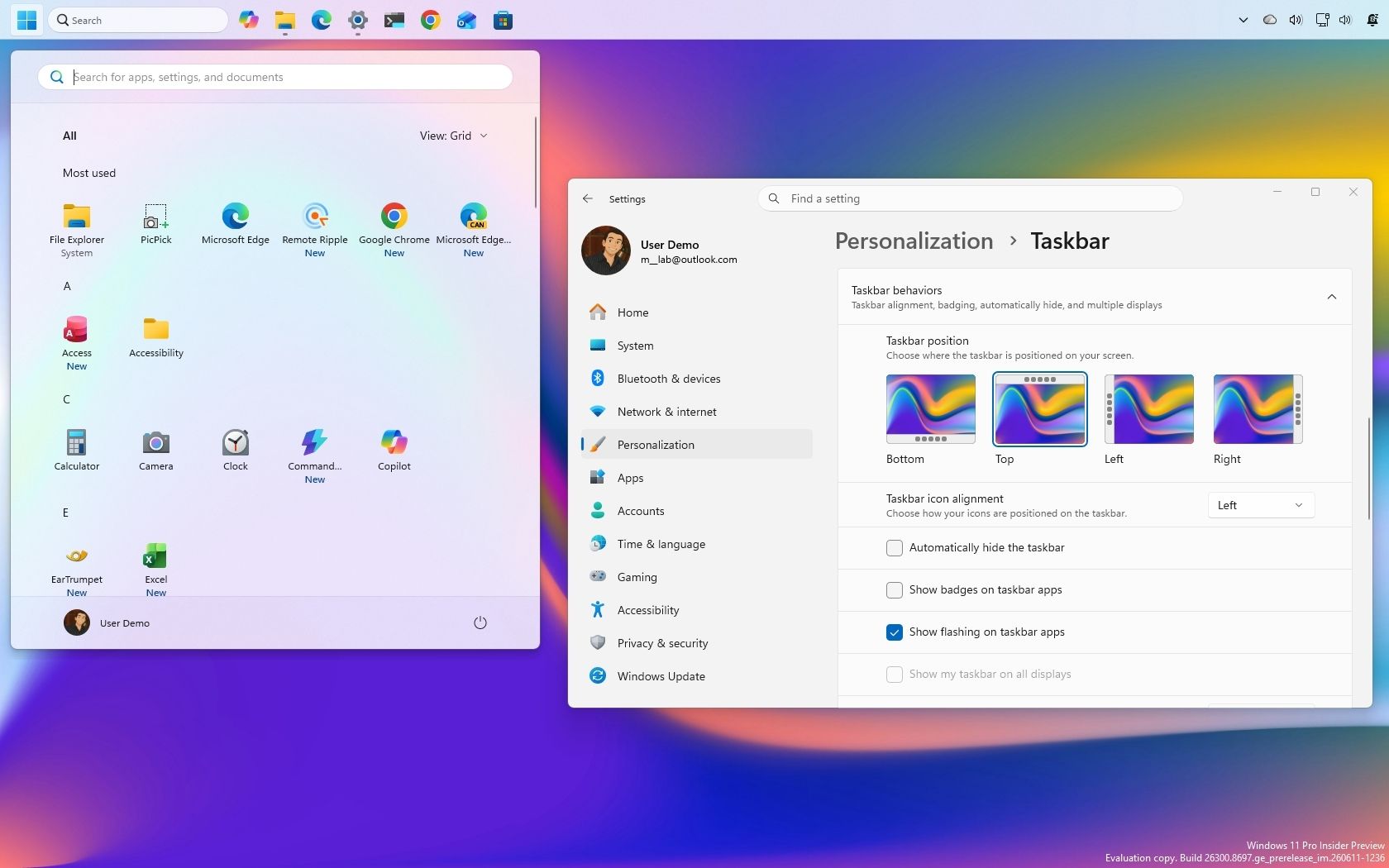
- Windows 11 is finally rethinking the Start menu and Taskbar. Microsoft is reversing its years-long simplification of the Windows 11 Start menu and Taskbar, with recent preview builds restoring customization options users had relied on for years. The 2026 direction is more control, not less — a notable change from the post-launch “minimal by default” stance. Windows Central
- PowerToys 0.100.1 squashes a wave of breakage. A small but important update that fixes a bunch of bugs in version 0.100.0 that had broken core features of the PowerToys Command Palette and extension system. Windows Central
AI & ML
- OpenAI reveals its first AI processor: Jalapeño. OpenAI has unveiled Jalapeño, a new “intelligence processor” chip built in partnership with Broadcom and designed to power current and future large model inference. Sam Altman and Broadcom CEO Hock Tan presented the chip together; the move parallels Google’s TPU and Amazon’s Trainium strategy of bringing training and inference silicon in-house. [The Verge]
- NVIDIA pitches next-gen AI infrastructure as a fix for data-center power and water demand. NVIDIA is claiming its next-gen AI infrastructure offers a path to address data centers’ insatiable thirst for power and cooling water — a pitch that lands at a moment when regulators and grid operators are increasingly skeptical of hyperscaler expansion plans. Windows Central
- Figma adds AI motion graphics and shader tools. At Config 2026, Figma announced a slate of AI-assisted design and coding product updates, including motion graphics generation and shader authoring tools aimed at letting designers prototype animated UI without round-tripping to After Effects or Lottie. [The Verge]
- Congresswoman denies staff used AI to write a defense funding amendment. Rep. Anna Paulina Luna (R-FL) says her staff used AI for “spellcheck” in an amendment summary for a major defense bill, but denies the bill text itself was AI-generated and insists “NO Legislation is ever drafted with AI.” The episode comes as the House Administration Committee has been pushing for clearer disclosure rules around AI-assisted drafting. [The Verge]
Google & Android
- Google Play Store opens to outside payments. Google is finally allowing developers to use alternative billing systems in the Play Store, a structural change that follows the long-running Epic v. Google antitrust case. The change still needs court sign-off on the larger settlement, but the rollout is now under way for select developer cohorts. [The Verge]
Apple
- Foldable iPhone and touchscreen MacBook Pro could go back to Samsung displays. Apple is reportedly re-evaluating Samsung as the OLED panel supplier for a future foldable iPhone and a touchscreen MacBook Pro, after the BOE-only sourcing of the most recent generation created supply constraints. The foldable iPhone has been rumored for years; a touchscreen MacBook Pro would be a more substantive departure from the existing keyboard-and-trackpad-only design. Pplware
Linux & Open Source
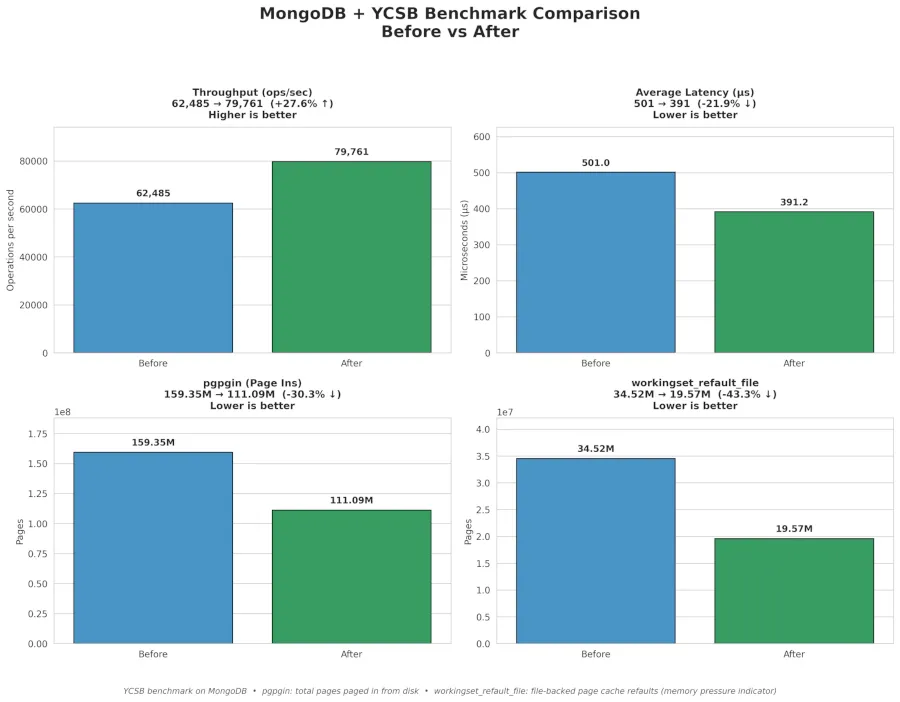
- Linux 7.2 merge window: MGLRU work yields 30–100% MongoDB throughput gains. The multi-generational LRU memory management improvements recently merged for Linux 7.2 are translating into large real-world wins: MongoDB sees 30–100% higher throughput depending on workload. MGLRU continues to replace the traditional page reclamation path with a multi-generational scan that better matches how modern workloads touch memory. Phoronix
- NTFS3 driver sees bug fixes and minor improvements. The NTFS3 in-tree driver — the read-write NTFS implementation in mainline Linux — gets another round of bug fixes and minor improvements in Linux 7.2, continuing the steady cleanup of a driver that has historically been a source of user-facing issues. Phoronix
- F2FS integrates FSERROR reporting and reduces memory footprint. The Flash-Friendly File System adds error reporting infrastructure and a smaller in-memory footprint in the 7.2 merge window, with the FSERROR support making it easier to surface storage-tier issues to user space. Phoronix
- “So many AI-fueled fixes” means no new ARM64 KVM features for Linux 7.2. Phoronix reports that the AI-assisted patch landing in 7.2 is so heavy on bug fixes that there’s no room for new ARM64 KVM virtualization features in this merge window — a notable tradeoff in where the developer bandwidth is going. Phoronix
- New AMD Linux patches expose Gamma 2.4 + Gamma 2.6 curves. AMD is preparing display-driver patches that expose Gamma 2.4 and Gamma 2.6 curve support in the AMDGPU kernel driver, alongside the long-awaited HDMI 2.1 work — both of which have been open issues for years. Phoronix
- SilverStone RM32 3U server chassis + 1000W Extreme 1000Rz Platinum PSU. For tight rack spaces, SilverStone’s RM32 fits an E-ATX or SSI-EEB motherboard, up to 360mm liquid cooling, and up to four full-size expansion cards in 3U. Paired with the Extreme 1000Rz Platinum PSU, it’s a dense workstation or server build in 5.25 inches. Phoronix
Hardware
- Framework’s 10G Ethernet module exposes USB-C’s complexity. Jeff Geerling has been following WisdPi’s development of 5 Gbps and 10 GbE USB-C adapters for Framework laptops, and his writeup of the Framework 10G Ethernet module lays out exactly how tangled the USB-C alternate-mode specification is when you try to push 10 gigabit Ethernet through it. Jeff Geerling
- HP Snapdragon X2 flagship laptop already $650 off in anti-Prime Day sale. A flagship Snapdragon X2 laptop from HP just hit the market and is already $650 off in an “anti-Prime Day” sale — a sign that the ARM-on-Windows premium tier is more price-sensitive than the initial launch positioning suggested. Windows Central
Self-Hosted
- OurSchool lands on Synology NAS. Marius Hosting has posted a walkthrough for installing OurSchool, an open-source homeschool management system, on Synology NAS via Container Manager. OurSchool handles attendance, subjects, assignments, grading, progress reports, and a points-based gamification layer — a useful self-hosted option for families running home education on Synology hardware. Marius Hosting
Deals — Amazon Prime Day 2026
Amazon Prime Day 2026 day two is rolling, and a heavy cluster of deal pieces landed this morning. Highlights: Google’s TV Streamer 4K hits a $25 best-ever discount, Philips Hue is rolling out a Thread/Matter connectivity upgrade, the 8BitDo Arcade Controller gets a screen upgrade, Birdbuddy’s solar-powered smart bird feeder is at its lowest price yet, SwitchBot’s battery-powered circulator fan is $90 for Prime Day, and Windows Central is recommending mini-PC alternatives to the Steam Machine starting at $594.
The Verge Windows Central Windows Central Windows Central Windows Central The Verge The Verge The Verge The Verge The Verge The Verge The Verge The Verge Pplware
In Brief
- Microsoft’s $27M Al proxy war over Alex Bores ends in a draw. A months-long effort by AI-focused PACs to oust New York congressional candidate Alex Bores ended inconclusively; Bores conceded the primary to Micah Lasher, who will replace Jerry Nadler in NY-12. [The Verge]
- Prairieland zine sentencing: 30-year sentence for moving zines. A defendant in the Prairieland case has been sentenced to 30 years in prison, with the verdict rooted in the same post-Charlie-Kirk enforcement push that has drawn scrutiny from civil-liberties groups. [The Verge]
- UK staff at the Wikimedia Foundation seek union recognition. UK-based staff at the foundation that runs Wikipedia have sent a letter to management requesting formal recognition of their union, the latest in a string of nonprofit-sector organizing drives. [The Verge]
- Zoox’s purpose-built robotaxi gets a refresh. Zoox, the autonomous vehicle company owned by Amazon, unveiled a new look for its boxy bidirectional robotaxi — the “next evolution” of the vehicle intended for mass production. [The Verge]
- Amflow TL e-bike lands. Amflow’s TL e-bike is ready for first mountain rides. [The Verge]
- How Roomba started a robot revolution. A retrospective on the original Roomba and the vacuum-cleaner category it created. [The Verge]
- SwitchBot’s standing circulator fan is “worth fighting for.” The Verge’s review of SwitchBot’s battery-powered Standing Circulator Fan argues the price-to-performance ratio is genuinely good even outside Prime Day. [The Verge]
- The Atlantic created a searchable database of music used to train AI. The Atlantic has published a searchable index of the music referenced in AI-training datasets, with attribution and provenance for thousands of tracks. [The Verge]
- Polymarket reportedly paid people to post fake videos placing bets. A report alleges that prediction-market platform Polymarket paid contractors to film staged bet-placement videos to seed social media. [The Verge]
- Pplware: phishing email in the name of Portugal’s National Cybersecurity Centre. A new malware-distribution campaign is using the CNCS name fraudulently to convince victims to click malicious links. [Pplware]
- Pplware: Tax Authority warns “influencers” to declare 2025 income. Portugal’s Autoridade Tributária has put out a public reminder that anyone earning through social media, digital platforms, or commercial partnerships in 2025 must declare it on the IRS. [Pplware]
- Pplware: fecal transplants from young rats rejuvenate the brains of older rats. A new study shows transferring gut bacteria from young to old rats has measurable cognitive effects — further evidence of the gut-brain axis. [Pplware]
- Pplware: Russia is “burying” its Tu-160 Blackjack and Tu-95MS Bear-H bombers. Growing effectiveness of Ukrainian drone attacks is forcing Moscow to hide its most valuable strategic bombers in hardened shelters. [Pplware]
- Pplware: Chinese e-commerce giant JD.com admits it will replace 700,000 couriers with robots. JD.com has acknowledged that its 700,000-strong delivery workforce will eventually be replaced by robots — a notably blunt statement from a major employer. [Pplware]
- Pplware: Trump’s “Golden Dome” missile shield passes first test. The first test of the Golden Dome missile defense system was a “total success,” according to the project team. [Pplware]
- Pplware: psychological thriller Time To Wake Up has a demo. Belgian indie studio Eye Blink Twice has put a demo of the psychological thriller Time To Wake Up on Steam. [Pplware]
- Pplware: Citroën C3 Aircross Marine Nationale concept car celebrates 400 years of the French Navy. A collaboration between Citroën Design and the Marine Nationale produces a muscular, adventurous take on the C3 Aircross. [Pplware]
- In Brief music: Cold Court’s debut EP is an infectious, glitchy genre mashup. [The Verge]
- In Brief games: Moves of the Diamond Hand is an unfinished, irresistibly weird dice-based RPG. [The Verge]
Roundup compiled from the TTRSS Tech feed. 54 articles from 7 sources clustered into 34 stories.