
Tech News Roundup — June 26, 2026 (AM)
The morning’s tech news is dominated by the spillover from the AI-fueled memory crisis. Apple finally joined Nintendo, Sony and Microsoft in raising hardware prices — hundreds of dollars in some cases — and Microsoft followed up by hiking Xbox consoles another $100+ effective August 1st, citing memory and storage costs that have already grown 2.5x and could double again by fall 2027. There’s grim news from Sony’s PlayStation camp too: Bungie has been hit with “significant” layoffs touching most of the Destiny 2 team and Marathon. On the AI side, OpenAI is staggering GPT-5.6’s release to a small enterprise preview after a Trump administration request, a more lenient treatment than Anthropic got. And there’s a quiet win for users still clinging to Windows 10: Microsoft extended its free Extended Security Updates program to October 2027.
Apple & Hardware
Apple raises prices across Macs, iPads, HomePods and Vision Pro. Following Tim Cook’s interview with the Wall Street Journal hinting at upcoming increases, Apple officially lifted pricing on most of its hardware today. The MacBook Neo’s signature $599 starting price is now $699, and iPads, Macs and HomePods climbed by hundreds of dollars in many SKUs. The iPhone is unaffected for now. The reasoning: AI companies are stockpiling RAM and SSDs for data centers, distorting component pricing across the consumer stack. Apple joins Nintendo, Sony and Microsoft in passing costs on.
Apple’s price hike is the canary in the RAM-coal-mine. With famously generous margins and immense purchasing volume, Apple is usually the last to move on component pricing. When it raises prices across nearly its entire lineup, the cost of memory and storage has clearly broken through every buffer the company could put in place. The Verge’s Allison Johnson frames it bluntly: Apple is “kind of a reverse canary in the coal mine.”
It’s a bad time to want a new computer. The PC side is following the same curve. Microsoft’s list of alternatives to a freshly-hiked MacBook includes several Windows laptops currently up to 54% off for Prime Day — a fleeting window before the same RAM/SSD pressures hit those prices too. Verge’s broader takeaway: across Apple, Microsoft, Sony, Nintendo and Valve, the same component shortage is forcing the same pricing concessions.
Framework finds a silver lining in the SSD market. Framework announced it has secured cheaper PCIe Gen 5 SSDs from Adata, and anyone who pre-ordered a Framework Laptop 13 Pro with a 500GB SSD will be bumped up to a 1TB drive at a lower price than the original configuration. The Verge notes the timing is striking — Framework’s CEO has called the 13 Pro the “MacBook Pro for Linux users,” and a free upgrade on top of a hardware refresh is a notable gesture in this market.
Gaming
Xbox console prices spike another $100 or more. Effective August 1st, Xbox Series S 512GB goes up $100 to $499.99, Series X without disc drive to $749.99, and Series X with disc drive to $799.99. Microsoft also says it will “sunset” the 2TB Series X. The company last raised prices in October by $20–$70 and says it “hoped to avoid further hikes”; console storage and memory prices have already grown 2.5x and Microsoft expects another doubling by fall 2027. Some Prime Day discounts remain for now.
Bungie hit with “significant” layoffs at Sony. Most of the Destiny 2 team and some Marathon team members have been cut, with additional Sony employees who assist Bungie also affected. The cuts were “somewhat expected” after Bungie announced the end of Destiny 2’s live-service development last month, but the developer published a statement extending “gratitude and compassion” to those leaving. Marathon, the studio’s long-in-development extraction shooter, remains in production.
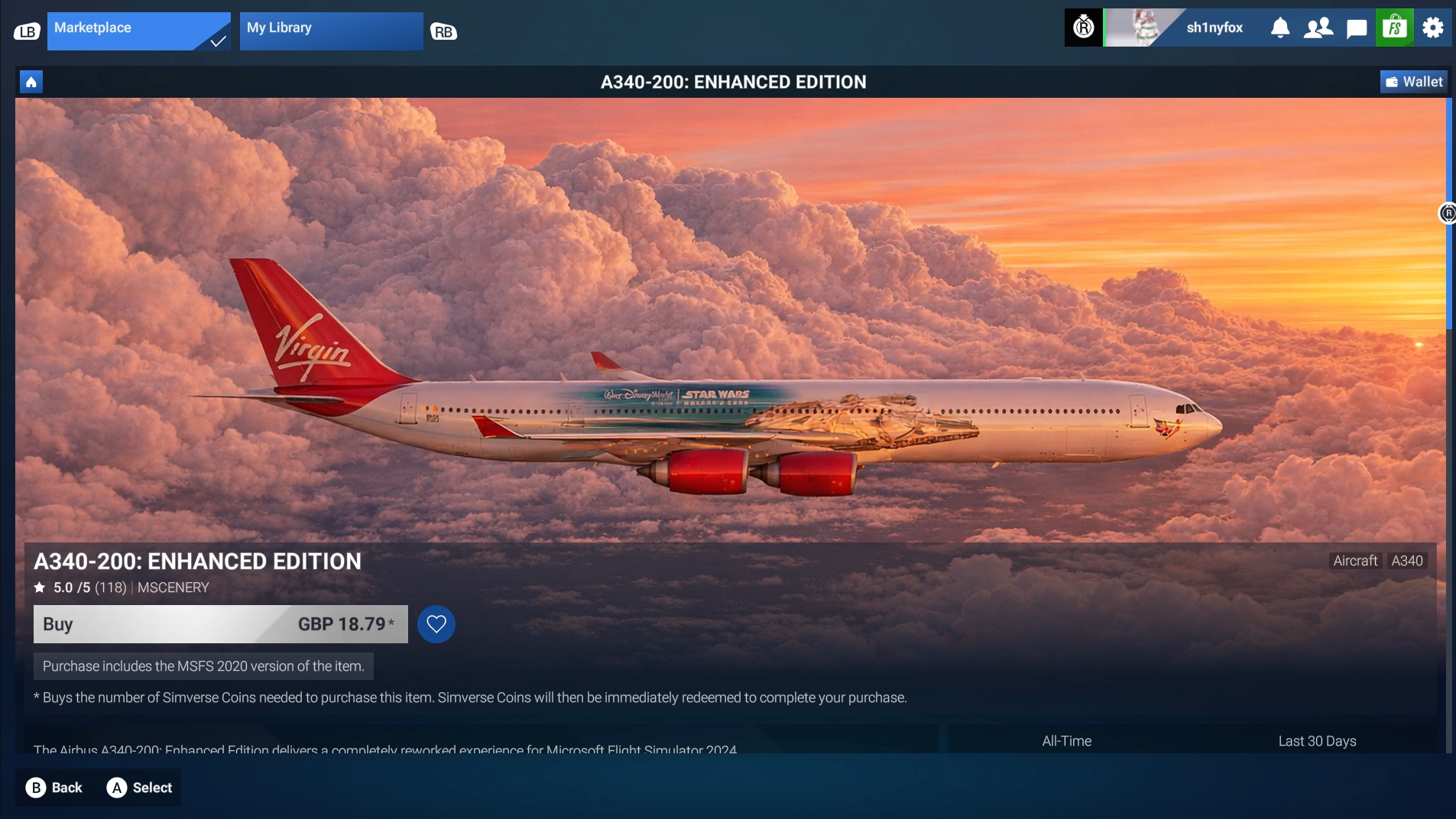
Microsoft ejects notorious Flight Simulator 2024 marketplace scammer. Vendor Mscenery, accused of low-quality AI-generated scenery, misleading product images and suspiciously inflated ratings, has been removed from the MSFS 2020/2024 marketplace effective immediately. Microsoft acted after significant community pressure, including from Windows Central’s reporting earlier this week. The Verge noted the Verge-style function: this is the rare marketplace takedown where the platform acted without litigation.
Epic CEO Tim Sweeney calls Steam’s AI disclosure rule a “hater community trying to kill the game.” Sweeney said Steam’s policy forcing developers to disclose AI-generated content is “actively harming” small studios by stigmatizing legitimate uses of generative AI. He framed it as an issue of disclosure burden rather than a content-quality issue — and warned that Epic’s own policies will be more permissive.
AI / ML
OpenAI will stagger GPT-5.6 release after Trump administration request. The Information reports that Sam Altman told employees in a Wednesday Q&A that GPT-5.6 will be released in limited preview to a small group of enterprise customers, with the Trump administration approving access case-by-case. The administration cited security concerns. The Verge notes this is “a more favorable deal than the Trump administration gave Anthropic,” which saw its models more aggressively restricted.
Microsoft and OpenAI keep leaning on the “fair use” card. Even as ChatGPT and Copilot fuel what one observer called the “death knell for local journalism,” Microsoft and OpenAI continue to argue that training on publisher content is fair use. The Windows Central piece walks through the recent court filings and the publishers’ counter-arguments; the legal posture is unchanged but the political winds are shifting.
Bill Gates: AI will replace a lot of jobs but never replace athletes. Speaking at an event this week, Gates said AI will disrupt many occupations but specifically excluded professional sports from the at-risk list: “no one wants to watch computers play.” The framing — a clean split between automatable cognitive labor and human-driven entertainment — is the kind of quotable line that has come to define Gates’s late-stage public commentary on AI.
Microsoft & Windows
Microsoft quietly extends Windows 10 ESU program to October 2027, free. Originally scheduled to end in October 2026 for consumers, the Extended Security Updates program will now run another year. Users already enrolled are covered automatically; new enrollees can sign up free with a Microsoft account, pay $30, or burn 1,000 Microsoft Reward points. Windows Central notes the extension is likely a response to the RAM crisis — Microsoft can’t push users to Windows 11 if the hardware upgrade itself is now constrained by component pricing.
WidBar brings widgets to the Windows 11 taskbar. A free, still-beta app by developer Andrea Del Bello adds “Now Playing” and “System Metrics” widgets into the empty space of the Windows 11 taskbar. Multiple monitors are supported. The piece frames WidBar as Microsoft-shame — Microsoft itself has not put serious effort into taskbar widgets even though the empty real estate sits there unused.
Linux & Open Source

Coreboot 26.06 lands with Intel Nova Lake and AMD Strix Halo support. The latest quarterly feature release adds support for Intel Nova Lake (the upcoming Core Ultra Series 3 successor) and AMD Strix Halo (the high-end Ryzen AI MAX platform), plus 31 new boards — including MSI’s new Dasharo firmware targets. Coreboot remains the go-to open-source firmware project for hobbyists and OEMs seeking to escape proprietary BIOS blobs.
Linux Foundation launches “Akrites” to defend open-source software from AI-enabled exploits. A new consortium led by the Linux Foundation and several major open-source foundations will coordinate vulnerability response, defensive tooling, and policy advocacy against threats posed by AI-augmented attackers — including LLM-assisted exploit development and AI-generated phishing targeting maintainers. Akrites is positioned as the open-source community’s answer to MITRE-style coordinated disclosure for an AI-threat landscape.
DXVK 3.0 ships with DXBC-SPIRV shader compilation and descriptor heaps by default. The Vulkan-based D3D9/10/11 translation layer used by Proton and Wine has reached 3.0, with native SPIR-V shader output replacing the previous DXBC-then-translate path and descriptor heap management moved out of the per-game workarounds into the upstream library. The result is simpler configuration and a measurable performance bump on many Steam Play titles.
Servo 0.3: the demo browser becomes more useful. The Rust-based browser engine — once a Mozilla project, now stewarded by the Linux Foundation — has reached 0.3. The release notes highlight that the embeddable “demo browser” is now a more credible starting point for actual applications, with improved CSS support and a cleaner IPC layer.
Academy Software Foundation announces the “Wayland for Artists Working Group.” A consortium of VFX, animation and game studios will coordinate Wayland improvements for the specific needs of digital content creation — color management, HDR pipelines, pen tablet integration, and high-bit-depth display support. The group sits under the Academy Software Foundation umbrella.
Ubuntu 26.10 Snapshot 2 released for monthly testing. The interim October-2026 release cycle moves forward with the second testing snapshot, ahead of the September stable launch.
Updated Raspberry Pi OS with Linux 6.18 LTS delivers performance benefits. The new Raspberry Pi OS image rolls up the 6.18 LTS kernel, with measurable throughput and latency improvements over the prior 6.6 LTS base — especially under heavy I/O.
Linux 7.2 drops an ancient PROFIBUS driver. A driver originally ported from SCO Unix in 1998 and unused for years has finally been removed from the mainline tree — one of the periodic “cleansing” merges that keep the kernel moving.
Android
Android 17 gets a dedicated gaming mode for foldables. The new mode places a virtual gamepad with touch controls on half of a foldable’s screen, with system-level emulation of physical button presses designed to work “with any game that supports physical controllers.” The controller layout includes D-pad, dual sticks, A/B/X/Y, L1/L2/L3, R1/R2/R3, and Start, and is configurable. Google’s Mishaal Rahman revealed the feature in a Reddit post; a public rollout is expected in the coming months.
Self-Hosted
Portainer 2.39.4 LTS released for Synology. The Docker web UI jumped from 2.39.3 to the new 2.39.4 LTS release on June 25, addressing multiple CVEs and stability fixes. Marius Hosting walks through the DSM-based upgrade.
In Brief
- Polestar pulled from the US market. The EV brand has been effectively banned from US sales — see [The Verge] for the policy chain.
- Slate’s ultra-minimal electric truck. All the news so far on Slate’s bare-bones EV pickup, summarized at [The Verge].
- Oppo’s “Bubble” selfie screen. A secondary screen on the front of a phone, designed to be the always-on selfie preview, has Oppo asking for Qi2 — at [The Verge].
- EverQuest Legends launched. A nostalgia-driven MMO spinoff; coverage at [The Verge].
- Samsung’s new budget phone costs $50 more despite downgrades. The Galaxy A27 5G lands with a higher price tag and weaker specs than its predecessor — [The Verge] has the breakdown.
- BYOK is a distraction-free writing tool. [The Verge] reviews a new minimalist editor.
- World Cup became a US streaming success story. A breakdown of how the tournament’s broadcasting strategy paid off — at [The Verge].
- GTA 6 launch: an Italian company is closing for the day. A small Italian firm has publicly announced it will give employees the day off on GTA 6’s launch. Pplware (PT) has the story at [Pplware].
- Apple approves iPhone Ultra 2 foldable. Pplware reports Apple has greenlit its second foldable iPhone — at [Pplware].
- Trump-dismissed scientists launch a climate data preservation portal. Scientists laid off in the recent federal RIFs have built a new portal to preserve climate data that was at risk of disappearing — at [Pplware].
- BTMOB trojan targets Android. A new remote-access trojan is targeting Android users; Pplware has the technical breakdown at [Pplware].
- YouTube Shorts gets more like TikTok. New updates push Shorts closer to a TikTok-style vertical feed — at [The Verge].
- Instagram wants your TV attention, too. Instagram is pushing into living-room screens with a TV app and YouTube micro-drama partnerships — at [The Verge].
Roundup compiled from the TTRSS Tech feed. 58 articles from 5 sources summarized.