
Tech News Roundup — June 26, 2026 (PM)
The afternoon feed tilts toward security and infrastructure: Polymarket — the world’s largest prediction market — disclosed a cyberattack that drained roughly $700k in crypto, and Google confirmed its Android earthquake-alert system beat the seismic waves to Venezuelan users by seconds. On the platform side, Microsoft is finally conceding that 8 GB of RAM is enough for Windows 11, while its July 14 update ships the long-requested indefinite update-pause toggle. Linux 7.2 fixes a long-standing PCIe bottleneck and picks up a new Wacom touchscreen driver, and Intel’s open-source ANV Vulkan driver flips descriptor heaps on by default after two months of testing. Separately, Samsung will start charging for SmartThings API access in October, and Volkswagen is reportedly preparing the largest job cut in its 89-year history.
Security

- Polymarket drained of roughly $700k in a cyberattack. Polymarket, the world’s largest prediction market, confirmed a cyberattack that resulted in the theft of approximately $700,000 in cryptocurrencies. The platform has not yet published a full post-mortem, but the incident ranks as one of the largest crypto-related heists of the year for a non-custodial platform. Pplware
Google & Android
- Google’s Android earthquake alert beat the tremors to Venezuelan users by seconds. Google’s earthquake-alert system detected the initial seismic activity in Venezuela and pushed warning notifications to Android users seconds before the shaking arrived on Wednesday, marking the first time the feature has demonstrably outpaced ground motion in a Latin American country. Pplware
- Google simplifies buying apps on Android after the Epic fallout. Following the Fortnite removal from the Play Store in 2020 and the resulting Epic lawsuit, Google is reportedly rolling out a much simpler app-purchasing flow on Android — a tacit concession that the previous friction was as much a liability as it was a control mechanism. Pplware
Microsoft
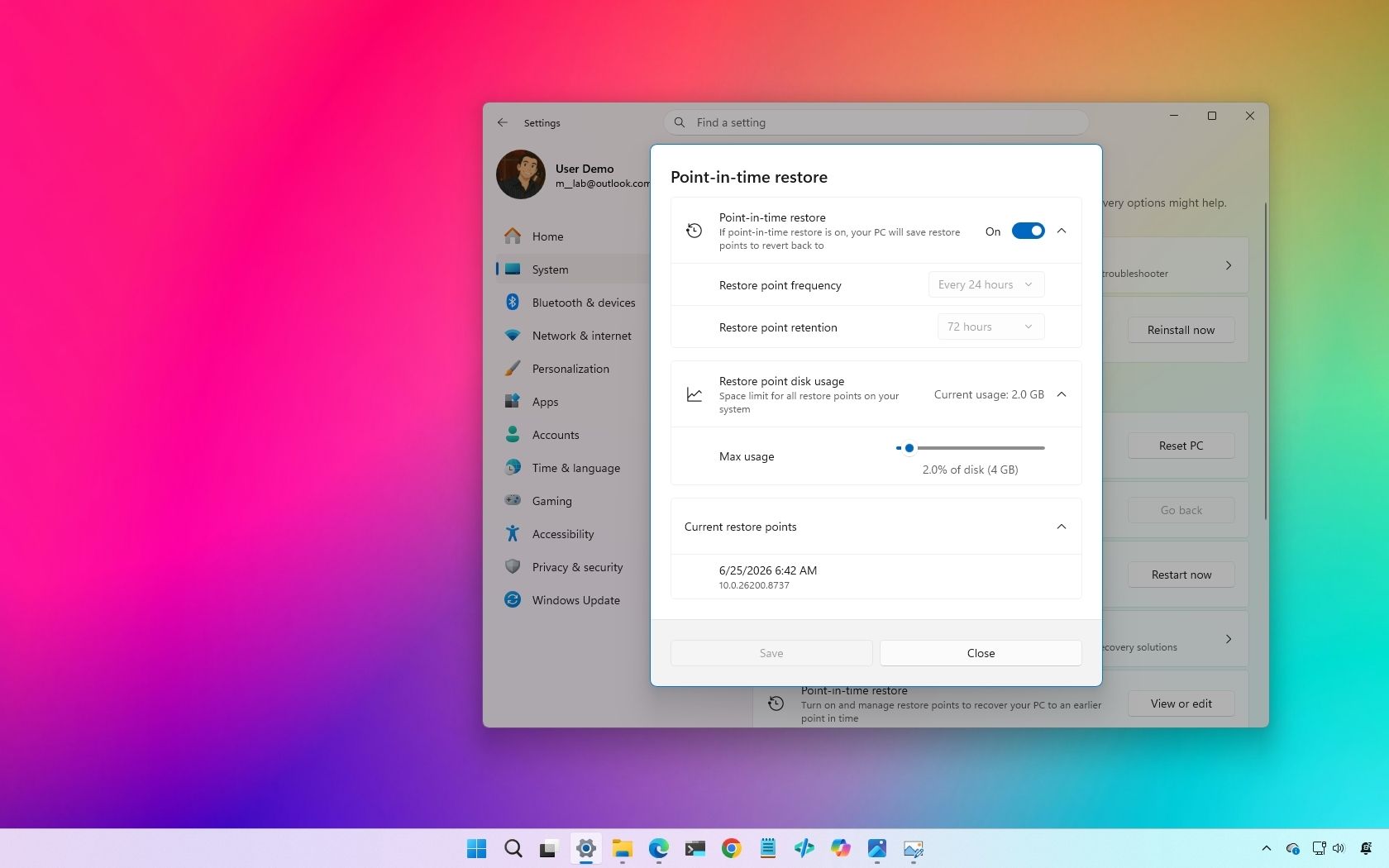
- Windows 11’s July 14 update lands with Point-in-time Restore, an indefinite update-pause toggle, and 13 headline features. Microsoft will begin rolling out the Windows 11 July 2026 Security Update on Tuesday, July 14, with several new features and improvements. The release introduces the Point-in-time Restore recovery feature, the Screen tint accessibility setting, and — at long last — a Windows Update option that lets users pause updates indefinitely. Widgets is also being tuned to be quieter and less distracting. Windows Central
- Microsoft admits 8 GB is “more than enough” for Windows 11. Microsoft has changed its tune once again on Windows 11 memory requirements: after years of pushing 32 GB configurations as the realistic baseline for power users, the company has now publicly stated that 8 GB is more than sufficient for the operating system — a notable reversal as RAM prices continue to drive OEM device costs higher. Pplware
- PowerToys’ new AltWindowCycle could be the next feature Windows 11 copies wholesale. Windows Central argues Microsoft’s next obvious Windows 11 feature should be AltWindowCycle — a PowerToys utility that lets users cycle between windows of the same app with a single shortcut (Alt + `), much like macOS and several Linux desktops have done for years. The feature is still in the proposal phase on GitHub but has a strong case for graduation. Windows Central
Linux & Open Source
- Linux 7.2 fixes a PCIe bottleneck that silently capped devices at 2.5 GT/s. Linux 7.2’s PCI/PCIe subsystem changes were merged this week as the merge window closes. Most notable: a fix for a case where PCIe devices could be inadvertently restricted to 2.5 GT/s — a 5× throughput cap compared to Gen 2’s 5.0 GT/s — under specific topology and power-state conditions. Phoronix
- Linux 7.2 adds a driver for Wacom W9000 pen-enabled touchscreens. The input subsystem changes for Linux 7.2 introduce the
wacom_w9000driver for newer pen-enabled touchscreens, alongside the usual assortment of smaller HID improvements. Phoronix - Intel ANV Vulkan driver flips descriptor heaps on by default. Two months after the experimental enabling of Vulkan descriptor heaps in the Intel ANV open-source driver, the VK_EXT_descriptor_heap extension is now enabled by default for Intel graphics on Linux — a small but important step toward parity with the proprietary Windows driver. Phoronix
- Intel ISPC 1.31 lands with Nova Lake targets and experimental PowerPC 64-bit support. Intel engineers released ISPC 1.31 — the implicit SPMD program compiler — with explicit support for the upcoming Nova Lake CPU family, plus experimental PowerPC 64-bit support that could broaden the compiler’s reach beyond x86. Phoronix
Smart Home
- Samsung will start charging for SmartThings API access in October. From October, Samsung will roll out paid tiers for access to its SmartThings API, including a $4.99 monthly “non-commercial, individual developers” plan. Power users who directly access the API for flexible controls — or rely on integrations like Home Assistant — will also fall under the new “personal plans.” Home Assistant founder Paulus Schoutsen confirmed the integration will be affected by the changes. [The Verge]
Automotive

- Volkswagen reportedly preparing its largest job cut in 89 years — up to 100,000 positions at risk. According to German press reports, Volkswagen’s CEO is studying a restructuring that could see up to 100,000 jobs cut — the most radical reorganisation in the company’s 89-year history. The move comes amid weak European EV demand and intensifying competition from Chinese automakers. Pplware
Apple
- Apple’s most powerful Macs may slip to 2027 as the M6 Pro/Max/Ultra lineup reportedly gets skipped. Bloomberg’s Mark Gurman reports that Apple will skip the Pro, Max, and Ultra variants of the upcoming M6 chip, instead fast-tracking the technologies originally planned for those SKUs into the M7 family launching in 2027. The move would mean the highest-tier Mac Pros and Mac Studios could be waiting nearly two years for their next big processor upgrade. [The Verge]
Gaming
- GTA VI’s looming launch collides with rising console prices at the worst possible moment. The release of Grand Theft Auto VI is shaping up as a singular “system seller” moment — exactly the kind of cultural event that drives a wave of new console purchases. But with PS5 and Xbox Series X pricing creeping upward in the same window, the upgrade path that GTA VI was supposed to anchor is suddenly much less attractive for the casual audience. [The Verge]
- Prime Day’s last gasp: pre-built gaming PCs may be the better buy while RAM is inflated. With RAM pricing still painful enough to make DIY PC building feel like a fool’s errand, iBUYPOWER’s 4th of July Mega Sale — running through July 6 — offers a wide spread of pre-built gaming desktops at prices that beat component-level assembly. Recommended configurations range from a $1,000-ish starter rig with 1 TB of storage up to a $2,000+ RTX 5070 Ti build with Intel’s 270K Plus CPU. Windows Central
Mobile
- Trump Mobile’s T1 phone hits open sale at $499, no deposit required. The Trump Mobile T1 Phone — which has been trickling out to a small number of preorder customers since launch — is now available for anyone to buy directly at $499 plus tax, with no deposit. The Verge notes that preorders placed earlier this year have yet to ship, leaving open questions about real-world delivery timelines. [The Verge]
Climate
- Europe’s historic heatwave is shutting down power plants across the continent. The record-breaking heatwave sweeping Europe is not just testing patience — it is overloading the grid and forcing the closure of power plants. Cooling-water temperature limits and reduced thermal efficiency at gas, nuclear, and coal facilities are combining to constrain generation precisely when air-conditioning demand peaks. Pplware
In Brief
- AirPods Max 2 still $150 off on Prime Day’s last day at Walmart. The AirPods Max 2 remain available for $399 ($150 off) at Walmart even after Amazon’s deal sold out — though one of the five color options is already out of stock there too. [The Verge]
- Philips Hue smart lights see rare Prime Day discounts. Hue products don’t usually get meaningful discounts, making this year’s Prime Day pricing on smart bulb starter kits, sleep lamps, and smart buttons especially notable. [The Verge]
- Prime Day 2026 wraps up with 130+ deals across TVs, smart home, chargers, and headphones. The final day of Prime Day — at this point more accurately “Prime Week” — has aggregated discounts across virtually every consumer-electronics category. The best-known deals are selling out, but the team is still adding fresh options as the event closes out. [The Verge]
- Vodafone offers free calls and SMS to Venezuela. Vodafone Portugal is offering free calls and SMS to Venezuela as the country deals with the aftermath of this week’s earthquakes — a quiet but useful operator-level response to the crisis. Pplware
- Mundial 2026 gets a single app covering everything fans need to follow the tournament. A consolidated app for the 2026 World Cup rolls out the schedule, results, and team information in one place. Pplware
- Python for beginners, Part V: where to go next. The fifth instalment of Pplware’s “Python for totós” series covers the next steps for beginners ready to move past the basics. Pplware
- Diesel and gasoline prices for the week ahead in Portugal. The weekly fuel-price forecast for Portugal, including regional variations. Pplware
Roundup compiled from the TT-RSS Tech feed. 24 articles from 4 sources clustered into 12 thematic and 7 in-brief items; Pplware and Marius Hosting articles were processed into the post but not marked read in TT-RSS.