
Tech News Roundup — June 29, 2026 (PM)
The dominant story in this evening’s tech roundup is Microsoft’s quiet XBOX rebrand finally making its way into Windows 11 — Experimental build 26300.8758 renames the recently launched XBOX mode. Elsewhere, AMD is pushing a new “Low Power” CPU core type into the Linux kernel, Apple is reportedly lobbying the White House for an exemption to use a memory supplier it previously avoided, and the long-awaited new Nissan LEAF lands with 622 km of claimed range. Gaming news is led by a sub-$150 1TB Xbox expansion card from Western Digital.
Microsoft & Windows
Windows 11 renames “Xbox mode” to “XBOX mode” — The May 2026 Security Update’s “XBOX mode” feature is already being renamed in the latest Windows Insider Experimental build, reflecting the broader rebrand Microsoft has been quietly executing across xbox.com, the Microsoft Store, and the XBOX social handles. Xbox CEO Asha Sharma had polled followers on X earlier this year and the all-caps version won decisively. The next-gen Xbox (Project Helix) is expected to ship running some form of XBOX mode. [Windows Central]
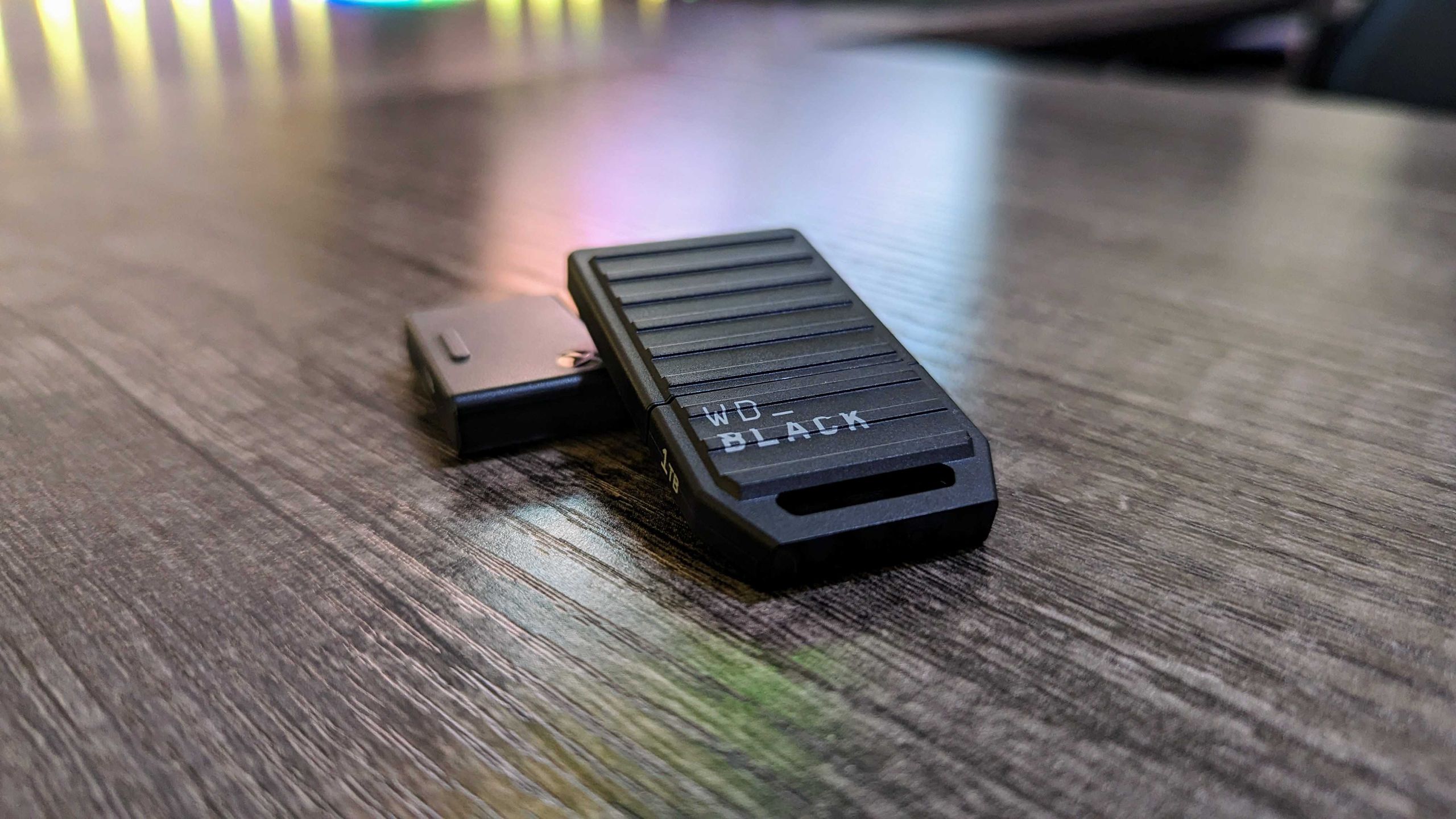
WD_Black C50 1TB Xbox expansion card hits $149.99 at Best Buy — Western Digital’s cheaper alternative to Seagate’s Storage Expansion Cards has dropped to a 58% discount, undercutting even Amazon’s Prime Day pricing. The WD_Black C50 uses Xbox Velocity Architecture to deliver read speeds comparable to Seagate’s card, supports Quick Resume, and works as plug-and-play storage on Xbox Series X|S. Worth noting if you’re juggling Call of Duty: Black Ops 7 and the rest of your library — the base game alone is 161 GB. [Windows Central]
Hardware
Apple reportedly asking the White House for a memory-supplier exemption — With RAM and NAND prices surging on the back of AI-driven demand, Apple is understood to be asking Washington for permission to source memory from a supplier it has historically avoided. The request signals how badly the memory crunch is biting even the largest buyers, and how far Apple’s supply-chain team is willing to bend its own procurement rules. [Pplware]
Nissan unveils the new LEAF: 622 km range, 30-minute charging — Sixteen years after the original LEAF helped define the mainstream EV, Nissan has pulled the wraps off the third generation. Headline numbers are 622 km of WLTP range and a 10–80% top-up in roughly 30 minutes on a fast charger — competitive with the newer Chinese EVs that have crowded the segment. [Pplware]

Renault preps power and range bump for the 4 and 5 EVs — The two affordable Renault EVs are getting more efficient and more powerful motors in an upcoming update, with a confirmed date to be announced. The bump keeps the 4 and 5 competitive against the wave of new small EVs from Stellantis, Hyundai, and the Chinese brands. [Pplware]
Airbus and Kawasaki partner on anti-submarine variant of the Eurodrone U950 — A strategic partnership to study an anti-submarine version of the Eurodrone, Europe’s first large MALE-class military UAV. The move pairs Airbus’s airframe work with Kawasaki Heavy Industries’ undersea-warfare expertise and signals continued European-Japanese defence industrial cooperation. [Pplware]
Linux & Open Source
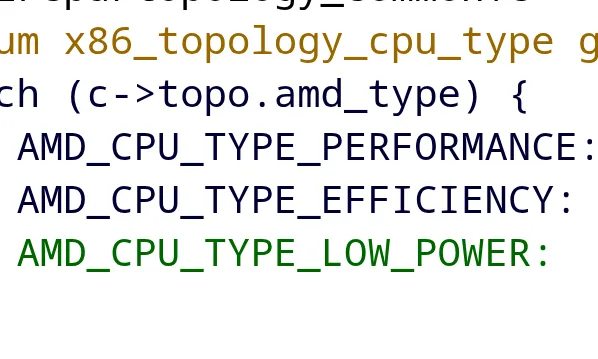
AMD pushes a “Low Power” CPU core type into the Linux kernel — A new patch series adds a third core classification alongside the existing Performance and Efficiency types for AMD heterogeneous platforms. The “Low Power” type is targeted at the smallest, most efficiency-focused cores on future AMD SoCs and APUs, and should land in the scheduler before the next merge window. [Phoronix]
ZLUDA v6 lands with working PhysX on AMD GPUs — but loses its anonymous commercial backer — The drop-in CUDA implementation has pivoted again, this time to PhysX support and better Windows compatibility, after its unnamed commercial funding source pulled out. The project remains open source and is increasingly focused on AI multi-GPU and gaming-physics workloads on AMD hardware. [Phoronix]
TLAC: a new open-source, privacy-respecting anti-cheat alternative to kernel-level systems — TLAC aims to provide cheat detection without the kernel-mode driver that Denuvo, Easy Anti-Cheat, and BattlEye use — the latter being a frequent flashpoint for Linux and Steam Deck compatibility. No games have shipped with it yet, but the project is looking for early adopters. [Phoronix]
RADV enables VK_EXT_descriptor_heap by default in Mesa 26.2 — Ahead of the Mesa 26.2 stable release in August, the Radeon Vulkan driver (RADV) is now exposing the descriptor heap extension by default. The change benefits Vulkan apps that target the new heap model and aligns RADV with the AMDVLK and NVIDIA proprietary drivers. [Phoronix]
OpenAPV 0.3 adds APV RAW encoding and decoding — The Academy Software Foundation’s reference implementation of the Advanced Professional Video codec picks up RAW-format support in its 0.3 release, useful for post-production workflows that need to preserve sensor data through the editing chain. [Phoronix]
Apple, Policy & Telco
Apple blocks Russian messaging apps in the iOS App Store; Kremlin tells citizens to switch to Android — VKontakte, Max, and a handful of other Russian messaging clients have been pulled from the Russian App Store. The Kremlin’s response: switch to Android. The move is the latest in a string of app-store chess moves between Western platforms and Russian regulators, and another data point on the iOS-vs-Android platform war playing out through geopolitics. [Pplware]
Comcast announces plan to split into two public companies — Comcast will spin off its NBCUniversal and Sky media businesses as a separate publicly traded company (also called NBCUniversal), while the remaining “Comcast” entity will keep the broadband and wireless business. The split is expected to take roughly a year and is framed as a way to shield the profitable connectivity business from the consolidation-and-streaming pressure bearing down on the media arm. [The Verge]
A new OMB rule could “blow up” US scientific research funding — A 412-page federal financial assistance proposal from the Office of Management and Budget, published on May 29, layers a set of “anti-woke” provisions on top of dense regulatory language. Researchers and university administrators warn the language could defund thousands of grants and gut a generation of US-led science. [The Verge]
Gadgets
Flipper Zero’s Busy Bar productivity display goes on sale July 14 — The pixelated-LED distraction blocker from the Flipper Zero team will start shipping on July 14 with an MSRP of $249. The first 3,000 buyers that day get a $199 launch price, and original waitlist members keep their $179 price. The device is positioned as a “productivity multitool” that signals availability/Do Not Disturb to anyone in eyeline. [The Verge]

In Brief
Greek AI-satellite fire-detection network could be a model for Portugal — Greece has rolled out a network of AI-equipped satellites able to spot fires as small as four metres across, and Pplware argues the same approach could help Portugal’s wildfire-stricken interior. [Pplware]
Portuguese Social Security payments get simpler — A process simplification removes an intermediate step from Social Security contribution and other payments, leaving users with a shorter flow. Portugal-specific, low cross-border signal. [Pplware]
The invisible work of gaming-PC maintenance — A Pplware explainer on the unglamorous side of PC gaming: stuck update bars, full SSDs, corrupted files. Useful read for anyone whose library is starting to feel like work. [Pplware]
Seven Portuguese districts to hit 40 °C in the coming days — Heatwave continues, with the interior districts under the most intense warnings. [Pplware]
“How to end a TV show” — The Verge takes a long, thoughtful look at how mystery-driven series like Lost and now From on MGM Plus struggle to land their finales. Read-it-on-a-Sunday piece. [The Verge]
Roundup compiled from the TTRSS Tech feed. 20 articles from 4 sources summarized.