
Tech News Roundup — July 2, 2026 (AM)
Gaming is in transition this morning: Sony’s announcement that it will stop producing physical discs for new PlayStation games starting January 2028 has small retailers sounding the alarm, while Microsoft is quietly prepping a disc-to-digital program called “Positron” and a wider Xbox “reset” with layoffs on the horizon. Apple is reportedly revamping the entry-level MacBook Pro for 2027. On the Linux side, Steam on Linux has retreated below 4% of surveyed users after its March spike, and the new System76 Lemur Pro becomes one of the first Panther Lake laptops on the market. Below: clusters, then the day’s smaller stories.
Sony Pulls the Plug on PlayStation Discs
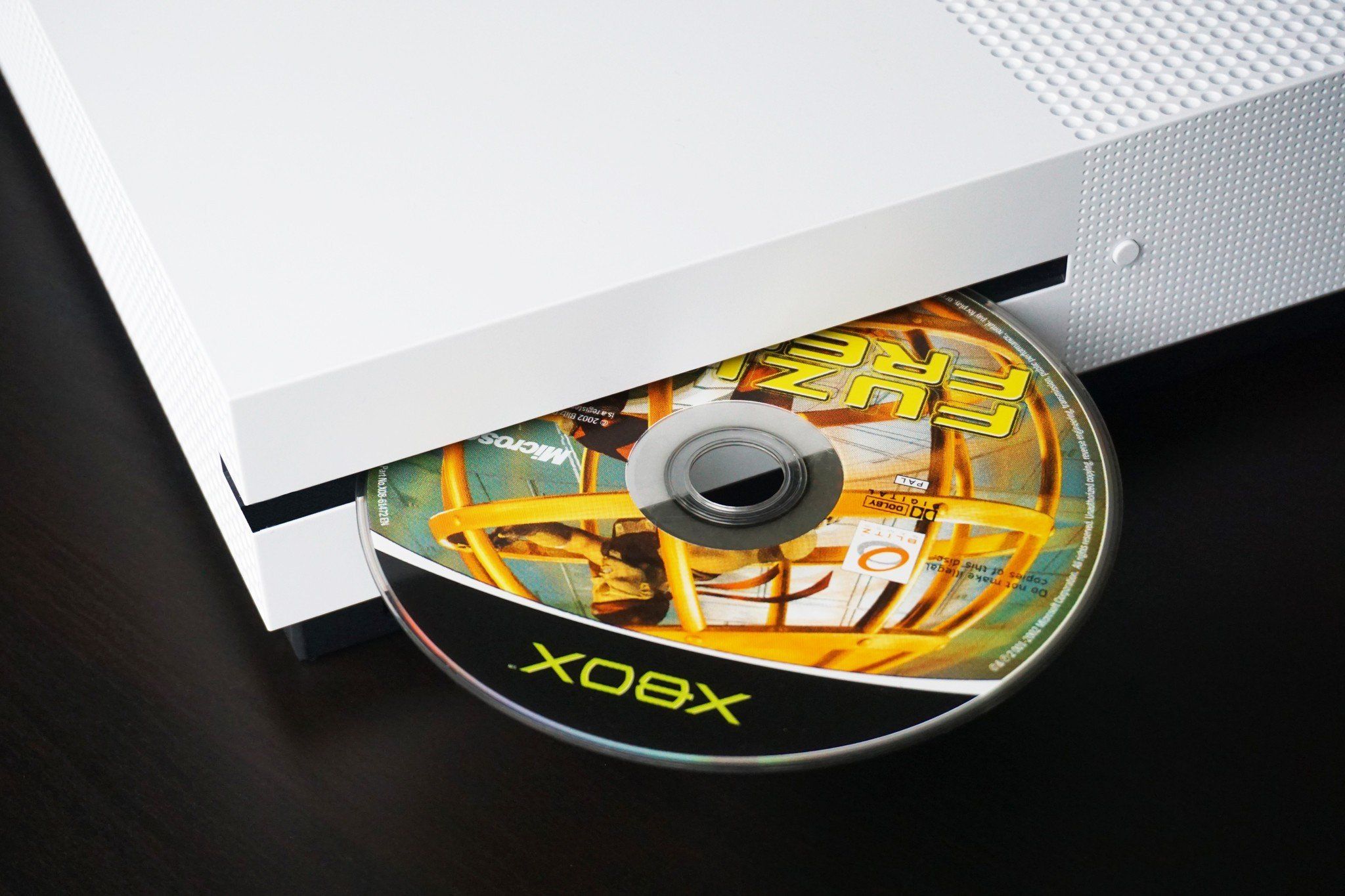
Sony has confirmed it will stop manufacturing physical discs for new PlayStation games starting in January 2028, citing shifting consumer trends. Small retailers say the move is devastating — Pink Gorilla Games’ Cody Spencer told The Verge the decision “is only a negative for gamers. We’re losing the ability to sell games, to share games, and to own games.” Discs already in the market will continue to circulate, and existing physical releases before January 2028 will still ship on disc, but from that date the catalogue shifts decisively digital. Sony framed it as a reflection of how players actually buy games; the trade reads it as a turning point for physical media on consoles.
[The Verge] [The Verge] [Windows Central]
Xbox “Positron” Disc-to-Digital Surfaces
Hot on the heels of Sony’s disc announcement, a Windows Central report details how Microsoft’s disc-to-digital “Positron” program is shaping up. The feature, first spotted in code snippets months ago, is reportedly more seamless than expected — Microsoft is leaning on a streamlined process to convert physical Xbox libraries to digital entitlements, with credible reporting suggesting the next-gen Xbox “Helix” will drop disc support entirely. The combination of Sony ending disc production and Microsoft preparing a smooth conversion path signals a console industry pivot point: physical media is becoming legacy by the end of 2028.
Xbox “Reset”: Layoffs and Studio Closures Loom
Microsoft is preparing another sweeping round of Xbox restructuring. CEO Asha Sharma and new chief content officer Matt Booty sent a memo on June 10 warning staff of an “Xbox reset,” citing significant challenges including a 3% “accountability margin” and rising component prices for consoles. The expectation across the gaming press: another wave of layoffs and studio closures, the kind of structural shake-up that has become a near-annual July ritual under Microsoft Gaming. The reset comes as Microsoft positions its next-gen hardware line, and studios that fail to align with the new content strategy are reportedly most at risk.
Apple’s Entry-Level MacBook Pro May Be Up for a Redesign
Apple is reportedly working on a “revamped” version of its entry-level MacBook Pro that could launch as early as the first half of 2027, according to Bloomberg. The updated 14-inch model will keep the same screen size but adopt a design more in line with the higher-end MacBook Pros — a notable shift, as the entry-level variant has historically lagged the flagship on industrial design. Apple is also testing four new iPad Pros with a spring launch focused on “internal improvements.” The redesign timing suggests Apple wants the entry-level Pro to feel closer to the high-end machine as the M-series lineup continues to expand.
Steam on Linux Retreats Below 4% in June
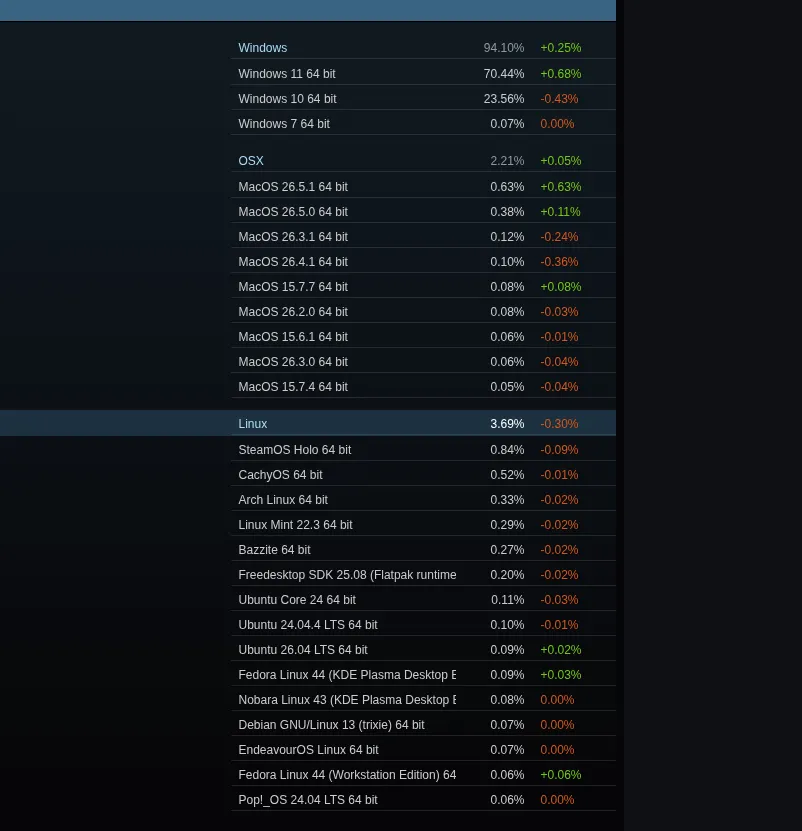
After a 5.33% peak in March, Steam on Linux usage has been steadily sliding: 4.52% in April, 3.99% in May, and now a further step back in June according to Valve’s latest Steam Survey. The trend isn’t dramatic — the dip is in fractions of a percentage point — but it confirms that the March spike was an outlier rather than a durable shift. Whether the new System76 Panther Lake laptops and the KDE Linux Developer Mode release can re-energise the segment will be visible in the July numbers.
Linux 7.3 Set to Tackle PCIe Gen5 NVMe Bottleneck
Even as the Linux 7.2 merge window has barely closed, features are already lining up for 7.3. The early standout: addressing a “significant” small-direct-I/O performance bottleneck affecting PCIe Gen5 NVMe SSDs — a regression that has plagued the highest-end storage on Linux for months. The fix is expected to land as part of the 7.3 cycle, which begins in earnest later this year.
System76 Lemur Pro: First Panther Lake Laptop Ships
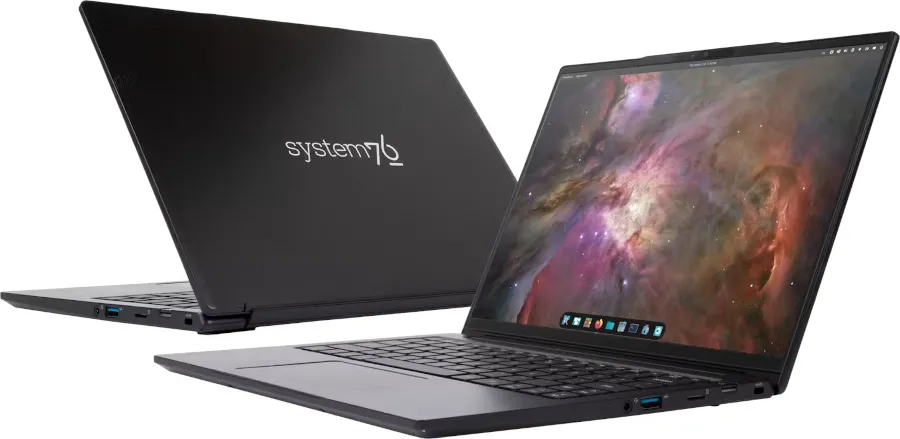
System76 has launched a new Lemur Pro built around Intel’s Core Ultra Series 3 “Panther Lake” SoCs, becoming one of the first vendors to ship a Panther Lake Linux laptop. The high-end portable continues the Lemur Pro’s thin-and-light focus while picking up the new platform’s efficiency and AI accelerator gains. For Linux-first buyers waiting on Panther Lake hardware, this is the first credible option outside of Intel reference designs.
KDE Linux Adds “Developer Mode” and Easier Log Collection
The June progress report on KDE Linux is out. The headline addition is a new “Developer Mode” option in the distro, plus streamlined log collection tooling aimed at making bug reports less painful. The team continues shipping KDE Linux alongside Plasma 6.7 and balancing the dual-track release schedule.
In Brief
- Portugal launches Amália, its first large language model. The government has officially unveiled Amália, Portugal’s first LLM, designed specifically for Portuguese speakers and positioned as a European AI project. [Pplware]
- Meta rolls out usage caps and a paid tier for its smart glasses. Meta is preparing a monthly subscription that gates features running on-device in its smart glasses, a move expected to draw criticism from early adopters. [Pplware]
- Portugal’s new cryptoasset rules take effect. The framework brings Portuguese law in line with the EU’s MiCA regulation and tightens oversight of cryptoasset providers, with penalties for non-compliance. [Pplware]
- New Nissan LEAF on sale in Portugal. Third-generation LEAF lands with up to 622 km of range, refreshed design, and a richer feature set. [Pplware]
- WhatsApp rolls out usernames. The new username system is positioned as a privacy feature but Pplware flags a likely advertising angle behind the rollout. [Pplware]
- Open-source map alternatives to Google and Apple Maps. Pplware rounds up four open-source mapping options for users looking to leave the big two. [Pplware]
- Musk denies SpaceX AI phone prototype report. Elon Musk says a Wall Street Journal report on a “handset-like prototype” shown to investors pre-IPO is “utterly false”; the device was described as slimmer than an iPhone and powered by a Qualcomm Snapdragon chip. [The Verge]
- Krafton settles Subnautica 2 dispute. After a long legal fight, Krafton will pay bonuses to Unknown Worlds staff; the dispute started with the push-out of the studio’s cofounders ahead of a potential $250M earn-out. [The Verge]
- Comcast split could make or break Peacock. The planned NBCUniversal / Peacock / Sky split will force Peacock to stand alone without the parent’s $123B revenue cushion, a make-or-break moment for the streamer. [The Verge]
- Kobo Libra Colour $30 off, undoing recent price hike. Kobo’s top e-reader alternative to the Kindle is back to $229.99 at Kobo, Best Buy, and Target, effectively rolling back its June price increase. [The Verge]
- How to install Zublo on a UGREEN NAS. Marius Hosting walks through deploying Zublo, an open-source self-hostable personal subscription tracker, on UGREEN NAS hardware. [Marius Hosting]
- HP OmniBook 3 16" leads the budget laptop market. Windows Central rounds up the Snapdragon X-equipped 16-inch machine starting around $500, calling it the best budget laptop on the market. [Windows Central]
- Windows 11 GIF issue traced to Google pulling support. The “GIF service is not available” error in the emoji panel starting June 30 is caused by a Google-hosted service Windows depended on quietly going away. [Windows Central]
- Microsoft omits controversial workplace check-in from June Teams roundup. The monthly Teams feature recap skips a workplace check-in feature; the omission is the story. [Windows Central]
- Winhanced PC launcher gets store browser for Windows handhelds. The unified Xbox Mode replacement adds in-launcher store browsing and price comparison across Steam, Xbox, and PlayStation libraries. [Windows Central]
- Rockstar accused of unjust pay disparity, “weaponizing” overtime. Current and former employees allege gender pay gaps, UK crunch culture, and use of bonus payments against the workforce; Rockstar faces mounting legal pressure ahead of GTA 6. [Windows Central]
- dbrand Killswitch 2 Switch 2 case discounted. Windows Central / The Verge call the Killswitch 2 the best Switch 2 case; it’s on sale right now. [The Verge]
- Foldable iPhone could lose 65% of value in first year, study says. A new depreciation study suggests Apple’s eventual foldable iPhone would lose value much faster than the standard line. [Pplware]
- iServices hiring across Portugal with 30+ open roles. The Apple-authorised service provider is recruiting 30+ positions nationwide. [Pplware]
- FIFA president’s private jet travel for World Cup 2026 costing millions. A BBC investigation finds Gianni Infantino’s private jet usage for the 2026 World Cup runs into the millions, contradicting FIFA’s “more sustainable” tournament messaging. [Pplware]
- Glibc adds /etc/tunables.conf for system-wide tunables. Red Hat’s contribution to glibc introduces a system-wide tunables configuration file. [Phoronix]
- AMD posts latest Linux patches for RMPOPT optimization. The tenth iteration of AMD’s Linux enablement for the RMPOPT instruction (Zen 6 EPYC “Venice” feature) is out, with the optimisation cutting Reverse Map Table overhead for SEV-SNP servers. [Phoronix]
- RADV / RadeonSI fixes for AMD GCN 1.0/1.1 GPUs. Valve’s Timur Kristóf continues his work on ageing AMD GCN 1.0/1.1 hardware with new fixes in Mesa’s open-source drivers. [Phoronix]
- BMW and Ferrari pick up Tesla’s trick to lower EV prices. The two premium automakers are quietly adopting a less-expensive metal Tesla has been using to keep EV prices competitive. [Pplware]
- “Scream Operator: Haunted House Manager” — a spooky management sim. Independent studio Japhet Interactive’s haunted-house management game hits the indie scene. [Pplware]
- How long a body takes to decompose and the stages involved. Pplware walks through the biology of human decomposition — the hours, days, and weeks after death. [Pplware]
- HP 2-in-1 with Intel Core Ultra hits $649. Windows Central’s pick for a no-frills productivity laptop: a 14-inch HP 2-in-1 with Intel Core Ultra and a $649 price tag. [Windows Central]
Roundup compiled from the TTRSS Tech feed. 38 articles from 5 sources clustered into 8 thematic stories and 27 in-brief items.