
Tech News Roundup — July 4, 2026 (AM)

Anthropic is the dominant story this morning, surfacing in two different threads: a confirmed bid to design and fabricate its own AI silicon with Samsung Foundry, and a new “Claude Science” workbench that pulls fragmented lab tooling into a single AI environment, with the company explicitly saying it will develop drugs of its own. The chips story also drags European financial regulators into the picture — they’re warning that AI in financial services has outrun the rulebook and demanding new frameworks before it is “too late.” On the Linux desktop, Phoronix files a five-story cluster covering GNOME 51’s alpha, Mutter’s first real GPU-reset recovery work, a UPower battery-protection fix, a Vulkan extension for OCP microscaling ML data types, and coreboot+openSIL booting Windows 11 on a consumer MSI Ryzen board. Microsoft’s Edge browser finally accepts Google account sign-ins, Valve’s first Steam Machine suffers a GPU failure that one Reddit user dubbed the “Red Line of Death,” Cyberpunk 2077 hits 40 million copies sold, Minecraft Bedrock picks up closed captions, and Bloober Team announces the Cronos: Lazarus DLC for Fall 2026. The Dell XPS 13 drops to $999.99.
AI/ML
Anthropic confirms an AI-chip bid with Samsung and pushes into drug discovery. Anthropic is in active discussions with Samsung to co-design AI silicon for its Claude model fleet, a move that would put it alongside the small club of model labs running their own accelerators. The same week, at its “Briefing: AI for Science” event, the company launched Claude Science — an AI workbench aimed at researchers — and went further, saying it intends to develop drugs of its own, citing a long list of biotech and pharma customers already using Claude. The dual-track strategy (own silicon plus own therapeutics pipeline) marks Anthropic’s clearest expansion beyond model-serving so far.
Pplware The VergeEuropean financial regulators demand new AI rules before it is “too late.” Senior European financial supervisors are publicly warning that the integration of AI into credit scoring, fraud detection, and trading has outpaced the supervisory rulebook, and are pushing for new binding frameworks specifically aimed at AI in financial services. The intervention is the loudest signal yet that the EU’s general-purpose AI rule is not, on its own, enough to cover the financial-sector use cases regulators are most worried about. Pplware frames it as a race between AI deployment and regulatory capacity — and right now deployment is winning.
Linux & Open Source
GNOME 51 alpha ships with Mutter GPU-reset recovery on the way. The GNOME 51 alpha is out, with the stable release targeted for September. In parallel, a Google Summer of Code project has finally delivered real GPU-reset recovery in Mutter, meaning a hung GPU on Linux will no longer wipe the entire GNOME session the way it has historically done. Two separate Linux-desktop-quality wins, one release cycle apart.
UPower 1.91.3 fixes a battery-degrading fast-charge fallback. UPower, the Linux power-management abstraction that GNOME and most other desktops depend on, shipped a point release that closes a behaviour bug: under certain conditions the daemon was falling back to the laptop battery’s “fast” charging mode, which accelerates long-term battery wear. Phoronix’s note is that the fix is small but meaningfully protective of hardware lifespan.
Vulkan adds OCP microscaling for machine-learning workloads. Vulkan 1.4.356 is out with a single new extension — VK_EXT_shader_ocp_microscaling_types — which exposes the Open Compute Project’s Microscaling (MX) data formats to the shader pipeline. The formats are designed to give ML inference a cheaper alternative to full FP16 without the precision loss of INT8, and the extension is the first step toward hardware vendors exposing them through Vulkan rather than proprietary ML APIs.
Coreboot + AMD openSIL boots Windows 11 on a consumer MSI Ryzen board. 3mdeb’s Dasharo port of AMD openSIL with Coreboot, previously demonstrated on a server-class Gigabyte EPYC board, now runs on the MSI PRO B850-P — a mainstream desktop Ryzen motherboard — with a working Microsoft Windows 11 install. Phoronix frames it as the moment open-source firmware on AMD desktop parts stops being a curiosity and starts being a viable alternative to proprietary UEFI for actual users.
Microsoft
Microsoft Edge finally accepts Google account sign-ins. Edge 150.0.4078.48 (stable channel, July 2) adds the option to sign in with a Google account, bringing bookmarks, history, and sync data across from a Chrome account without a Microsoft identity. It’s a controlled rollout, and admins can disable it via the NonMicrosoftAccountSignInEnabled policy; the same release also ships Intune MAM protected downloads, a WebView2 “DowngradeVersion” policy, a tightened “View in File Explorer” SharePoint path, and security-update alerting in the Edge management service.
Gaming

Cyberpunk 2077 crosses 40 million copies sold. CD Projekt Red confirmed the milestone on X, attributing much of the run to the post-launch turnaround (the Phantom Liberty DLC plus the years of patches), the Edgerunners anime’s reputational rehabilitation, and the player base that stuck with the game through the 2020 launch. A sequel is in pre-production; Witcher 4 remains in development.
Steam Machine’s first “Red Line of Death.” A Reddit user on r/SteamMachine reported a GPU failure on a brand-new Valve Steam Machine after installing a system update mid-session in No Man’s Sky — Valve’s own support page indicates the GPU is soldered to the motherboard, so the affected unit is not user-repairable. Windows Central is careful to note this looks like an isolated incident; the comparison to the Xbox 360’s Red Ring of Death is unavoidable but, for now, premature.
Minecraft Bedrock picks up closed captions. After years of parity requests, Minecraft Bedrock now ships closed captions: text and visual cues for in-game sounds like footsteps, door openings, and the approach of hostile mobs. The feature is enabled under Settings → Accessibility, with configurable display options. Java has had it for years; Bedrock players who need the feature — or just want the spatial-awareness assist — can now turn it on.

Cronos: Lazarus DLC dated for Fall 2026, action-heavy. Bloober Team’s survival-horror follow-up to Cronos: The New Dawn puts the player in the role of the Warden — the mysterious ally from the base game — on a black-ops mission the Collective wants buried. Per a new dev-diary trailer, the DLC shifts toward more action-oriented combat (new weapons, teleportation, holographic decoys) and adds a persistent hunter in the Mr. X mould. Launching Fall 2026 on Xbox Series X|S, PlayStation 5, Switch 2, Steam, Epic, and GOG.
Hardware
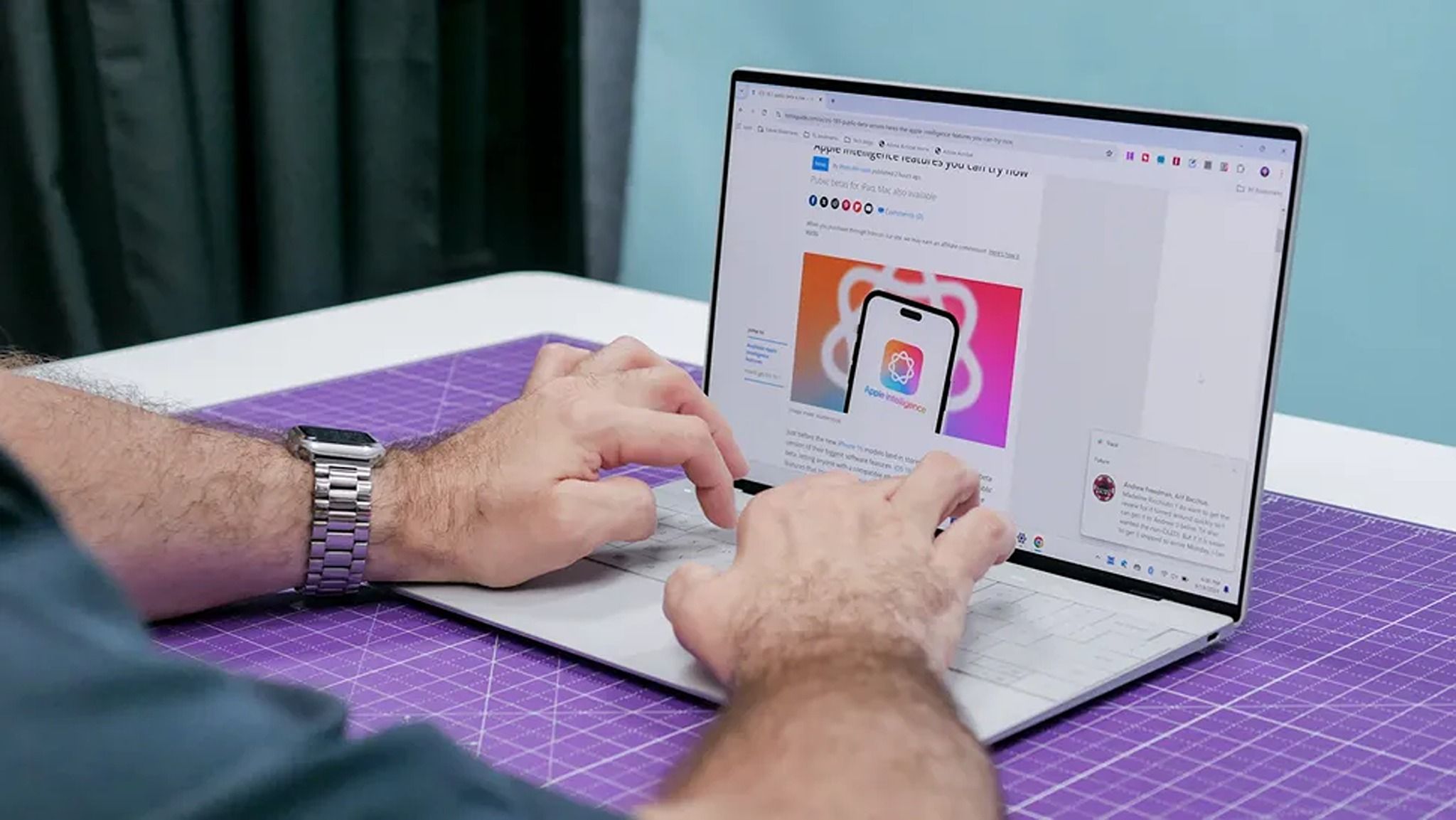
Dell XPS 13 dips to $999.99 with a 3K OLED and Lunar Lake. The 2025 Dell XPS 13 (Intel Core Ultra 7 Series 2 / Lunar Lake, 16GB RAM, 1TB SSD, 3K OLED, near-24-hour battery) is on a 33% discount at Dell.com this week, dropping the configuration to $999.99 — the first time this particular spec has been on a major-promotion run in 2026. The catch is the usual XPS-13 caveat: RAM is soldered, and you get exactly two USB-C ports. Reviewers at TechRadar, Tom’s Guide, and LaptopMag all rate the chassis highly.
Crypto & Finance
Visa, Mastercard, and Coinbase form a global stablecoin consortium. A new consortium led by Visa, Mastercard, and Coinbase has formally launched a global stablecoin initiative under the working name “Open Standard,” aiming to accelerate the cross-border adoption of fiat-pegged digital currencies. The framing is interoperability-first: a single technical and compliance baseline that participating issuers can build on, rather than a single new token. Pplware reads it as the payments incumbents’ clearest response to the rise of USD-pegged stablecoins outside the traditional banking rails.
In Brief
- A Godox camera with a transparent LCD viewfinder. Godox’s C100 skips the conventional colour preview screen for a transparent LCD that doubles as an optical viewfinder — joining the wider retro-style point-and-shoot revival that has Canon and Kodak units selling out on eBay. [The Verge]
- Amazon quietly upgrades the 2023 Fire HD 10 to 4GB of RAM. The 32GB Fire HD 10 (2023) now ships with 4GB instead of 3GB, and a small $15 price bump to $154.99; the 64GB version is unchanged. [The Verge]
- Trump Mobile’s T1 Phone lands at The Verge, a year late. Three T1 Phones arrived (one more than paid for, all sent to the wrong address), and Dominic Preston’s first-impressions piece is now live. [The Verge]
- DC and the World Cup host cities are rolling out a new surveillance stack. From Kansas City to New York, World Cup host cities have been layering cameras, drones, and audio monitoring ahead of the tournament, with the July 4th festivities in Washington as the first big test. [The Verge]
- Just drink water. Victoria Song’s Optimizer column this week cuts through the electrolyte-marketing noise: Powerade is fine for World Cup athletes, but unless you are also sweating buckets, water is enough. [The Verge]
- WhatsApp’s username reservation is live — and controversial. Meta has activated WhatsApp’s username reservation feature ahead of a wider rollout later this year, allowing users to be addressed by a handle rather than a phone number. Pplware notes early friction over discoverability and impersonation. Pplware
- Portugal hits an all-time electricity-consumption record. REN data shows a 3.5% year-on-year rise in Portuguese electricity consumption for the first half of 2026, with renewables covering 71% of the total — the highest first-half figure on record. Pplware
- The Iberian heat wave is keeping specialists up at night. With multiple Portuguese districts under red alert and daytime temperatures above 40°C, specialists are flagging the risk of high overnight temperatures that prevent the body from recovering. Pplware
- Office 2024 at €14.8 ahead of Office 2021 end-of-support. A GoodOffer24 promotion drops Office 2024 to €14.8 with Microsoft ending several Office 2021 support fronts on October 13. Pplware
- Lockstep on UGREEN NAS via Docker + Portainer. Marius Hosting’s walkthrough deploys the Lockstep personal-security-checklist platform on a UGREEN NAS. Marius Hosting
- Clean Start gets a gameplay trailer. Serious Sim’s Clean Start — a Portugal-made game that has crossed 30,000 Steam wishlists — has a new gameplay trailer. Pplware
Roundup compiled from the TT-RSS Tech feed. 30 articles from 5 sources summarized (12 Pplware, 6 The Verge, 6 Windows Central, 5 Phoronix, 1 Marius Hosting); 170 articles skipped (already in the local tracker).