
Tech News Roundup — July 7, 2026 (AM)
Microsoft kicked off its fiscal year with 4,800 layoffs — a third of them inside Xbox — as the company’s gaming division began shedding studios and refocusing on fewer, larger bets. Sony signalled the end of the physical PlayStation disc era, Nintendo confirmed it will pull the original Switch from European shelves in February 2027, and Mesa 26.2 landed Microsoft’s first DirectX 12-based AV1 encoder upstream. The headlines tell a single story: the big-platform era of gaming and Windows is contracting, while the open-source graphics stack quietly gets faster.
Microsoft
Xbox “reset”: 3,200 gaming roles cut, four studios spun off. Microsoft began its new fiscal year by laying off roughly 4,800 employees — about 2.1% of its workforce — with the heaviest impact on Xbox and the commercial sales organisation. The gaming division is taking 1,600 cuts immediately and another 1,600 over the next 12 months, totalling 3,200 Xbox roles through FY27. In an internal memo, Xbox CEO Asha Sharma said Xbox Game Studios is “losing 64 cents for every dollar invested” under current market conditions. Compulsion Games, Double Fine Productions, Undead Labs and Ninja Theory are being divested and will run independently. Microsoft says it is investing in MachineGames, with a Wolfenstein TV series in development alongside a third game, and Mojang now reports directly to the Xbox CEO. Xbox hardware is described as “safe” from the cuts, with cost reductions focused on materials and innovation.
Windows Central Windows Central Windows Central Windows Central Windows Central Windows Central Windows Central Windows Central [The Verge] [The Verge]Blizzard has been spared for now, but Microsoft’s Chief People Officer Amy Coleman blamed the cuts on a shifting technology industry and “the need to adjust resources and roles” in response to AI’s impact on Microsoft’s own business. Overwatch, World of Warcraft and Diablo 4 are currently standout performers. Arkane Lyon, maker of the in-development Marvel’s Blade, is reportedly at risk of closure or split, though a leadership change there — MachineGames co-founder Jerk Gustafsson taking over, with Arkane president Leonard Bendel resigning on June 30 — is being read as a possible positive sign.
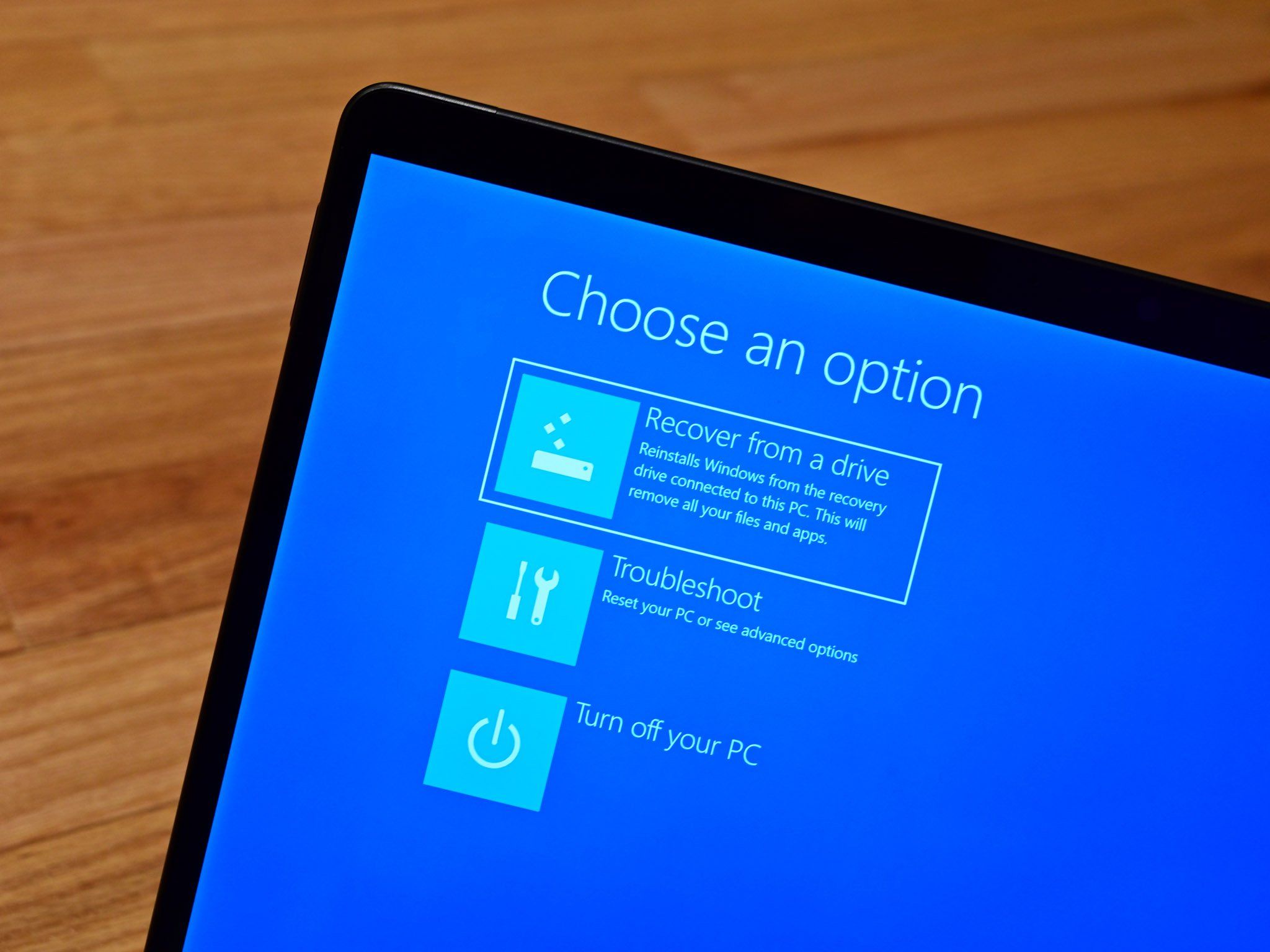
Windows 11 gets a “Cloud Rebuild” recovery mode. Microsoft is testing a new recovery flow that reinstalls the OS and device drivers from Windows Update over the air, no USB stick required. “Cloud Rebuild” downloads the Windows image and the device’s drivers in one shot, then performs a clean reinstall — useful when the OS is unbootable and the existing “Reset this PC” cloud download can’t reach a working state. It deliberately does not preserve apps or files; the goal is a known-good system state. Microsoft also highlighted a third-party file manager called Files, whose version 4.2 ships with a clever Tree View sidebar that Microsoft’s own File Explorer still lacks.
Gaming
Sony will stop producing physical PlayStation game discs in January 2028. From that point on, new PlayStation releases will only be available digitally through the PlayStation Store and other retailers; discs for games already on shelves will continue to be sold. Sony Interactive Entertainment described it as “a natural direction” that aligns the platform with how most players already buy games. The company’s disc plant in Thalgau, Austria — which produces 600,000 discs a day, half for PlayStation — is already retraining its 300 employees to make optical microlenses as its disc volume drops to roughly 10% of current levels by 2028. The move follows growing industry trends, including GTA VI’s launch as a near-entirely-digital release.
[The Verge] [The Verge]Nintendo pulls the original Switch from European shelves in February 2027. Almost ten years after the Switch launched in March 2017, Nintendo confirmed it will stop selling the original Switch, Switch Lite, and Switch OLED to European retailers from mid-February 2027. The decision coincides with a separate EU-driven revision to a Switch 2 model — a replaceable-battery variant being introduced to comply with upcoming European regulations.
[The Verge] Pplware
Linux & Open Source
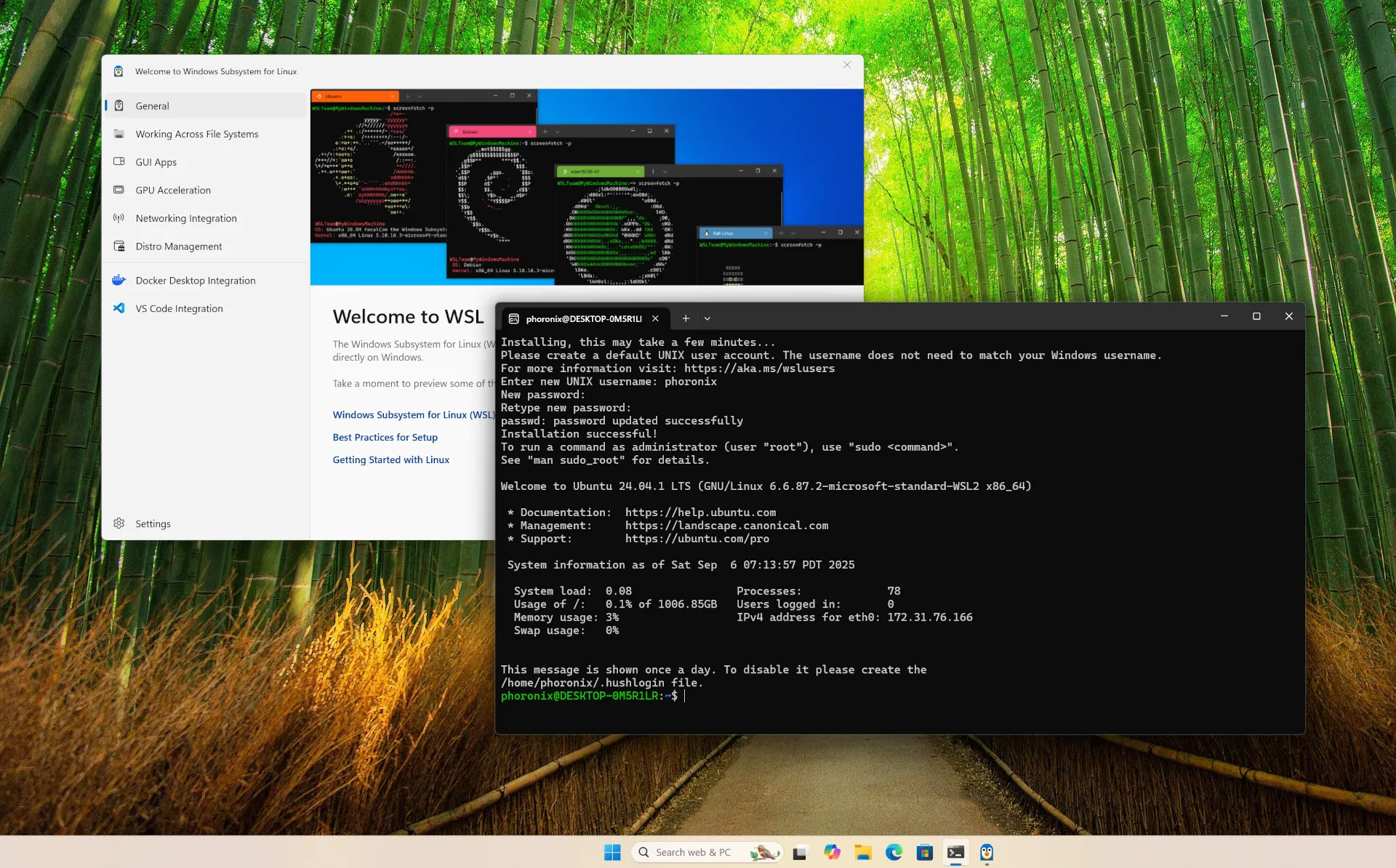
Microsoft lands initial AV1 encoding via DirectX 12 + HMFT inside Mesa 26.2. In an unexpected upstream contribution, Microsoft engineers added accelerated AV1 video encoding to the Mesa codebase using a combination of DirectX 12 and the Hardware Media Foundation Transform (HMFT) layer. The merge is the first of its kind from Microsoft into Mesa and is likely to accelerate WSL / WSLg video workloads on Windows-side hardware.
Vulkan Video H.264/H.265 encode re-enabled for Intel Alchemist GPUs on Linux. Earlier this year Intel disabled Vulkan Video encode on Gen12.5 and newer graphics hardware (basically Arc and later) due to insufficient validation. H.264 and H.265 encoding has now been re-enabled on the ANV driver for those parts, restoring hardware acceleration in FFmpeg and other Vulkan Video consumers.
Marek Olšák lands a RADV VRS overhaul that can “double performance” in some cases. The longtime AMD Linux graphics driver expert, now at Valve and focusing on RADV, merged a major rework of variable rate shading into Mesa 26.2. In specific VRS-bound scenarios, the new code can roughly double frame rates compared with the old path.
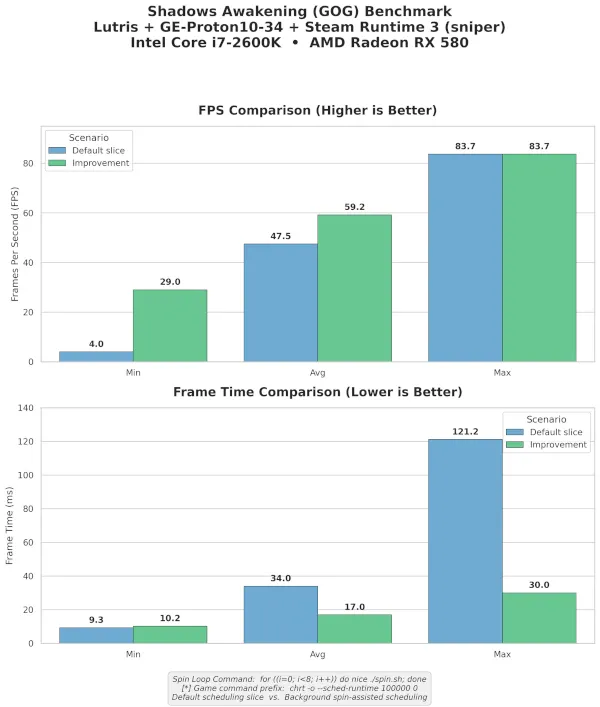
Linux 7.3 lands the “flatten the pick” gaming-scheduler patches. The cgroup-scheduling patch series originally posted in early May is now headed into the 7.3 kernel. The goal is to improve frame pacing and latency on older or underpowered hardware by better scheduling between competing cgroups, with measurable gains in gaming workloads.
AMD’s Ryzen AI Halo mini PC ships with a custom Debian-based “Rex” distro. AMD’s Strix Halo-powered mini PC started shipping this week. Buyers can order it with Windows 11 or a “Linux OS” option, which turns out to be a custom Debian-based distribution called the “AMD Ryzen AI Developer Platform 1 Rex” — not a stock Ubuntu install, contrary to Phoronix’s earlier expectations. Early impressions are positive, with the platform described as a powerful mini PC that is fully open source out of the box.
In Brief
- Anthropic’s Mythos 5 returns to a limited customer set after two weeks of Trump-administration negotiations; the public-facing “Fable 5” is still in limbo. [The Verge]
- Meta is reportedly building its own prediction-market app to compete with Polymarket and Kalshi, framed as “turning everything into gambling.” [The Verge]
- Dish files for bankruptcy but is not shutting down operations. [The Verge]
- China claims the world’s fastest supercomputer, in a yet-unspecified benchmark. [The Verge]
- NASA launched an emergency mission to deorbit the Swift Observatory before it crashes to Earth. [The Verge]
- White House deletes thousands of webpages about energy conservation as a US heatwave bakes the country. [The Verge]
- Sony may delete your PlayStation account if you violate the platform’s terms — including losing access to all purchased digital games. [Pplware]
- EU wants a blacklist to stop IPTV piracy hosting, with a sports-and-entertainment consortium pushing a new takedown regime. [Pplware]
- Marius Hosting: NoteDiscovery is a new self-hosted note-taking app available to install on Synology NAS. [Marius Hosting]
- EU bans small hotel shampoo bottles and tightens other hospitality waste rules; data-centre power demand is reportedly looking at cow manure as a fuel source. [Pplware]
- A Hoto PixelDrive screwdriver is down to $60; DJI’s Osmo Pocket 3 lookalike is $329; the Xreal One Pro smart glasses are $50 off for Prime Day. [The Verge]
- Google’s smart speaker sounds great, but Gemini isn’t ready for it yet. [The Verge]
- Apple’s entry-level MacBook Pro could be up for a redesign as the company prepares price hikes across Macs and iPads. [The Verge]
- The Meta Quest 3S is $297 (basically its old price) during the final hours of Prime Day. [The Verge]
Roundup compiled from the TTRSS Tech feed. 45 articles from Phoronix, Windows Central, The Verge, Pplware and Marius Hosting summarized into 5 thematic clusters and a brief.