
Tech News Roundup — July 8, 2026 (PM)

The lead of this edition is hardware: Samsung locked in its next Galaxy Unpacked for July 22, headlined by a new wide-form-factor foldable; Google answered with a Pixel 11 reveal date of August 12. On the policy side, a New Jersey bill targeting lidar-less robotaxis is the most concrete regulatory threat to Tesla’s vision-only stack we’ve seen. Linux fans got two Phoronix items — Linux Mint graduating Cinnamon’s Wayland support and easier syscall-user-dispatch toggles in Linux 7.3 — and AMD pushed ZenDNN 6.0 for AI inference on Ryzen/EPYC. Gaming side is strong: Black Flag Resynced earns a “must play” from Windows Central, Toys for Bob makes a public pitch to revive Banjo-Kazooie, and Valve’s Steam Machine continues to win converts.
Google / Android
- Google confirms Pixel 11 reveal for August 12 in New York. The event will show the new Pixel 11 family alongside the Pixel Watch 5, with the Tensor G6 expected to anchor the lineup. [Pplware]
Microsoft / Windows

- BleachBit is the open-source cleanup utility Windows 11 power users have been missing. A how-to from Windows Central walks through the tool’s safe-cleanup options, secure file-shredder, and free-space wiper, and recommends it as a complement to Storage Sense — explicitly not a registry cleaner, which the author argues is a feature, not a gap. [Windows Central]
- Microsoft is simplifying the Windows 11 reinstall flow. A new in-OS path aims to make a clean reinstall significantly less painful than the current multi-step “Reset this PC” route, with the goal of turning reinstall from a last resort into a routine maintenance option. [Pplware]
- Microsoft Rewards gets a public feedback portal, and the loudest complaint is “where’s the value?” Microsoft shipped a Feedback Portal mirroring the Xbox Player Voice forum. Day-one top requests: redeeming points for Game Pass, bringing back better-value gift cards, and a rewards badge on Xbox Live profiles — a clear signal that May’s reward-cut changes have hurt user sentiment. [Windows Central]
- You can still find 16 GB Windows laptops under $1,000, even with the memory squeeze. A roundup of current deals spans the Dell 14 at 43% off ($699.99), the ASUS Vivobook 14 at $519.99, the Dell 14 Plus 2-in-1, the Lenovo Yoga 7i 16, and the Lenovo IdeaPad Slim 3X — all productivity-grade, none of them gaming machines. [Windows Central]
Gaming
- Assassin’s Creed Black Flag Resynced is “everything a remake should be, the new gold standard.” Windows Central’s review credits Ubisoft with finally surfacing the rope dart in the first few hours, expanding every Jackdaw weapon with a meaningful secondary fire mode (heated shot is now a close-quarters broadside barrage), and shipping a visual overhaul that holds 110+ FPS at Ultra with ray-tracing on an RTX 5080 / 9800X3D build. [Windows Central]
- Toys for Bob publicly expresses interest in reviving Banjo-Kazooie. Studio leads told Kinda Funny Gamescast the franchise is “top of the heap” among platformers and that several staff have Banjo Jiggies as profile pictures, though they stress it would only happen “if the opportunity ever arose” — Microsoft has to greenlight it. [The Verge]
- The Steam Machine keeps winning converts who already own a PS5 and Xbox. Jay Peters’ review argues the device’s $1,049 price is justified by Steam’s cloud-save handoff with the Steam Deck and access to a Steam library that no console can match, even granting the published 6/10 score. [The Verge]
Linux & Open Source
- Linux Mint’s Cinnamon desktop is graduating Wayland out of “experimental.” The June development summary reports Wayland support is now solid enough to ship as the default in the next Cinnamon release — a long-awaited milestone for Mint users who prefer its Xfce-style workflow over GNOME. [Phoronix]
- Linux 7.3 will make it easier to disable Syscall User Dispatch. Introduced in 5.11 to help Windows games run under Wine, SUD is now being patched with an easier kill-switch after years of debate about its security tradeoffs. [Phoronix]
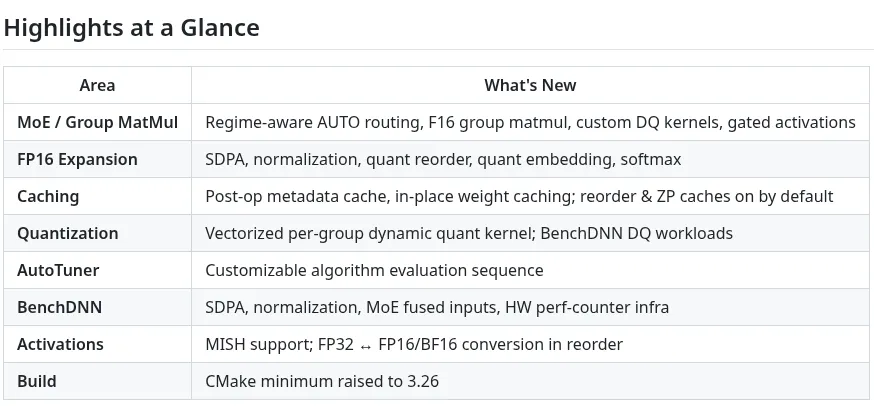
- AMD ships ZenDNN 6.0 with broad inference-acceleration improvements for Ryzen and EPYC. The open-source deep-neural-network library gets a major update aimed at letting AMD’s Zen CPUs handle more of the AI inference load that has otherwise been offloaded to accelerators. [Phoronix]
- Pi-hole Docker 2026.07.2 lands on Synology / UGREEN NAS. Released July 7, this is the latest Docker image of the network-wide ad blocker; Pi-hole core 6.4.3 shipped the day before. [Marius Hosting]
Hardware & Smart Devices
- Samsung’s next Galaxy Unpacked is July 22, with a new wide-form-factor foldable as the headliner. The “A new shape unfolds” tagline and the torn-ticket invite point to the rumored shorter-and-wider book-style foldable (Huawei Pura X Max competitor), alongside updated Flip/Fold hardware and the Galaxy Watch 9. [Pplware] [The Verge]
- Fi launches the first Starlink-enabled pet tracker. The Fi Ultra adds automatic failover to T-Mobile’s T-Satellite direct-to-cell service, so the collar can switch from LTE to SpaceX’s Starlink constellation in dead zones — useful for “adventure dogs,” at the cost of noticeably shorter battery life than a typical LTE tracker. [The Verge]
AI / ML
- AI or die: how small businesses are using it to avoid losing customers. Pplware’s piece argues that today’s consumers research, compare, and decide in seconds based on a few surface signals (site freshness, social activity, easy purchase flow), and small businesses that don’t build AI-assisted automation into those signals will be filtered out before they ever get a conversation. [Pplware]
EVs, Autos & Regulation
- A New Jersey bill could effectively ban camera-only robotaxis in the state. The legislation would require overlapping sensors (lidar/radar) for fully driverless operations — directly targeting Tesla’s vision-only approach. It’s the first time this decade-long camera-vs-lidar argument has been pushed to a state-level statutory vote. [The Verge]
- Tesla is preparing an identity-verification step to “unlock” FSD. Code in the latest iOS app update suggests Tesla will require drivers to prove their identity before enabling Full Self-Driving (Supervised) — likely an accountability and regulatory-defensibility play, not a new safety feature per se. [Pplware]
- Xiaomi is launching a separate brand for gas-powered cars. After the SU7 EV’s success, Xiaomi is spinning up a new sub-brand for combustion models rather than mixing them into the main EV lineup. [Pplware]
- A Chevrolet pickup has run 100,000+ km on wood gas. A US project demonstrates that a century-old gasification technology still works as a fuel-flexible bridge: a Chevrolet pickup is being driven on wood-derived gas as a gasoline substitute. [Pplware]
In Brief
- Netflix subscribers are abandoning shows after the first season. Retention has emerged as a strategic problem for the streamer as viewers increasingly treat S1 as a one-and-done, with the most-cited reason being a mismatch between promised long-form storytelling and actual short-run delivery. [Pplware]
Roundup compiled from the TTRSS Tech feed. 19 articles from 5 sources summarized. 4 images fetched (1 cover, 3 inline); The Verge stories are summarized without links per site convention.