
Tech News Roundup — July 9, 2026 (PM)
The day’s tech news spans Microsoft’s deepest Xbox cuts yet, Sony finally pulling the plug on physical PlayStation discs, Apple’s roadmap for the next MacBook Pro generation, and a flurry of AI stories — Anthropic’s Fable 5 returning from a regulatory hiatus, Meta’s first in-house image model shipping across Instagram and WhatsApp, and a new Chinese supercomputer claiming the TOP500 crown without using any GPUs. Phoronix’s Linux beat has four notable hardware patches, NASA enlists a private contractor to rescue the Swift Observatory, and the rest of the inbox folds into a healthy “In Brief” section.
Apple
MacBook Pro redesign on the horizon. Apple is working on a revamped version of its entry-level 14-inch MacBook Pro that it could launch in the first half of 2027. The new design will be “in line” with the touchscreen MacBooks Apple has in the pipeline for late 2026 / early 2027, both of which are expected to ship with the Dynamic Island-style interface that has so far been iPhone-only. Bloomberg also reports Apple is testing four new iPad Pros targeting a spring launch with internal improvements as the headline change. Separately, the iPhone 18 Pro surfaced on the dark web after a breach at Indian supplier Tata Electronics — leaked drop-test photos show a three-camera layout and Apple logo consistent with the existing Pro design language.
Mac and iPad prices jump by hundreds of dollars. Apple raised prices on Mac, iPad, and other product lines by hundreds of dollars ahead of expected tariff-driven cost increases, with the new pricing landing just before the recent Prime Day window. The hikes hit while MacBook and iPad deals were still circulating, and the gap between MSRP and street price is now wide enough that several deals pages flagged the move as the trigger for a brief buying rush.
Microsoft / Windows
Xbox’s “reset” cuts ZeniMax Online by 213, ZeniMax Media by 166. New WARN filings from the State of Maryland show Microsoft’s restructuring has now hit the studio behind The Elder Scrolls Online directly. ZeniMax Online Studios laid off 213 people and parent ZeniMax Media Inc. lost another 166, joining id Software (which confirmed losing 136 staff earlier in the week) on the growing list of studios gutted by the “reset.” The Bethesda Softworks United Union is calling on fans to formally voice concerns to Microsoft leadership, framing the cuts as a betrayal of studios that have historically propped up other parts of Xbox’s portfolio. No word yet on whether The Elder Scrolls Online itself is at risk of being shut down.
Microsoft Forms picks up a full Copilot chat experience. Forms now hosts Microsoft 365 Copilot inside the form-builder, with the AI able to suggest structural improvements, apply refinements directly, run deeper analysis on responses, and add basic branching logic via a chat-style interface. The integration is available now to commercial Copilot license holders. The new feature builds on the longstanding strength of Forms in Excel sync and question-level branching, both of which the reviewer still rates as advantages over Google Forms.
Windows 11’s search box is now four pixels taller. Microsoft tweaked the Windows 11 search box height by 4 pixels in the latest preview build. Reasons unknown. The Verge’s gaming column is calling the broader Xbox situation a “disaster” after another week of mounting cuts and closed studios, with the column laying out the timeline from the boisterous June Xbox showcase (Halo, Gears of War, Fable, translucent Xbox hardware) to the deepening layoff picture.
Gaming
Sony ends physical PlayStation disc production in January 2028. Sony Interactive Entertainment confirmed that from January 2028 it will stop producing physical discs for new PlayStation titles entirely — new releases will be digital-only through the PlayStation Store and other digital retailers. Titles already on disc before that date remain available; existing PS5 disc drives are unaffected. The Verge’s game of the year column frames this as the inevitable endpoint of a years-long shift, while the GTA VI physical-launch context (most copies sold digitally on day one) is being cited as the moment the industry’s data caught up with the trend. A separate story notes Sony’s disc factory is already being repurposed for other products.
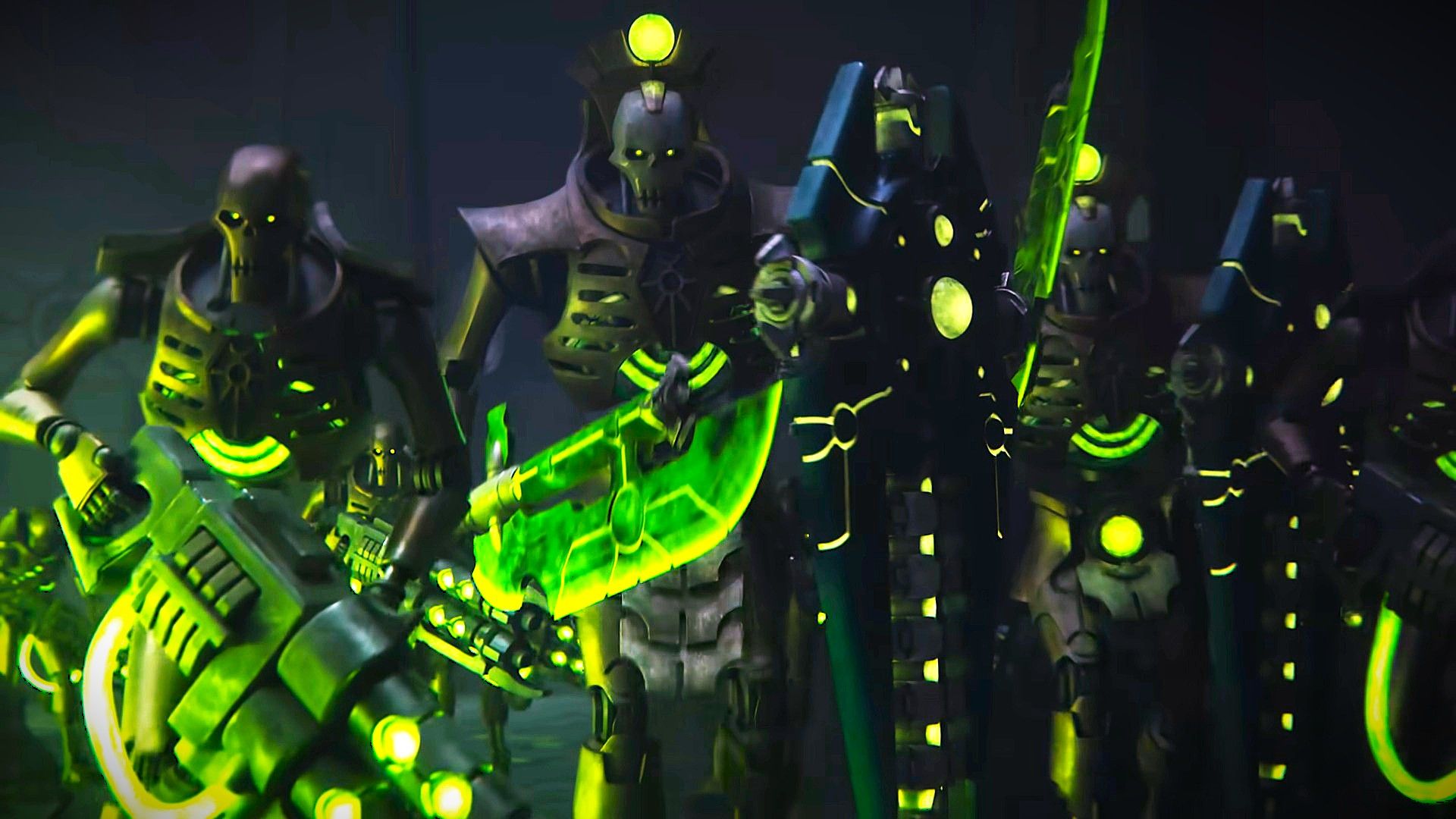
Warhammer 40,000: Dawn of War IV shows Necrons vs. Adeptus Mechanicus. A new 15-minute gameplay demo from the upcoming RTS sequel pits the Necron and Adeptus Mechanicus factions against each other in 1v1 skirmish. The Admech are making their Dawn of War debut and feature a Noosphere Network linking buildings to reduce unit cost and buff turrets; the Necrons deploy their signature Power Matrix creep to spread regeneration and the ability to resurrect units for free. The launch date is set for September 16, 2026 on PC via Steam.
AI
Anthropic’s Fable 5 is back online after weeks of regulatory limbo. Anthropic confirmed it will begin restoring global access to Claude Fable 5 on Wednesday after the Department of Commerce lifted export controls imposed during recent negotiations with the Trump administration. Access will return on Claude platforms first, with AWS, Google Cloud, and Microsoft Foundry re-enabling access “soon” but on no fixed timeline. The model, which had been “long-sidelined” by the restrictions, returns alongside a related variant called Mythos 5 that was also caught up in the same controls.
Meta ships its first Muse image model from Superintelligence Labs. Meta is rolling out Muse Image, the first image-generation model from its new Superintelligence Labs division, across the Meta AI app, Instagram, and WhatsApp, with Facebook and Messenger following. The Muse line replaces the previous Llama-based image tools; Alexandr Wang says Muse Image is “agentic,” working with the Muse Spark LLM to plan, search the web, and reason before generating. The launch also lands as Meta adds soft paywalls and “rate limits” to its Ray-Ban smart glasses (a sign the hardware is being groomed for a paid tier), and as the company leans harder into Instagram as its primary attention-monetization vehicle.
FL Studio 2026 turns its AI chatbot into a full “assistant engineer.” Image-Line’s annual FL Studio release positions its built-in AI assistant as a session collaborator that can suggest arrangements, handle repetitive editing tasks, and stay on-call as the user works. The Verge’s review frames it as a step beyond simple prompt-to-clip tools.
Tidal will not pay royalties on AI-generated music. The streaming service clarified its AI-music policy: it will not pay royalties for tracks identified as AI-generated, but it is not banning AI-generated music outright from the platform. Separately, The Atlantic has built a searchable database of the music used to train AI systems, and a growing number of wealthy American families are reportedly using AI tutors as the default teaching layer for their children.
Linux & Open Source
Phoronix roundup: USB-C security mode for ThinkPads, M4 device trees, Ryzen AI RGB driver, and zlib-rs 0.6.6. The Linux kernel is getting a new “USB-C Security Restricted Mode” reporter path for newer Lenovo ThinkPad systems. Separately, initial Device Tree patches for booting the Apple M4 SoC have landed (still not end-user-functional, but a step past the M3 work merged into 7.2). The AMD Ryzen AI Halo “Strix Halo” mini PC — which began shipping this week with strong out-of-box Linux support under the Debian-based Ryzen AI Developer Platform — is one RGB-LED driver away from full mainline support, and that driver is reportedly close. Finally, zlib-rs 0.6.6 is out with an updated Zlib API.
Hardware
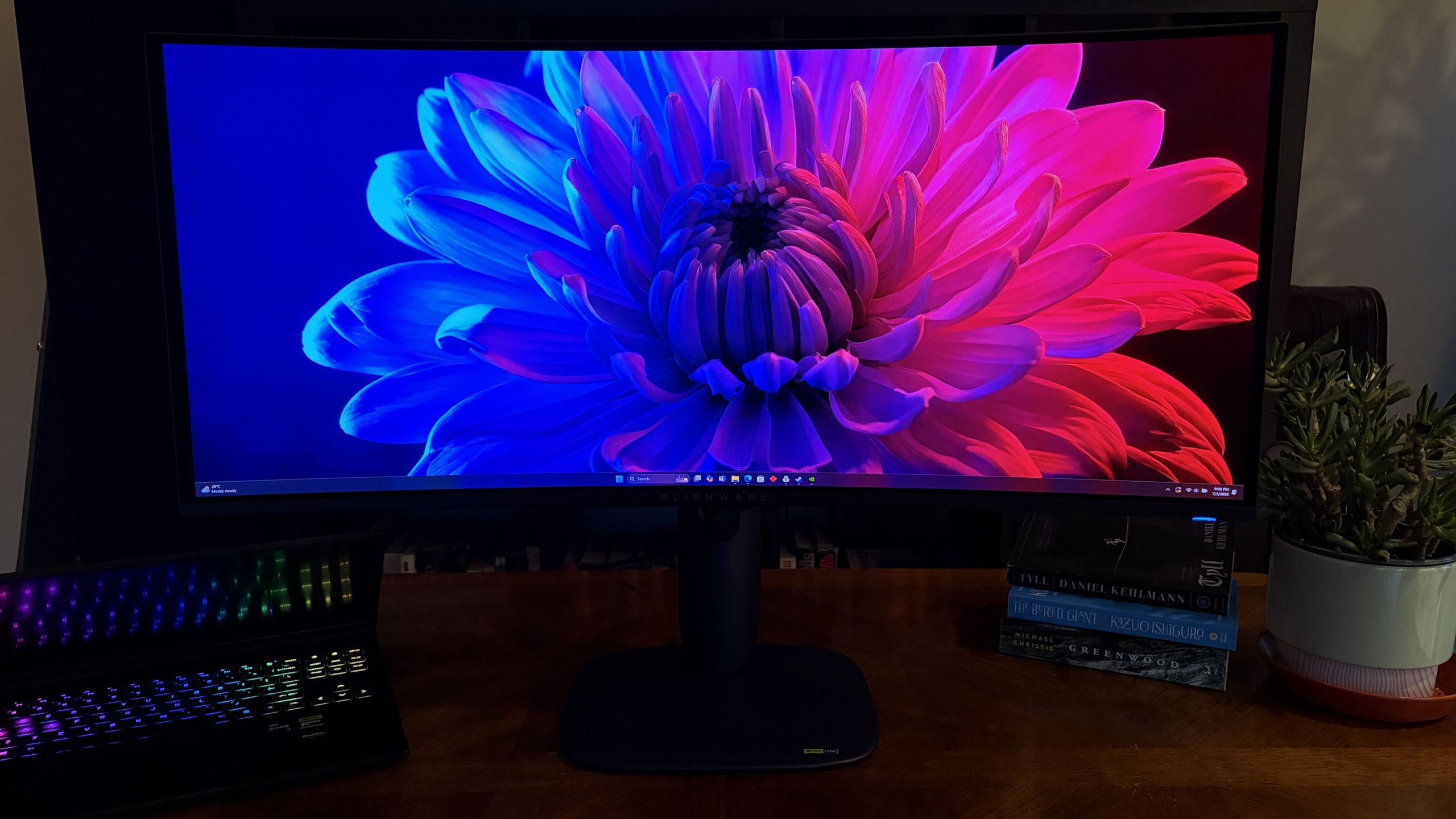
Alienware’s new AW3426DW QD-OLED ultrawide lands at $799.99. Dell’s flagship 34-inch QD-OLED ultrawide refresh arrives with Samsung’s fifth-gen Penta Tandem panel (twice the lifespan, 1.3x brightness over the previous generation), 280Hz refresh rate, 0.03ms response, peak brightness 1,300 nits, and HDR10 + VESA DisplayHDR True Black 500 + Dolby Vision support. The three-year warranty still covers burn-in. Drawbacks are minor: no 3.5mm audio jack, no built-in speakers, single DisplayPort 1.4, and a USB-C port limited to 15W.
Geely’s “Gold Brick” battery breaks the 1000 kW charging barrier. Chinese automaker Geely has validated a battery pack capable of accepting more than 1000 kW of charging power — pushing EV recharge times into the “minutes, not tens of minutes” range. The news comes from Pplware’s coverage of Geely’s official announcement and positions the company at the front of China’s ultra-fast charging race.
Space & Science
SpaceX on pace for a record Starlink deployment year. SpaceX launched 1,589 Starlink satellites in the first half of 2026 — ahead of the 1,489 launched by the same point last year, and on track to beat 2025’s record of 3,180 satellites deployed in a calendar year. The company has launched over 12,400 Starlink satellites since the constellation’s inception, with nearly 11,000 still functional. For context, Amazon’s Project Kuiper rival has only deployed a tiny fraction of that. Separately, T-Mobile’s parent launched a Starlink-enabled pet tracker that found a dog when LTE couldn’t — a real-world stress test of the satellite-direct-to-device pipeline.
NASA rescues the Swift Observatory with a private contractor. Solar storms pushed the 22-year-old Swift Observatory’s orbit low enough to risk atmospheric reentry this year. NASA enlisted Katalyst Space Technologies to intercept Swift with its Link servicing spacecraft, which launched Friday and aims to raise Swift’s 224-mile orbit by about 150 miles using a three-armed robotic grappler. Swift has no propulsion of its own, so the Link spacecraft will have to do the entire boost manually.
China’s LineShine takes the TOP500 crown — without any GPUs. China’s new LineShine supercomputer at the National Supercomputing Center in Shenzhen pushed El Capitan out of the top spot on the latest TOP500 ranking, reclaiming the title for the first time since 2018. The build defies US trade restrictions on high-end compute components, and notably does not use GPUs — typically the backbone of modern supercomputers. The US still holds three of the top five spots.
Telecom & Media
Dish files for Chapter 11, but will keep operating. Dish (and parent EchoStar’s Dish DBS unit) filed for Chapter 11 bankruptcy protection, citing “unforeseen delays” in its $23 billion sale of 5G spectrum to AT&T. Dish TV, Sling TV, Boost Mobile, and Gen Mobile will all continue to operate through the process; the company plans to emerge from Chapter 11 by the end of Q3 2026. The 5G spectrum sale to AT&T was the keystone of Dish’s wireless strategy, and its collapse is reshaping the US mobile carrier landscape.
Netflix to host third-party publisher video feeds. Netflix is preparing to host video content from BuzzFeed, Condé Nast, and other publishers directly on its platform — a notable shift from its traditional scripted/unscripted content mix and a sign the company is positioning itself as a broader video destination.
Polymarket paid people to film themselves placing bets. Reporting suggests the prediction-market platform paid users to post fake videos of themselves placing bets on the platform, in a marketing campaign designed to manufacture social proof around activity levels.
In Brief
- Google’s smart speaker is great, but Gemini isn’t ready for it. The new Nest speaker hardware gets strong reviews; the Gemini-powered voice experience still feels underbaked. [The Verge]
- Nest Thermostat deep-dive. The history of how Nest tried (and largely failed) to make the smart thermostat a category. [The Verge]
- Google’s “founding fathers + AI” ad draws fire. A commercial imagining the founding fathers embracing generative AI prompted heavy criticism for tone-deafness. [The Verge]
- White House deletes thousands of energy-conservation webpages. The deletions come as a major heatwave hits the US. [The Verge]
- The “war against woke” could end US science as we know it. An essay arguing that the ongoing political pressure on US research institutions is doing structural damage. [The Verge]
- iFixit’s new toolkit is built for home repair, not gadgets. A new multi-tool kit aimed at furniture assembly and appliance fixes. [The Verge]
- TMD’s keyless bike lock is a $280 solution to a $60 problem. Reviewed unfavorably on price-to-utility grounds. [The Verge]
- Amflow’s TL e-bike is “ready for baby’s first mountain adventure.” Reviewed as a friendly entry-level electric mountain bike. [The Verge]
- “The G-Wagen of golf carts” could be the ideal second car. A surprisingly long Verge feature on a luxury golf cart. [The Verge]
- BitTorrent’s “disastrous, legendary, and controversial” history. A longread tracing the protocol from peer-to-peer revolution to cultural pariah. [The Verge]
- Roomba started a robot revolution. A feature on iRobot’s legacy as the consumer robotics pioneer. [The Verge]
- The SwitchBot Standing Circulator Fan is “worth fighting for.” A rare positive review of a smart-home fan. [The Verge]
- Rhythm Heaven “never misses a beat.” A new entry in Nintendo’s rhythm series reviewed. [The Verge]
- Jim Henson’s “The Cube” was a proto-Black Mirror masterpiece. A retrospective on a forgotten 1969 short film. [The Verge]
- How Keurig “saved — and ruined — your coffee.” A feature tracing Keurig’s dominance and the environmental backlash. [The Verge]
- A 30-year sentence for moving zines, courtesy of Charlie Kirk’s “legacy.” A longread on the legal aftermath of an unlikely defendant. [The Verge]
Roundup compiled from the TTRSS Tech feed. 81 articles from 4 sources summarised; the inbox was heavy on Amazon Prime Day retrospectives and lifestyle/feature stories, which have been folded into In Brief or dropped. The Verge does not permit image linking, so all inline imagery is sourced from non-Verge articles.