
Tech News Roundup — July 19, 2026 (PM)
This afternoon’s roundup covers fallout from Sony’s increasingly aggressive push away from physical media, a status update from Bethesda on Creation Engine 3, a revolt inside Xbox’s studio leadership over Game Pass economics, Microsoft’s long-promised clean-up of Windows 11 Search, and a wave of Linux enablement patches landing for ARM tablets and ASUS desktops. AI keeps making headlines on both the cost-cutting side (Spotify) and the capex side (Meta datacentre rentals).
Microsoft
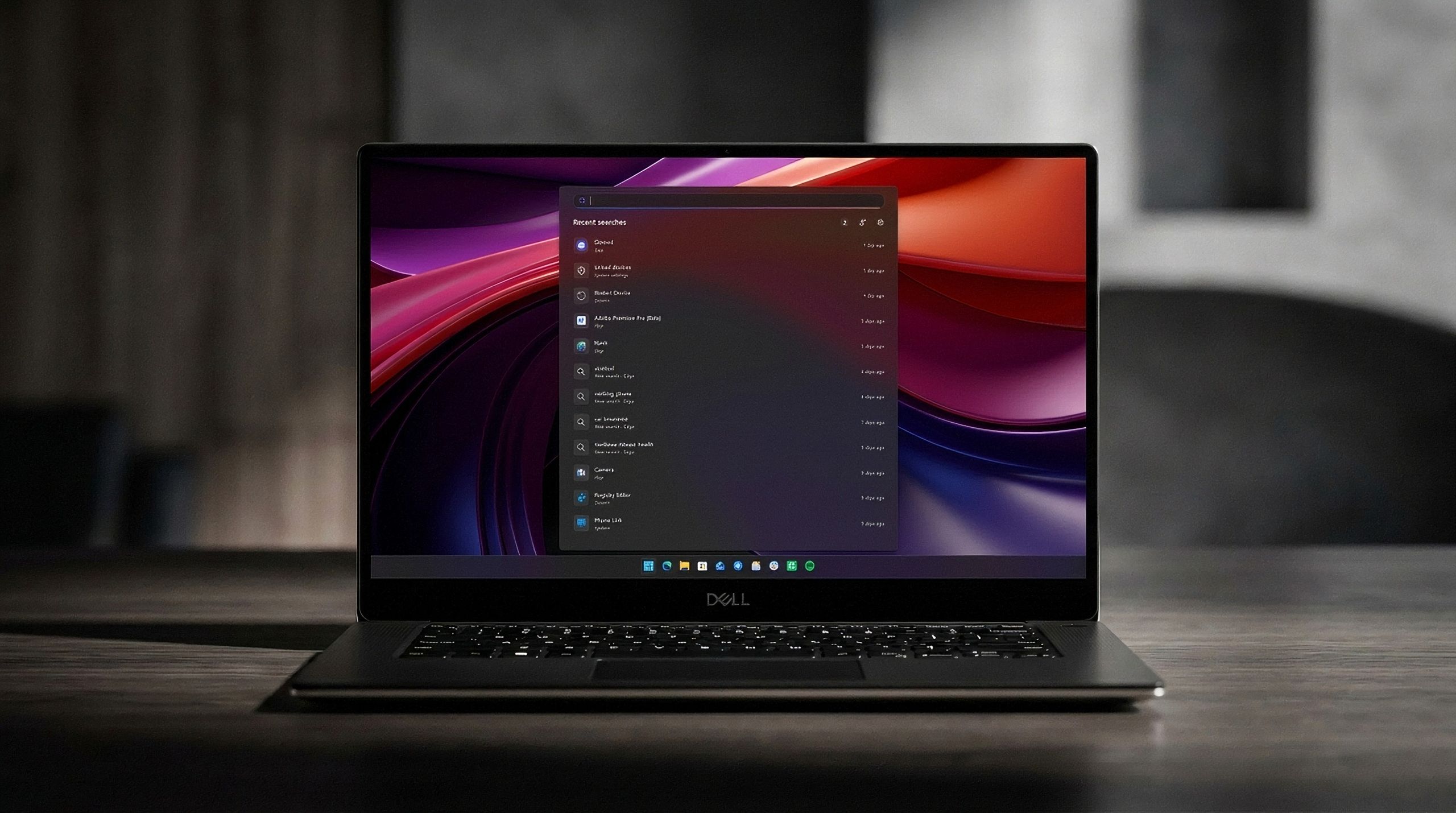
- Windows 11 finally drops Bing ads for a clean Search experience. Microsoft unveiled a major Search overhaul this week: results will skew toward local content over the web, ads and promotional material are being removed, and users will be able to customize whether web and Microsoft Store suggestions appear at all. It is the loudest admission yet that years of stuffed-in ads hurt the product, and the upgrade should land alongside broader AI-first Search behaviour Microsoft has been previewing for months. Windows Central
Gaming
- Bethesda confirms Fallout 5, Elder Scrolls VI on Creation Engine 3; Starfield keeps getting content. Bethesda put out a wide-ranging status update covering its roadmap after Xbox’s recent cuts. Elder Scrolls VI is reportedly hitting its milestones on the new engine; Starfield continues to receive expansions; and Fallout is getting multiple new projects, with Fallout 5 in pre-production and the Obisidian-built spin-off still on the slate. Todd Howard framed Creation Engine 3 as giving developers and modders more power than the previous generation. Windows Central
- Xbox studio leads reportedly “detest” Game Pass; “it felt like a race to zero.” In the wake of Xbox’s recent layoffs, a familiar pattern is being reported from inside the studio leadership: Game Pass’s flat-fee economics have been eroding margins for years, and some leads viewed the subscription as a race to the bottom even as Xbox kept marketing it as “the best value in gaming.” The story tracks with the broader post-Spencer reorganisation under Asha Sharma, who has conspicuously avoided mentioning Game Pass on stage. Windows Central
- Sony’s killing of physical game discs draws open mockery at the Marvel’s Wolverine trailer. The new Wolverine trailer landed with an unintentionally perfect metaphor — a photograph of a loved one burns to ash in front of Logan — and fans used the comments section to dunk on Sony’s accelerating phase-out of physical media: “Wolverine was really getting PHYSICAL in this trailer; he has such a DISCtinct presence.” The pile-on is the latest in a string of consumer-facing decisions (PS3/Vita store shutdowns, delisting 500+ movies from UK accounts, Crunchyroll’s $14 add-on subscription) that have made Sony a punchline even to brands like KFC and Domino’s. Microsoft is reportedly working on a “Positron” disc-to-digital program that could end up being the buyer-friendly counterpoint. Windows Central [The Verge]
Linux & Open Source

- FFmpeg picks up another AVX-512 hand-tuned path: 1.372x faster RGB-to-RGBA conversion. The latest FFmpeg git mainline adds another set of AVX-512 assembly optimizations targeting modern Intel and AMD processors — measured at 1.372x faster on RGB24-to-RGBA pixel format conversion versus the prior C fallback. The series continues a multi-month pattern of squeezing SIMD performance out of one of the most heavily-used media pipelines on Linux. Phoronix
- Lenovo Legion Y700 Gen4 tablet sees mainline Linux patches. The 8.8-inch Snapdragon 8 Elite Android tablet that launched last year is now seeing patches aimed at enabling Linux support outside Android — a path that should eventually land in the mainline kernel. The work continues Qualcomm’s slow unfurling of upstream support for its high-end ARM chipsets. Phoronix
- More ASUS motherboards to gain working sensor monitoring with Linux 7.3. The upcoming kernel cycle will extend open-source
it87-class sensor monitoring to several additional ASUS desktop boards on both Intel Core and AMD Ryzen platforms — a steady drip of community-contributed fixes that has been chipping away at ASUS’s historically poor Linux support for years. Phoronix
AI / ML
- Meta plans multimillion-dollar deal to rent its data centres to Anthropic. Meta is reportedly preparing to enter the datacentre rental market via a multi-billion-dollar arrangement with Anthropic, opening a new revenue stream by leasing capacity built out for its own AI workloads. The deal signals that Meta views its infrastructure footprint as an underutilised asset — and it positions Anthropic as a major external anchor tenant at a time when AI-lab capex is increasingly being matched against hyperscaler-colo economics. Pplware
- Spotify has been quietly deleting millions of songs; AI and spam to blame. Spotify is reportedly purging large swaths of AI-generated and spam-injected tracks that have flooded the platform — a cleanup that finally acknowledges what has been visible to listeners for years: ghost artists, minute-long hooks, and streaming-fraud farms padding catalog counts. The policy shift is the first meaningful platform-side response to generative-music abuse at scale. Pplware
Hardware
- IP68 and IP69 ratings may not protect your device as much as you think. A growing body of field testing is undermining consumer confidence in flagship water-resistance marketing: IP68/IP69 ratings are tested under controlled, time-limited lab conditions (typically fresh water, stationary, low pressure) that bear little resemblance to pool chlorine, saltwater, soapy showers, or pressurised jets. For most users, the labels signal “survives accidental splashes” rather than “swim-proof.” Pplware
In Brief
- Meta outage: Facebook and Instagram down worldwide. Millions of users across multiple regions hit login failures, blank feeds, and error messages on both Facebook and Instagram on Sunday — the issue is platform-side, not account-related. Pplware
- Google Contacts finally adds a personal-info card on Android. A long-requested feature arrives: contact cards for personal entries can now carry structured address, email, and notes — closing a gap that has plagued the app since Google’s gradual deprecation of the older People app. Pplware
- A “phone” for kids that just lets them call — with vintage styling. A company best known for pared-down children’s phones has launched a fixed-line phone with retro looks and modern internals, pitching it as a calmer alternative to smartphones for younger users. Pplware
- A vine-growing robot that dresses you in ten seconds, hands-free. A joint South Korean/US research team has built a “climbing” robot that wraps around a user like a vine and dresses them in roughly ten seconds without any hand interaction — a promising assistive-tech milestone and an awkward headline in the same sentence. Pplware
- A 630-mile solar-car race with no support vehicles. High-schoolers are racing custom solar cars across Texas on a multi-day route with no fuel logistics beyond sun and battery, a striking demonstration of how mature the “sunlight-only vehicle” category has quietly become. [The Verge]
Roundup compiled from the TTRSS Tech feed. 49 articles fetched, 33 already processed, 13 new clusters across Microsoft, Gaming, Linux, AI, Hardware.