Tech News Roundup — July 23, 2026 (AM)

A heavy morning cycle anchored by AMD’s up-to-$5B commitment to Anthropic and a surprisingly strong Xbox hardware month: Series X|S sales in the U.S. jumped 86% year-on-year in June — the highest monthly unit count of 2026 — while PS5 and Nintendo platforms slid. Microsoft used the same news cycle to ship the first wave of original-Xbox backward-compat games to PC. On the Linux side, AMD’s EPYC Turin is showing real PCIe 5.0 storage gains on the Linux 7.2 kernel, System76’s COSMIC desktop reached Epoch 1.4, and SDL landed native HDR10 rendering. Apple’s iOS 27 beta contains code for a “Restricted Mode” that would let the company cut off apps when financed iPhones miss payments.
AI/ML
AMD commits up to $5 billion to Anthropic
AMD says it will invest up to $5 billion in Anthropic while helping expand the AI lab’s compute footprint, the latest of a string of deals that has turned Anthropic into one of the most heavily-capitalised model builders in the West. The partnership pairs AMD’s Instinct accelerators with Anthropic’s Claude training and inference workloads, and gives AMD a marquee customer to anchor its data-center GPU roadmap against Nvidia.
[The Verge]
Substack ships an AI-text detector
Substack rolled out a built-in detector that flags posts likely written with AI assistance, joining a broader push across publishing platforms to label machine-written content. The move lands as Portuguese outlets amplify the EU’s parallel work on watermarking mandates.
AI agents and the “who pressed Send?” problem
A new wave of autonomous AI agents can now send emails and execute transactions without a human in the loop. The article — picked up across Portuguese-language tech press this morning — asks the obvious liability question: if no human approved the send, who is legally on the hook for the result?
Microsoft & Xbox
Xbox Series X|S U.S. sales jump 86% in June 2026
June 2026 was the Xbox Series X|S’s best month of the year in the U.S. — a 86% year-on-year unit jump even as PS5 and Nintendo hardware sales slid. Analysts cite a combination of the memory-supply easing, sharper marketing, and a steady drip of Game Pass exclusives as the swing factors. The numbers don’t fully reverse the multi-year Xbox hardware decline, but they’re the first unambiguously good data point in a long time.
Original Xbox games finally come to PC
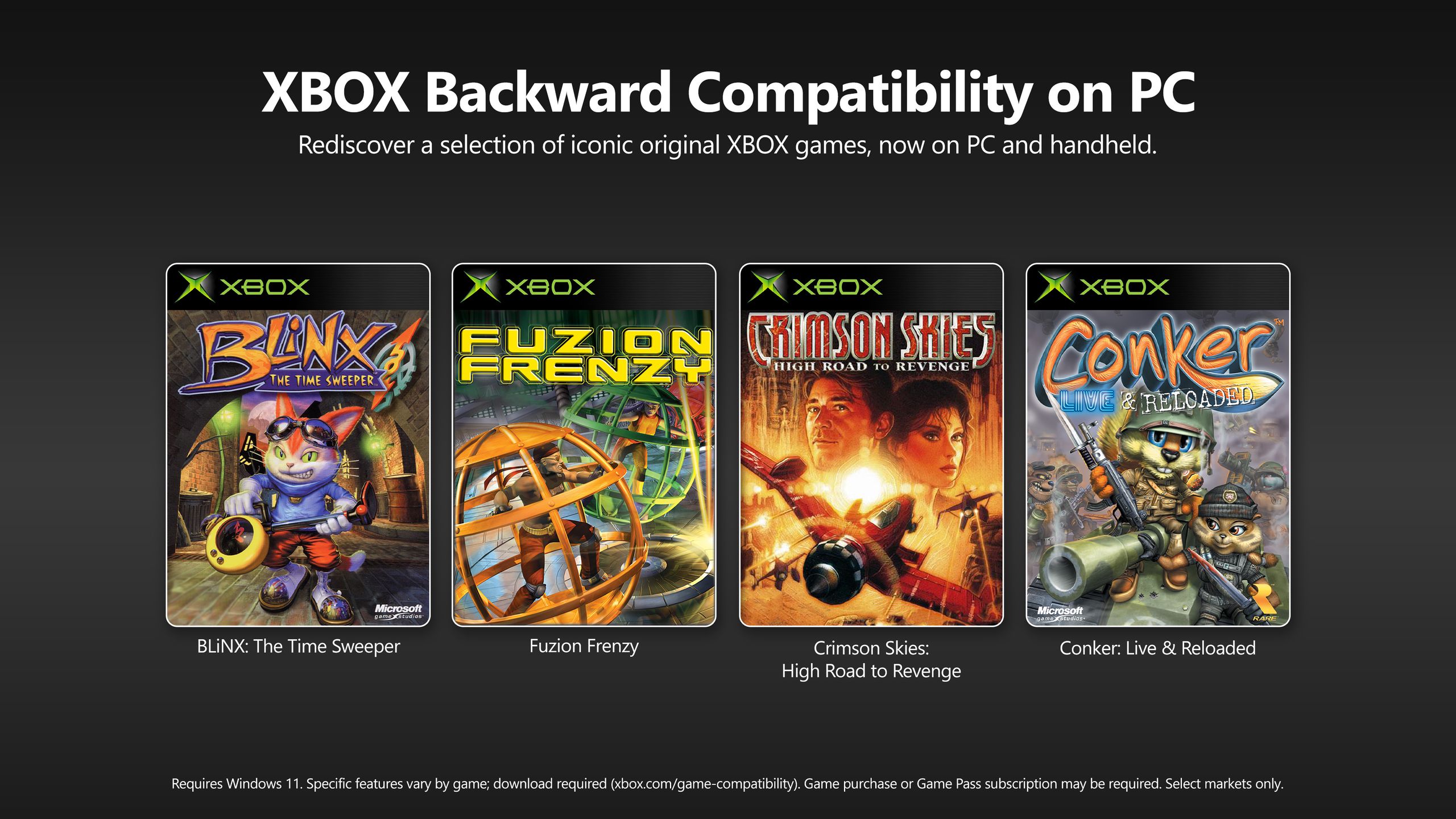
Microsoft’s Xbox backward-compatibility program has been one of the company’s quieter preservation wins on console — and this week it expanded to PC. An early preview release will see four original-Xbox titles playable on Windows for the first time, with achievements and modern store integration included; more titles are promised.
[The Verge] [Windows Central]
Free Copilot quietly turns into a demo
Microsoft is moving a growing list of previously-free Copilot features behind paid tiers — the third such shake-up in a single quarter, per Windows Central’s tally. The pattern has the publication’s writers openly asking whether readers will think they’re seeing the same story twice.
Surface Pro with Snapdragon X2 ships with a real GPU bump
Microsoft’s summer Surface Pro refresh pairs Snapdragon X2 silicon with the same 2-in-1 chassis that defined the line, but the GPU is meaningfully faster than last year’s X1. Some outlets are calling the device the “Surface Pro 12” for its screen size, though Microsoft sticks with the older naming.
Gaming
RuneScape’s CEO wants to dethrone World of Warcraft
Jagex’s CEO used a press appearance this week to claim the team is aiming to become the biggest MMO on the planet — beating World of Warcraft. The bold claim, from a 25-year-old franchise that predates WoW itself, will need more than words behind it.
BlizzCon 2026 digital bundles ship ahead of the convention
With BlizzCon 2026 now less than two months out, Blizzard released new digital bundles for World of Warcraft, Overwatch, Diablo, and Hearthstone packed with in-game rewards. The bundles are an early-bird hook for an event that already has early-bird tickets.
Gears of War: E-Day multiplayer reveal set for July 30
The Coalition has locked in a multiplayer gameplay reveal for Gears of War: E-Day on July 30, 2026 at 6am PT / 9am ET — the first proper look at the prequel’s online modes after years of single-player-focused marketing.
Lego Donkey Kong arcade lets Mario jump endless barrels
Carl Merriam’s new Lego Donkey Kong arcade cabinet is a brick-built tribute to the original 1981 Nintendo arcade game, with Mario perpetually scaling the girder stack. Miyamoto is reportedly happy with the build.
[The Verge]
Steam Deck sales are cratering — and you shouldn’t buy one anyway
A Boiling Steam analysis making the rounds this week shows Steam Deck sales falling off a cliff into mid-2026. The catch: a successor handheld is widely expected by late summer, so anyone in the market should wait.
GRAFT gets a new story trailer at Convergence Games Showcase 2026
Harebrained Schemes — the studio behind the Shadowrun trilogy — debuted a new story trailer for GRAFT, its long-teased RPG, at the Convergence Games Showcase 2026.
Samsung & Hardware
Samsung’s smart glasses — the design we’ve been waiting for
At its London Galaxy Unpacked, Samsung and Google previewed two production-bound designs for their joint AI smart glasses line, with partnerships on the fashion side (Gentle Monster, Warby Parker) and cameras on every pair — the same privacy question Meta’s Ray-Bans are already wrestling with.
[The Verge]
Galaxy Z Fold 8 vs Z Flip 8 — how the lineup compares
The new Z Fold 8 goes wider and shorter than its predecessor; the Z Flip 8 keeps the 6.9-inch inner / 4.1-inch cover screen combo but ships thinner with more cover-screen functionality. Samsung also announced a Z Fold 8 Ultra with a near-invisible crease using a titanium Flex Titanium film.
[The Verge]
Galaxy Z Fold/Flip 8 preorders come with up to $350 in gift cards
Preorders for the new foldable lineup opened with up to $350 in carrier/store gift cards, the usual sweetener for a July launch window.
[The Verge]
Galaxy Watch Ultra 2 lands an 800mAh battery
Samsung’s Galaxy Watch Ultra 2 ships with a 35% bigger battery than the original Ultra (800mAh vs 590mAh), a thinner case, and the new Galaxy Watch 9 alongside it. AI features now extend across the wearable line.
Nvidia’s Jensen Huang recalls Sega’s $5M Dreamcast-era save
Speaking at Tokyo’s GiGO Akihabara arcade anniversary, Jensen Huang reminisced that Sega’s $5 million investment in Nvidia’s pre-IPO GPU business saved the Japanese console maker — and seeded a partnership that, three decades later, is coming full circle as both companies chase AI and edge-compute markets.
Apple
iOS 27 contains a “Restricted Mode” for missed iPhone payments
Code spotted in the iOS 27 beta lets Apple flip a financed iPhone into a “Restricted Mode” if it detects the buyer missing payments — locking down apps and features until the account is current. The mechanism hasn’t been formally announced.
[The Verge]
Apple tests a MacBook Neo with more RAM
Apple is reportedly testing a higher-RAM variant of the MacBook Neo — the budget laptop launched earlier this year — with the A19 Pro chip. It’s a quiet acknowledgment that the original 8GB ceiling is too tight for current AI-era workloads.
[The Verge]
iPad price hikes — briefly — ease
A number of Apple products including the iPad Pro M5, iPad Air, and AirTags are discounted at major retailers this week, partially reversing the spring’s price increases.
[The Verge]
Apple Watch saves a life after a railway-tracks fall
Apple’s human-interest slot this morning: a fall onto railway tracks triggered the Apple Watch’s automatic fall detection, which called emergency services and routed the victim to a hospital in time. It’s the latest in a regular string of similar stories the company surfaces.
Linux & Open Source
AMD EPYC Turin + PCIe 5.0 storage — real gains on Linux 7.2
Phoronix’s bench run of 5th-gen EPYC (Turin) on the upcoming Linux 7.2 kernel shows meaningful PCIe 5.0 NVMe storage throughput gains, complementing the Xe3 graphics numbers published earlier in the week for Intel’s Panther Lake hardware. Both stories reinforce that the kernel’s I/O and graphics stacks are still tracking the AI/storage era aggressively.
COSMIC Epoch 1.4 — force-quit and fixes
System76 pushed COSMIC Epoch 1.4, the latest stable release of the Rust-based desktop environment. The headline feature is a force-quit option for COSMIC Monitor; the rest is the usual batch of bug fixes and small compositor tweaks.
SDL lands HDR10 rendering support
Sam Lantinga merged HDR10 rendering support into SDL — the Simple DirectMedia Library used by a long tail of cross-platform games. The change unblocks native HDR output for titles that previously had to roll their own tone-mapping pipeline.
Lemonade 11.5 completes the local AI router
One week after Lemonade 11.0, the open-source AMD-backed local AI server shipped 11.5 with a completed Lemonade Router. The router is the orchestration layer that routes inference across heterogeneous local accelerators — a missing piece that the 11.0 release kicked off.
In Brief
- Tesla’s revenue rebounds but profits stay weak. Q2 2026 numbers show sales bouncing back from the early-year slump, but margins continue to compress as the automaker absorbs price cuts and AI/inference capex. [The Verge]
- Meta dodges the next social-media-addiction trial. Less than a week before opening arguments, the planned trial against Meta was dropped — the second major social-media-addiction suit to collapse this year. [The Verge]
- Philips’ new AI toothbrush points out where you missed. The DiamondClean 9900 Prestige uses sensors and an AI model to map brushing coverage in real time on a paired phone. [The Verge]
- DIGI quietly offers 1 Gbps on its 5G network in Portugal. The operator hasn’t advertised gigabit speeds, but tests in the field are now turning up consistent 1 Gbps on supported devices. [Pplware]
- TCAS saves two airliners from a mid-Atlantic collision. A near-miss over the Atlantic was averted by the Traffic Collision Avoidance System after two commercial flights crossed into the same airway at the same altitude in opposite directions. [Pplware]
- ANA unveils Portugal’s new Luís de Camões Airport. First renderings of the long-planned Lisbon-region replacement for Humberto Delgado Airport are out. [Pplware]
- Light returns with a new flip phone. The minimalist-phone company came back from a long absence with the Light Flip, a modern clamshell in the spirit of its older devices. [Pplware]
- August 12 solar eclipse across Portugal — certified glasses only. The first total solar eclipse visible from mainland Portugal in over a century is two weeks out; eye-safety authorities are pushing the certified-glasses message hard. [Pplware]
- Three historical cases of cruise control that wouldn’t turn off. A retrospective on the famous stuck-cruise-control incidents that became case studies in driver-assist failure modes. [Pplware]
- Jeff Geerling on Open Sauce and GPS-time as “AI Antiseptics”. A summer-field blog post on the antidote effect of in-person maker events and time-puzzle tinkering against the daily AI grind. [Jeff Geerling]
Roundup compiled from the TTRSS Tech feed. 38 articles from 5 sources summarised.