
Tech News Roundup — July 25, 2026 (AM)
Wine 11.14 ships with WoW64 support for FreeBSD, Debian developers open a general-resolution debate over LLM use in the project, Microsoft finally lets you remap the Copilot key on Windows 11, Meta pauses its smart-glasses subscription plan after user backlash, and Qualcomm warns customers of double-digit price hikes effective after September 1.
Linux & Open Source

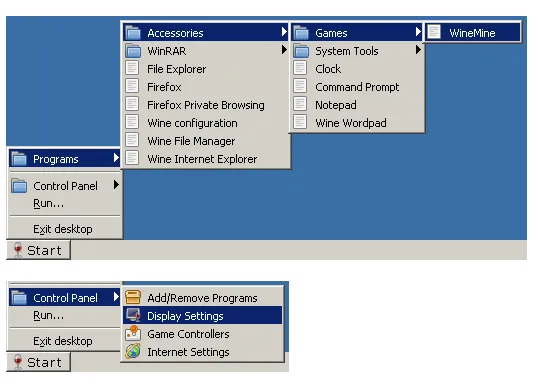
Wine 11.14 lands with WoW64 mode for FreeBSD. The bi-weekly development release adds a WoW64 thunking mode on FreeBSD so 32-bit Windows binaries can run on 64-bit Wine, plus a long-requested Start Menu icon for the bundled programs entry. The release is the usual mixed bag of bug-fixes, Direct3D work, and updated test suites; Phoronix notes it as a stepping stone toward the eventual Wine 12.0 stable line. Phoronix
Debian opens a general resolution on LLM usage. Developers have begun drafting a project-wide GR that would define which parts of the Debian workflow — code review, translation, package maintenance — may incorporate AI large language models and which may not. The discussion is currently in the “this is a complex enough question to need a GR” phase rather than the “vote is happening” phase, and early threads are split between a permissive policy with disclosure requirements and a stricter “no LLM-generated code in the archive” stance. Phoronix
AMD ROCm locked into a six-week release cycle. Speaking at AMD’s Advancing AI event in San Francisco this week, ROCm leadership said the platform will move to a rigid six-week cadence going forward, matching the upstream Linux kernel’s roughly ten-week cycle but with shorter, more predictable drops. The change is meant to make ROCm easier for downstream distributions and ISVs to package against. Phoronix
Fedora 45 to phase out the in-kernel crypto userspace API. The change targets the legacy
/proc/cryptointerface, which the kernel team has long said is superseded by the AF_ALG socket-based API; Fedora 45 will print deprecation warnings and Fedora 46 is expected to remove the proc entries entirely. Distributions that still ship tooling against the old interface have roughly a year to migrate. PhoronixPowerVR BXM-4-64 MC1 marked supported in Linux 7.3. Imagination’s drm-misc-next pull for the Linux 7.3 merge window adds initial support for the BXM-4-64 MC1 part, a mid-range PowerVR GPU. OpenGL 3.3 / ES 3.1 conformance is the realistic target; Vulkan support is still in progress. Phoronix
Ubuntu moves to remove the
/etc/debian_versionhistorical artifact. The file, written by base-files to advertise the upstream Debian base, has long been vestigial on Ubuntu images (it still reports the Debian release Ubuntu was forked from). The change will leave/etc/os-releaseand/etc/lsb-releaseas the supported discovery points. Phoronix
Microsoft
Surface team teases “a few more surprises” for 2026. In a 20-minute video posted this week, Windows+Devices EVP Pavan Davuluri and Surface CVP Brett Ostrum recapped the year so far (Surface Pro 12, Surface Laptop 8 on Intel and Snapdragon) and confirmed the upcoming Surface Laptop Ultra, plus hints at a Surface Studio monitor and a smaller Surface Mini form factor. The video is more roadmap than product launch — Microsoft is buying itself runway into the holiday quarter. Windows Central
Windows 11 finally lets you remap the Copilot key. The dedicated Copilot key — which, on most 2024-and-newer laptops, replaced the right Ctrl key — can now be reassigned to the Context menu key, right Ctrl, or disabled entirely in the Settings app. Power-users had been begging for this since launch; Microsoft is treating it as a quality-of-life fix rather than a reversal of the Copilot push. Windows Central
Age of Empires III: DE’s “The Baltic Powers” expansion returns from the dead. Microsoft’s Age of Empires revival programme had quietly shelved the third expansion, but it’s back in open beta from July 23 to August 6 ahead of a September 10 launch. The expansion adds four new civilisations from the Baltic region and a campaign that ties into the late-18th-century European theatre. Windows Central
Meta
Meta walks back the smart-glasses “rate limit” plan. After user backlash over reports that the company was planning to charge a $20/month subscription for the accessibility-focused “Conversation Focus” feature on Ray-Ban Meta — a feature that runs locally and doesn’t touch the cloud — Meta has paused the proposal. The company confirms subscription-based “premium features” are still coming, but says Conversation Focus will remain free. [The Verge]
…and turns the Meta AI chatbot into a proper assistant. A separate update adds calendar access, daily-briefing generation, and steerable deep-research mode to Meta AI, positioning it against Gemini, ChatGPT, and Claude. Mark Zuckerberg has been calling this direction “personal superintelligence”; the launch is the first productised step. [The Verge]
The smart-glasses moderation problem hasn’t gone away. The same week, a separate report catalogues how the always-on cameras on Meta’s smart glasses are creating a moderation nightmare for venues, performers, and bystanders — a problem the rate-limit debate pulled into sharper focus. [The Verge]
Qualcomm
Qualcomm tells customers to expect double-digit price hikes. A letter sent to customers on Friday and reported by Bloomberg warns of “a percentage in the double digits” increase on products shipped after September 1, citing component shortages and an exhausted ability to absorb supplier cost increases. The ripple effects are predictable: smartphone OEMs, automotive telematics modules, and XR headsets all price off Qualcomm silicon. [The Verge]
…and the in-house QCE crypto driver looks set for the chopping block. A patch series queued for the mainline kernel marks the Qualcomm Crypto Engine driver as “~48x slower than ARMv8 Crypto Extensions” and proposes removing it. If accepted, the kernel will fall back to the generic AES/SHA acceleration paths on Snapdragon hardware. Phoronix
Hardware & Devices
DJI clone-maker Xtra halts and refunds preorders on its new camera. Xtra Technology — which built last year’s near-identical clone of the DJI Osmo Pocket 3 — abruptly pulled the Muse 2 Pro (its take on the dual-lens Pocket 4 Pro) from its site, paused preorders indefinitely, and refunded the $20 deposits. The timing coincides with the FCC’s planned retroactive ban on disguised DJI gadgets, which would have made the camera illegal to sell in the US. [The Verge]
Roku raises streaming-hardware prices by up to $50. The cheapest HD Streaming Stick jumps from $29.99 to $39.99; the Streaming Stick 4K goes from $49.99 to $79.99; the Ultra is now $149.99. A current sale puts some devices back at their old prices — for now. [The Verge]
Apple reportedly raising AppleCare Plus prices on Mac and iPad. Per Bloomberg’s Mark Gurman, monthly AppleCare Plus pricing is going up $0.50 and annual pricing $5 for new sign-ups; existing subscribers keep their current rates. A 13-inch MacBook Air plan rises from $7.49 to $7.99 monthly / $74.99 to $79.99 annually. Apple hasn’t yet reflected the change on its US site. [The Verge]
OnePlus officially exits the US and Europe. Parent company Oppo confirmed the long-rumoured wind-down: no new OnePlus products will launch in either region, though existing-device software updates and warranty support are guaranteed, with future updates delivered via Oppo’s ColorOS. The OnePlus 15 was the brand’s final US flagship. [The Verge]
Boox is building a tiny e-reader to take on Xteink. The Boox Picco, spotted by Good E-Reader, will feature a 3.97-inch front-lit e-paper display with SD-card expandability and MagSafe-friendly sizing aimed at the same use case as Xteink’s phone-back readers. [The Verge]
AI & ML
Anthropic releases Claude Opus 5. Just days after the OpenAI/Hugging Face security incident dominated industry chatter, Anthropic shipped its newest model, which the company says “comes close to the capabilities of Claude Fable 5 in many domains” and is much better at complex coding tasks. Fable 5 — the public-facing Mythos-class model — was taken offline earlier this year after drawing federal scrutiny. The Verge
1Password opens up stored credentials to Claude. A new browser integration lets users authorise the Anthropic chatbot to complete multi-step tasks — booking travel, managing online accounts — without exposing passwords to Anthropic’s models. The feature is positioned as a stopgap until first-party agent protocols mature. [The Verge]
Netflix says ~300 titles used generative AI. The figure came out of Netflix’s Q2 earnings report; the company says most uses were post-production VFX work and that it expects AI’s share of production to keep growing. [The Verge]
Midjourney buys the astrology app Co-Star. The AI-image startup announced the acquisition on Thursday, with no immediate plans for product integration. Co-Star stays available as a standalone horoscope/compatibility app. [The Verge]
Google / Android
- Third-party Android app stores land next week. Google and Epic Games jointly withdrew their attempt to retroactively settle the 2024 injunction, meaning Google will start carrying rival app stores inside the Play Store on Wednesday, July 22. The first beneficiary is expected to be Microsoft’s Xbox game store on Android. [The Verge]
In Brief
Jeff Geerling adds a backup 5G WAN on his OPNsense router. Two Spectrum cable outages in two weeks pushed him to borrow a 5G gateway from his dad; AT&T Fiber still isn’t available at his studio, so a permanent 5G failover is on the roadmap. Jeff Geerling
Tesla’s electronic door-handle deaths could tighten auto-industry safety rules. NHTSA’s notice on the mechanical release doesn’t open a Tesla-specific defect investigation but signals broader scrutiny of pop-out handles across the industry. [The Verge]
FCC’s Brendan Carr plans an August 6 vote to lift the 39% national TV-ownership cap. Carr announced the move in a Breitbart op-ed; broadcast giants would be free to consolidate if the rule goes. [The Verge]
Blade Runner 2099 streams November 25 on Prime Video. All eight episodes drop at once; Silka Luisa (Shining Girls) is showrunner. [The Verge]
Pplware this week. Portugal’s Chave Móvel Digital crossed 5 million active users and is now the country’s primary digital ID. Pplware The PSP arrested a suspect in MB WAY-related scams targeting taxi drivers and merchants. Pplware Meta’s text-based feed is reportedly starting to resemble TikTok. Pplware Câmara térmica footage shows how misleading “car feels hot in summer” complaints actually are. Pplware A new EU-approved retinal implant could restore vision to thousands. Pplware CrashAtlas catalogues decades of aviation accidents in a browsable map. Pplware Vodafone Portugal will use satellites to backhaul dead zones. Pplware
Nothing confirms layoffs, denies “exit 12 markets” report. Cofounder Akis Evangelidis called the reported numbers “way overblown” but acknowledged a reorganisation. [The Verge]
Roundup compiled from the TTRSS Tech feed. 39 articles from 5 sources summarised across Linux/OSS, Microsoft, Meta, Qualcomm, hardware, and AI sections.